General articles are free for 24 hours after publish.
Vietnam Redefines Four Strategic Pillars Amid Global Uncertainties
Vietnam's Communist Party Central Committee has outlined four strategic pillars, reaffirming commitments to the environment, economic growth, and investment, aiming to boost trade via infrastructure and talent development. These shifts are seen as crucial for navigating global uncertainties.
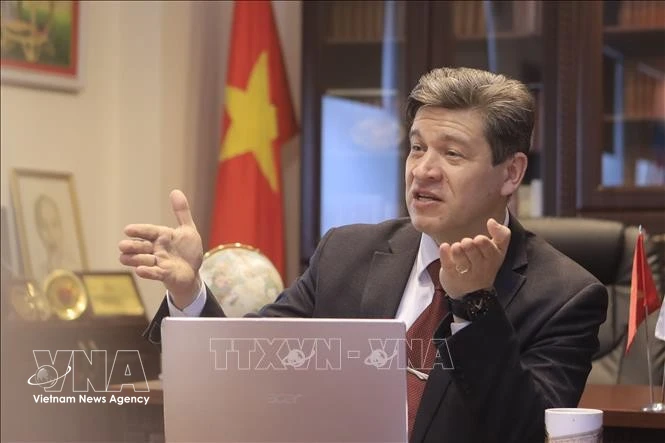
The Communist Party of Vietnam Central Committee has identified four strategic pillars for national development at its recent third plenum of the 14th Party Central Committee. These shifts are seen as a reaffirmation of Vietnam's commitments to the environment, economic growth, and investment opportunities. They are expected to create new impetus for trade through large infrastructure programmes and showcase Vietnamese talent and wealth to other countries. A Russian scholar noted that these strategic shifts suggest Vietnam is seriously abiding by its commitments, creating new impetus for trade through large infrastructure programmes and showcasing Vietnamese talent and wealth to other countries. The focus on infrastructure development is considered a key element for trade revitalization. China and Vietnam, both socialist nations led by communist parties, are each hunting for a development path that fits their own conditions. Prof. Huang Rihan, Director of the Maritime Silk Road Institute at Huaqiao University in China, stated that mutual learning is an invaluable asset in the relationship between the two Parties and nations. The swift move by the third plenum to translate the 14th National Party Congress vision into actionable policy directives should inspire confidence in Vietnam’s future development trajectory. Recent reports also highlight the dismissal of the Deputy Minister of Agriculture and Environment for violations, progress in the Vietnam-Myanmar Comprehensive Cooperative Partnership, steady development of Vietnam-Bangladesh ties, and extensive diplomatic engagements with countries including South Korea, Mongolia, Russia, and France. These diplomatic activities are significant for implementing the foreign policy set out by the 14th National Party Congress and Politburo Resolution No. 06-NQ/TW, while concretising the orientations and agreements reached by Vietnam's senior leaders with the respective partners. General Secretary of the Communist Party of Vietnam Central Committee and President To Lam, his spouse, and a high-ranking Vietnamese delegation were scheduled to pay a state visit to Russia and an official visit to France, and attend the International Space Summit in Paris from September 7 to 12. This visit to Russia was significant as it was the first state visit by Vietnam's top leader since 1991. Foreign leaders affirmed their readiness to closely coordinate with Vietnam to further strengthen bilateral ties across all fields. Parliamentary diplomacy plays an important role in bilateral relations, helping consolidate political trust, promote and oversee the implementation of high-level agreements, and contribute to peace, stability, and cooperation in the region and the world, according to Professor Park Yeon Kwan. Source: VietnamPlus English
Original source
VietnamPlus English