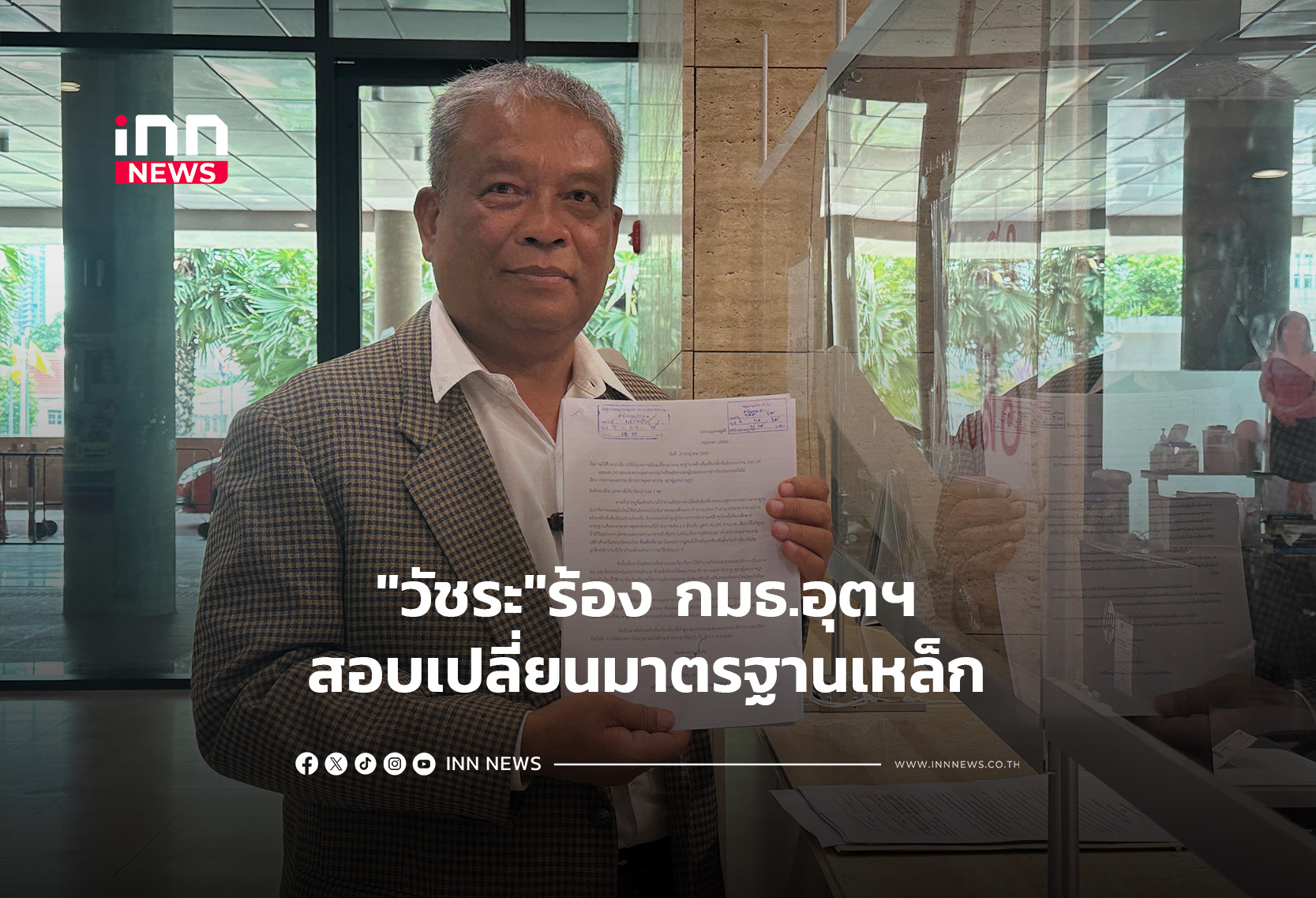
Thai Steel Standards Change Under Scrutiny; Probe Demanded Over Political Pressure and Industry Impact
Business
2026年7月3日
5
INN News

Thai Steel Standards Change Under Scrutiny; Probe Demanded Over Political Pressure and Industry Impact

AI サマリー

Former MP Watchara Phetthong has petitioned the Industry Committee of the House of Representatives to investigate potential unfairness in proposed changes to steel bar standards (TIS 20 and TIS 24). He alleges political pressure to abolish IF furnace technology, which could impact nearly 3 million tons of production, valued over 40 billion baht, and numerous jobs.

A former Member of Parliament, Watchara Phetthong of the Democrat Party, has submitted a letter to the Chairman of the Industry Committee of the House of Representatives, urging an investigation into the proposed changes to steel bar and rebar standards (TIS 20 and TIS 24) by the Ministry of Industry. The core concern is whether these changes are fair to domestic steel manufacturers. Watchara stated that there are indications of certain politicians attempting to push the Ministry of Industry to introduce new standards that would abolish the use of IF furnace technology in rebar production. This move could significantly impact domestic steel manufacturers who currently produce according to the existing ministry standards. These manufacturers collectively represent a production capacity of nearly 3 million tons, valued at over 40 billion baht, and affect a substantial number of workers. He emphasized that there has been no factual evidence presented suggesting that steel produced using the IF furnace method under the current standards has been the cause of building collapses. Therefore, a comprehensive fact-finding inquiry is deemed necessary to ensure fairness for the manufacturers and maintain public safety standards. Watchara requested the Industry Committee to invite the Permanent Secretary of the Ministry of Industry, relevant agencies, academics, and steel rebar manufacturers to provide explanations from all sides to reach a fair resolution, with a requested update on the proceedings within 15 days. Furthermore, Watchara also submitted a letter to the Speaker of the House of Representatives, demanding an investigation into serious ethical violations by Mr. Atthawit Suwanphakdi, a party-list MP from the Ruam Thai Sang Chart Party. This is in response to his interview criticizing IF furnace rebar production as substandard, which Watchara believes has caused severe damage to Thai steel manufacturers. Such statements could potentially violate ethical codes 8 and 11 for MPs, reflecting bias against IF furnace producers or a lack of integrity in his duties. Watchara urged the committee to investigate whether the push to abolish or restrict IF technology would create economic benefits worth hundreds of billions of baht for specific business groups and if any individuals would gain special advantages from such policies. He also questioned the basis for continuously linking building collapse incidents to IF technology or steel, especially when state investigations have not identified steel bars as the cause, to prevent public misunderstanding. Regarding Atthawit's interview, Watchara stated that such matters should be deliberated by the committee, which should invite experts, standards agencies, and all producers for comprehensive information before jointly determining the facts, rather than relying on any single individual's opinion. Source: INN News

多角的分析

経済的影響

鉄鋼標準の変更、特にIF炉技術の廃止は、タイの鉄鋼業界に大きな経済的影響を与える可能性がある。既存のIF炉技術を持つ製造業者は、生産能力の約300万トン、400億バーツ以上の市場価値に影響を受ける。もし政治的圧力によって特定の技術が排除され、代替技術や新規参入が有利になる場合、それは市場の歪みを生み、競争環境を変化させる。これは、業界全体の生産コスト、技術革新の方向性、そして輸出競争力にも影響を及ぼす可能性がある。

投資家心理

鉄鋼標準の変更は、タイの鉄鋼セクターへの投資リスクとリターンに影響を与える。IF炉技術の廃止が強行されれば、既存のIF炉設備を持つ企業は資産価値の低下や再投資の必要に直面する。一方で、新しい標準に適合する技術を持つ企業や、標準変更によって恩恵を受ける可能性のある企業への投資機会が生まれるかもしれない。政治的な介入の可能性は、投資家にとって不確実性を高める要因となる。

社会的影響

鉄鋼標準の変更は、労働者の雇用に直接的な影響を与える。ワチャラ氏の指摘通り、IF炉技術に依存する工場が閉鎖または縮小された場合、多数の労働者が職を失う可能性がある。また、建築物の安全基準に関わる問題であるため、標準の変更が建物の安全性に影響を与えないか、市民の懸念も高まる。標準変更のプロセスが透明性を欠き、一部の利害関係者のみが利益を得るような形になれば、社会的な不信感につながる恐れがある。

市民の声

建築物の安全基準に関わる鉄鋼標準の変更は、タイ国民の生活の安全に直結する問題である。ワチャラ氏が指摘するように、IF炉技術による鉄筋が建物の崩壊原因ではないという過去の事実があるにも関わらず、技術廃止が推進される背景には、国民の安全よりも特定の経済的利益が優先されているのではないかという懸念が生じる。標準変更が、より安全で、より手頃な価格の建材供給に繋がるのか、それとも一部の企業を利するだけで、最終的に建物の安全性やコストに悪影響を与えるのか、市民は注視する必要がある。

背景・歴史的文脈

タイにおける鉄鋼産業は、国内建設需要と輸出の両方で重要な役割を担っている。産業標準(TIS)は、製品の品質と安全性を確保するために設定されるが、しばしば政治的影響や業界内の利権が絡むことがある。過去にも、特定の産業標準の変更が、一部の企業を優遇し、他社を不利にするとして議論を呼んだ事例がある。IF炉技術は、鉄鋼製造における一つの方法であり、その採用や廃止は、技術的側面だけでなく、経済的、政治的な要因によって左右されることがある。今回の件は、こうしたタイの産業政策決定プロセスにおける、政治と経済の複雑な関係性を浮き彫りにしている。

原文ソース

INN News

原文を読む