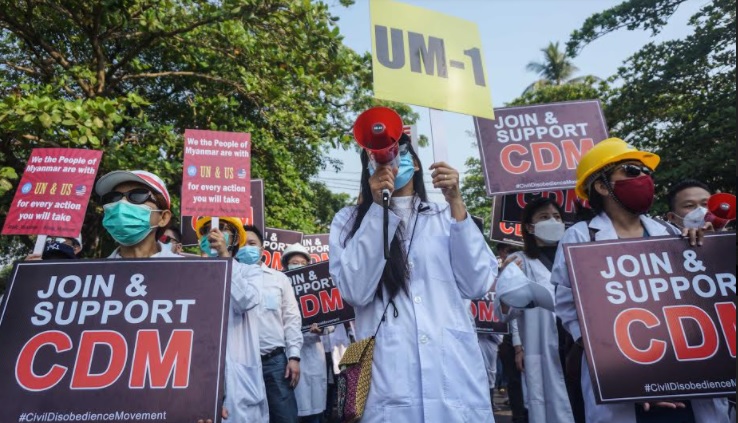
Interrupted futures: How Myanmar’s coup reshaped youth
In 2020, a university student in Myanmar could still imagine a fairly ordinary future: complete a degree, graduate, find a job, become financially independent, and gradually support a family. The students were studying different subjects and dreaming about different careers, but the basic direction was similar. Education was expected to lead to employment, and employment was expected to lead to a more stable adult life. COVID-19 had already interrupted university education. But at that time, the interruption still looked temporary. Students could imagine returning to university when the pandemic improved and continuing along the same path. Then came the military coup on February 1, 2021. Five years later, many young people who were university students were nowhere near the futures they had expected in 2021. Among eight young people whose lives were traced from their university years in 2020 to their situations in 2026, some had become international students in Thailand, some were migrant workers abroad, some remained inside Myanmar with redirected careers, and others had moved into alternative education, community or political pathways. The important point is not simply that their education was delayed. Their entire path from university to adulthood was reshaped. A degree was supposed to lead somewhere Before the coup, university education was more than a period of study. It was expected to be a bridge between youth and adulthood. The expected sequence was simple: study, graduate, find professional work, become financially independent, and take on greater family responsibility. That path did not disappear because young people suddenly changed their ambitions. It was disrupted by political events beyond their control. The coup was also different from COVID-19. The pandemic interrupted university attendance. The coup changed the political and institutional conditions surrounding education itself. For young people connected with the Civil Disobedience Movement, continuing in military-controlled institutions could also become a political decision. Education was no longer separated from questions of resistance, legitimacy and personal security. As a result, some degrees remained unfinished. Some students entered alternative education. Some changed fields. Others eventually moved abroad and restarted university. By 2026, a young person who had expected to already be working in a profession could instead still be completing a new bachelor’s degree. Another could be working abroad without the qualification originally expected to open the door to a professional career. Another could remain inside Myanmar but work in a field completely different from what was planned in 2020. These are not simply educational delays. They are interrupted life paths. Six years later, are they living their dreams? This is the question that matters most to me. If these students had been asked in 2020 where they expected to be by 2026, how many would have imagined restarting university in another country?