General articles are free for 24 hours after publish.
Vietnam Enhances Rural Tourism Value with New Sustainability Criteria
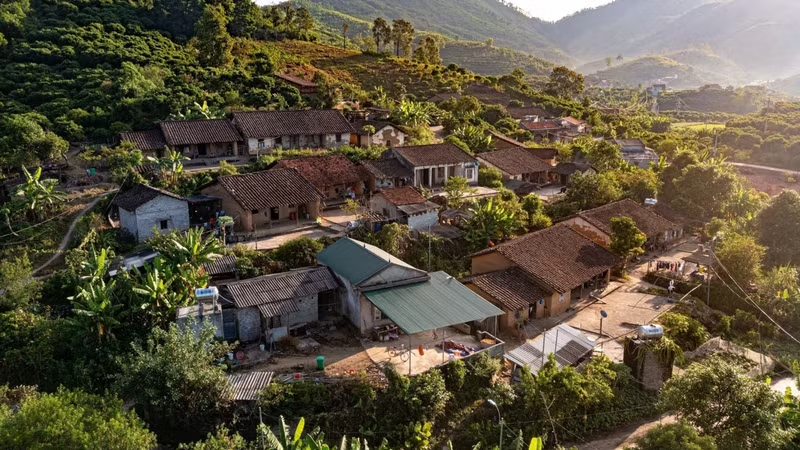
Vietnam has established new criteria for sustainable rural tourist destinations, aiming to boost local economies and improve residents' incomes. These standards serve as a vital tool for assessing regional realities, standardizing management quality, and charting a course for green development.
Vietnam is actively developing a comprehensive set of "Criteria for Sustainable Rural Tourist Destinations" (Bộ tiêu chí "Điểm đến du lịch nông thôn bền vững"). This initiative is viewed as a crucial measurement tool designed to empower local areas in accurately assessing the current state of their respective tourist spots. The criteria aim to standardize the quality of management and provide a concrete pathway for green development strategies. The overarching goal of establishing these standards is to foster sustainable rural tourism, thereby contributing to the creation of livelihoods and the enhancement of income for local communities. This approach emphasizes integrating rural tourism with unique local agricultural products and indigenous cultural heritage. Illustrative of this effort, Dak Lak province has taken steps to launch a digital map that consolidates information on agricultural products and rural tourism offerings. Concurrently, a high-intensity campaign is underway to digitize data pertaining to durian cultivation areas. Furthermore, the exploration of rural tourism opportunities that coincide with the peak fruit harvest seasons is being pursued as a promising new avenue for development. These developments are being reported by Nhan Dan, the official newspaper of the Communist Party of Vietnam, which covers policies aimed at stimulating economic and social advancement in rural regions. This focus underscores Vietnam's strategic intent to pursue sustainable development in its rural areas, complementing its broader national economic growth objectives.
Original source
Nhan Dan