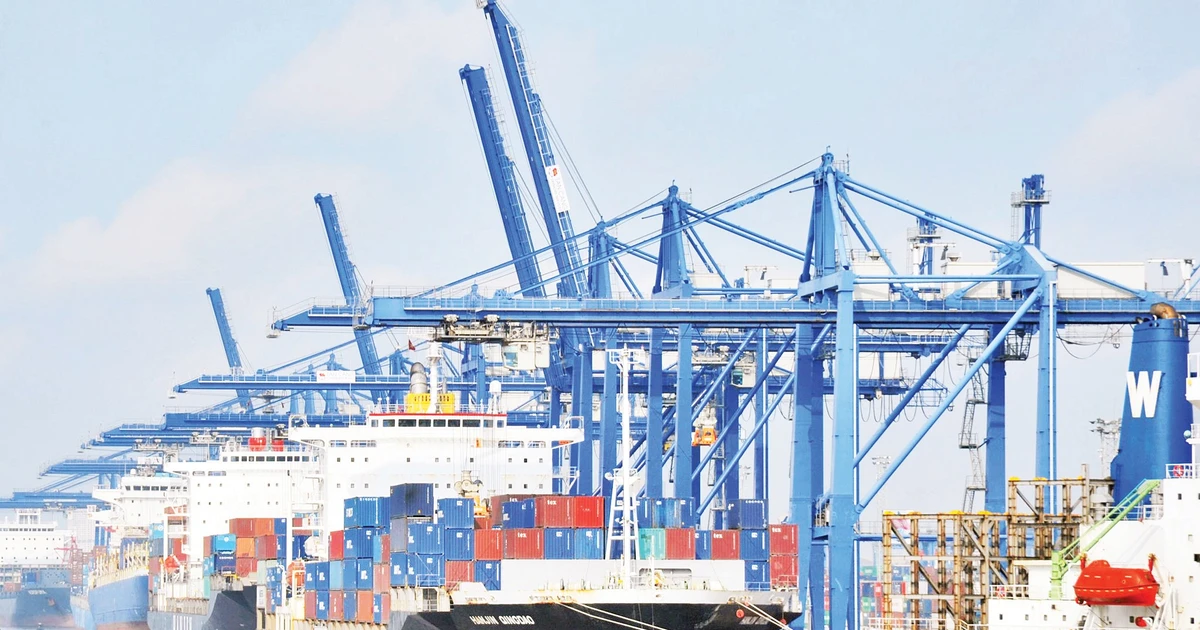
Ho Chi Minh City Aims to Become a Global Logistics Hub
Infrastructure
2026年8月1日
7
Nhan Dan
Relations
🇻🇳Vietnam🇨🇳China

General articles are free for 24 hours after publish.

Ho Chi Minh City Aims to Become a Global Logistics Hub

Share
AI Summary

Ho Chi Minh City, Vietnam, is leveraging its geographical advantages and the global supply chain reorientation to become a regional and global logistics hub. Infrastructure development, digitalization, and green logistics are key to this ambition.

Ho Chi Minh City, the economic powerhouse of southern Vietnam, is accelerating its efforts to achieve its strategic goal of becoming a regional and global logistics hub. In the context of constant shifts in global supply chains due to economic and geopolitical volatilities and the demand for sustainable development, logistics has evolved beyond mere freight transportation to become a critical determinant of a nation's competitiveness, investment attraction, trade expansion, and deeper integration into global value chains. According to Deputy Minister of Industry and Trade Phan Thi Thang, Vietnam possesses numerous advantages to integrate more deeply into regional and global supply networks, owing to its strategic geographical location, increasingly sophisticated port infrastructure, and a network of new-generation free trade agreements. Ho Chi Minh City, in particular, is recognized as a locality that converges many favorable conditions to become a logistics hub for the region and the world. With its extensive system of seaports, airports, industrial parks, and large-scale commercial and financial centers, coupled with a dynamic business community, the city plays a pivotal role as a key trading gateway for the nation and the southern region. Nguyen Loc Ha, Permanent Vice Chairman of the Ho Chi Minh City People's Committee, stated that the global supply chain realignments are opening up significant development potential. With its existing advantages, the city is fully equipped to develop into an international logistics service center, serving as a gateway connecting goods from the southern region to global markets. To realize this objective, the city prioritizes the development of synchronized and modern logistics infrastructure and enhanced regional connectivity. The development of inter-regional transportation systems, logistics centers, seaports, and transport hubs needs to be synchronized to improve cargo flow capacity, reduce costs, and increase operational efficiency. Alongside infrastructure development, digital transformation is emerging as a crucial driver for enhancing logistics operational efficiency. The application of technology in warehouse management, transportation, traceability, and data sharing not only optimizes supply chains but also enhances transparency, connectivity, and the competitiveness of businesses. Another prominent trend is the development of green logistics. As major export markets increasingly tighten environmental and carbon emission standards, building an environmentally friendly logistics system presents an opportunity for businesses to enhance their value and position within global supply chains. Furthermore, developing high-quality human resources and improving service quality are considered decisive factors for the logistics sector to transition from a supportive role to a modern service industry, contributing significantly to economic growth. However, Ho Chi Minh City's leadership emphasizes that logistics is a highly interconnected field, and no single locality can develop in isolation. Therefore, Ho Chi Minh City calls for continued coordination with ministries, central agencies, and other localities to perfect planning, invest in strategic transport corridors, logistics centers, and transport gateways, and enhance data sharing to boost supply chain capabilities.

0

Original source

Nhan Dan

原文を読む