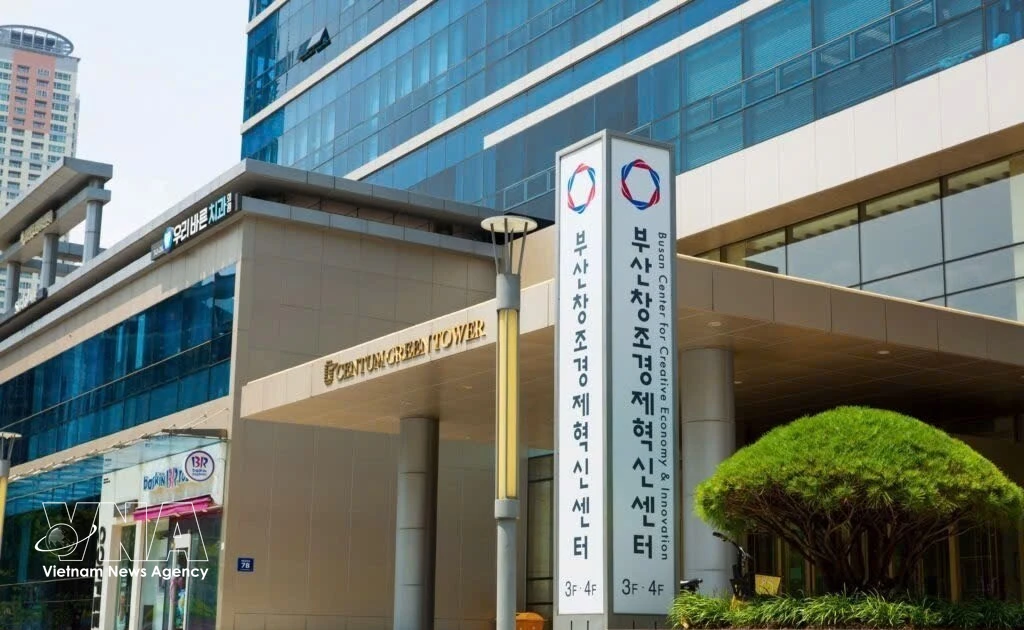
Vietnam, RoK Deepen Startup Ecosystem Connectivity, Drive Innovation
Technology
2026年7月17日
5
VietnamPlus English
Relations
🇻🇳Vietnam🇰🇷South Korea

General articles are free for 24 hours after publish.

Vietnam, RoK Deepen Startup Ecosystem Connectivity, Drive Innovation

Share
AI Summary

Vietnam is rapidly expanding its startup ecosystem, recording the fastest improvement in the AI supply chain globally. Deepening cooperation with South Korea is crucial for enhancing international competitiveness in science and technology and transitioning to a productivity and knowledge-driven growth model.

Vietnam is among the fastest-growing countries within the group ranked between 21st and 50th globally in StartupBlink’s 2026 report. Hanoi, Ho Chi Minh City, Da Nang and Hai Phong are now listed among the world’s top 1,000 startup ecosystems. The domestic innovation ecosystem continued to expand, with 963 sci-tech enterprises, 20 sci-tech exchanges and 37 innovation centres operating across 26 out of the 34 cities and provinces nationwide. According to Tiffany Hoang, Chapter Lead of the Stellar Vietnam fund, three key factors are drawing the attention of investment funds to Vietnam and Da Nang in particular. Via conferences, expert dialogues, networking and inspirational talks, VinFuture has brought many of the world's leading scientists to Vietnam not just to share knowledge, but to co-design research, advise on talent pipelines, and build practical solutions for the country’s most urgent problems. Former Prime Minister Nguyen Xuan Phuc instructed ministers, heads of ministerial-level agencies and provincial and municipal leaders to treat science, technology, innovation and digital transformation as a top political priority, stressing that faster disbursement must go hand in hand with efficiency, transparency and the prevention of waste and corruption. End-to-end electronic processing rates have climbed to 91.7% for outgoing documents and 93.8% for incoming ones, the highest nationwide. The rate of administrative procedures handled entirely online has surged to roughly 97–99% at present from 89.65% as of July 1, 2025. In the medical field, experts are introducing six-dimensional (6D) cerebral vascular imaging for treatment planning, AI-assisted stroke imaging, and robotic intervention and rehabilitation. They are also presenting next-generation neurointerventional devices and personalised treatment strategies to shorten treatment times, improve survival rates, and reduce long-term disability. HSBC identifies Vietnam as the economy that has recorded the fastest improvement in its position within the AI supply chain. The country’s share of global trade in AI-related equipment surged from 1.2% in 2015 to 12.4% in 2025, the strongest increase worldwide during the period. Japan is aware that no country can single-handedly manage the entire semiconductor supply chain, so cooperation with partners like the US, Europe, and Asian countries including Vietnam forms a crucial part of Japan's strategy, said Assoc. Prof. Dr Le Duc Anh of the University of Tokyo. Dr Ta Anh Phuong, CEO of Seinetime, a French technology start-up specialising in data personalisation and artificial intelligence (AI) solutions, said Vietnam's strategic technology goods should pass a global relevance test and strive to achieve strategic indispensability, making them products that international corporations actively seek to incorporate into their operations. Deputy Prime Minister Ho Quoc Dung expressed his hope that Professor Tran Thanh Van, the Rencontres du Vietnam Association and ICISE would continue serving as bridges between Vietnam and the international scientific community, attracting leading researchers and making practical contributions to the country's scientific and technological progress. Vietnam's growth model, long fueled by low-cost labour, resource extraction, contract manufacturing, expanded investment, and capital accumulation, has run out of road. The country now needs a sweeping reform agenda to shift from extensive growth to a model driven by productivity, knowledge, science and technology, innovation, and digital transformation. Meanwhile, personal data protection is also being strengthened, granting citizens the right to control the use of their personal data, access digital services and receive legal protection in the digital environment. However, cybersecurity challenges are emerging, with over 6.9 million accounts exposed in the first quarter of 2026, doubling the figure recorded in the same period last year. Stolen personal data has frequently been exploited in sophisticated online scams, particularly impersonation schemes targeting victims through fake relatives or acquaintances. Source: VietnamPlus English

0

Original source

VietnamPlus English

原文を読む