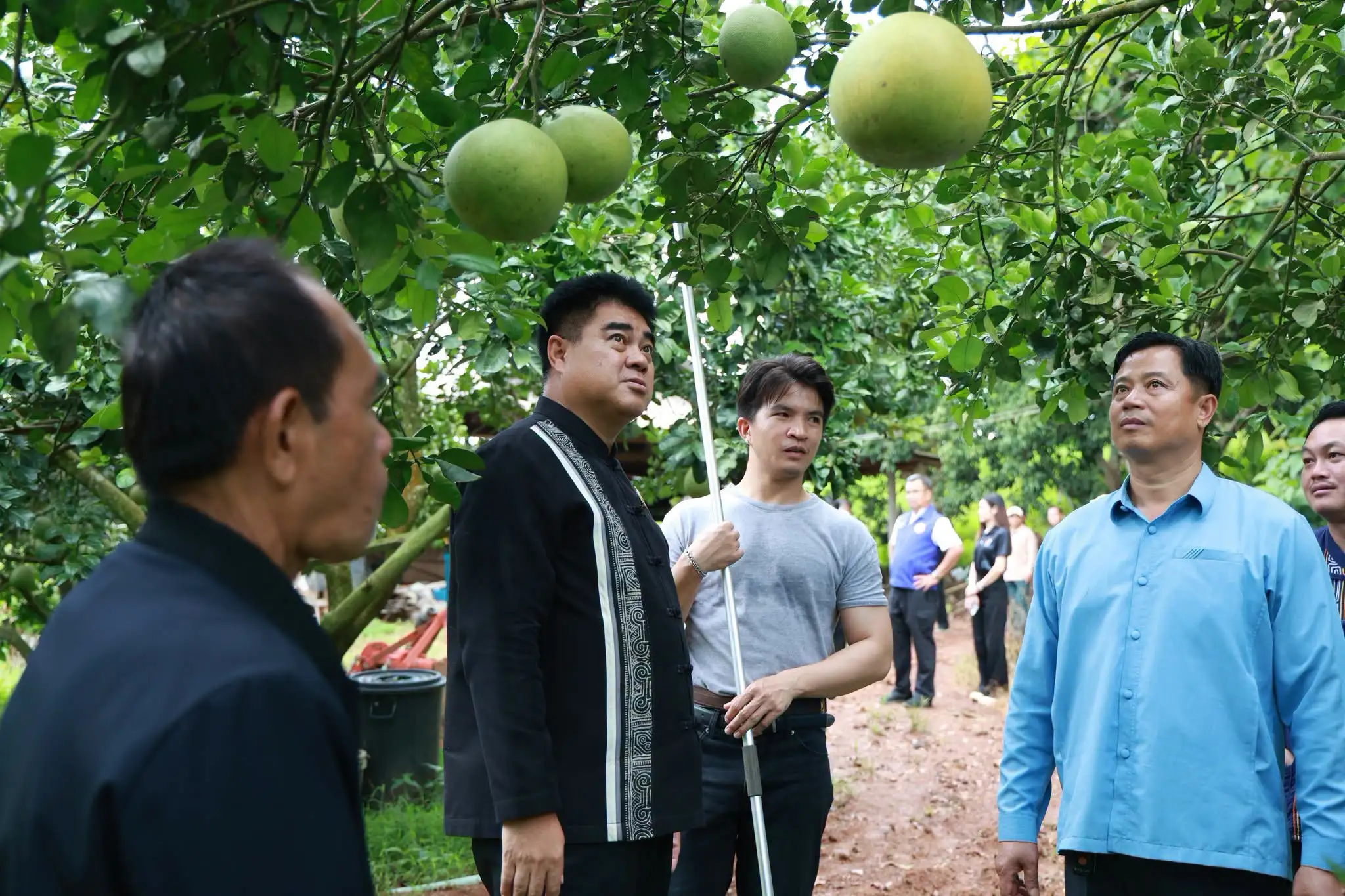
Chiang Rai Governor Inspects Wiang Kaen Pomelo to Boost Global Exports
Chiang Rai Governor Chucheep Phongchai visited Wiang Kaen district to support the region's Wiang Kaen Pomelo, now the province's 9th Geographical Indication (GI) product. The fruit generates over 400 million baht annually and is poised for expanded global export.
CHIANG RAI – Governor Chucheep Phongchai recently led a special field visit to the Wiang Kaen district on July 7, 2026, to provide full support for the renowned Wiang Kaen Pomelo. This delicious fruit has now become the 9th Geographical Indication (GI) product of Chiang Rai, generating over 400 million baht annually for the local community and making Chiang Rai the province with the second-highest number of GI products in Thailand. During the visit, the governor was accompanied by key local officials, including Permanent Secretary Supot Saenmee and District Chief Supot Langaweeranan. They toured "The River Craft" orchard, a prominent community business covering over 40 rai in the Muang Yai subdistrict. This farm focuses on growing premium pomelos that meet strict global standards, successfully exporting its harvest to major markets in China and Europe. The community farm is in the final stages of obtaining its official GI logo, a mark intended to control quality and enhance the fruit's retail value. The team also inspected the local packing house, observing the meticulous process of gathering and preparing the fresh fruits for sale. The Wiang Kaen Pomelo was officially registered by the Department of Intellectual Property. Its growing area spans four unique subdistricts: Muang Yai, Lai Ngao, Po, and Tha Kham. This region's natural basin, filled with rich river soil, contributes to the pomelo's sweet, mellow, and very juicy taste. Three distinct varieties—Khao Yai, Thong Dee, and Cellar—have received the respected GI status. Currently, 1,383 farming households are engaged in cultivation within this region, producing an average of 25,130 tons of fruit annually, significantly supporting the entire local rural economy. Chiang Rai province has set clear goals to establish a robust quality control and traceability system. This digital system aims to build trust with global buyers by providing clear information about the fruit's origin. Local government officials also plan to expand marketing channels for farmers, ensuring wealth is spread evenly in rural areas and promoting sustainable farming practices. With nine GI products now recognized, the province is strategically looking ahead to promote Pang Khon Coffee as its 10th GI product, aiming for continued economic growth and a strong presence on the world stage by supporting local farmers. Source: Chiang Rai Times
多角的分析
ウィアンケン・ポメロのGI認定は、地域経済の活性化に大きく貢献している。年間4億バーツ超の収益は、地方の農家所得の向上と雇用創ちを生み出す。国際市場への輸出拡大は、さらなる経済効果をもたらす可能性があり、タイの農産物輸出戦略において重要な位置を占める。品質管理とトレーサビリティの強化は、国際競争力を高める上で不可欠な要素である。
ウィアンケン・ポメロの成功は、タイの農業セクターへの投資機会を示唆している。GI認定された農産物は、ブランド価値が高く、安定した需要が見込めるため、投資家にとって魅力的な選択肢となり得る。特に、輸出市場の開拓が進むことで、関連インフラや物流への投資も期待される。ただし、気候変動や国際市場の変動リスクには留意が必要である。
ウィアンケン・ポメロのGI認定は、地域住民の誇りとなり、伝統的な農業文化の継承にも寄与している。1,383世帯もの農家が関わることで、地域社会の結束が強まり、若者の農業への関心を高める可能性もある。一方で、輸出拡大に伴う生産量の増加や品質維持のプレッシャーは、農家への負担となる可能性も否定できない。また、デジタル化されたトレーサビリティシステムは、消費者との直接的な繋がりを強化する一方で、情報格差が生じないような配慮も求められる。
チェンライ県知事のウィアンケン・ポメロへの支援は、地方の農産物が国際的な評価を得るための重要な一歩である。GI認定は、地域特有の農産物の価値を高め、農家経済の安定に直結する。これは、地方の生活水準向上に貢献し、都市部への人口流出を抑制する効果も期待できる。また、品質管理とトレーサビリティの強化は、消費者が安心して購入できる環境を整備し、タイ産農産物全体の信頼性を高めることに繋がる。
背景・歴史的文脈
タイにおける地理的表示(GI)制度は、農産物の品質と地域性を保護し、地域経済の活性化を図る目的で導入されている。チェンライ県は、豊かな自然環境と多様な農産物を有しており、これまでもコーヒーや茶などがGI認定を受けてきた。ウィアンケン・ポメロの9番目のGI認定は、同県が地域特産品のブランド化と国際競争力強化に注力してきた戦略の成果と言える。特に、近年はデジタル技術を活用したトレーサビリティシステムの構築が進められており、これはグローバル市場における信頼性向上に不可欠な要素となっている。
原文ソース
Chiang Rai Times