General articles are free for 24 hours after publish.
Modern Boarding Schools Open in Vietnam's Border Areas, Fostering Hopes for Educational Equity
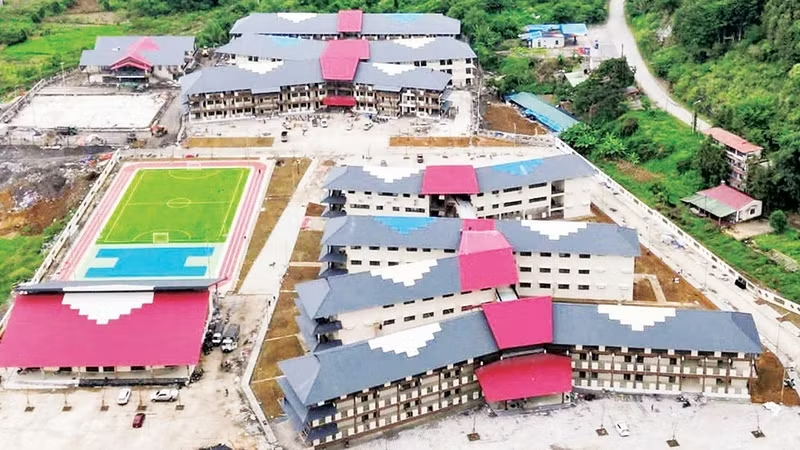
Vietnam has seen a wave of new, modern boarding schools offering integrated primary and secondary education opening in its border regions starting with the 2026-2027 academic year. This development is expected to significantly improve the learning environment for children in areas previously facing limited access to educational resources.
The opening ceremony for the 2026-2027 academic year was particularly special as boarding schools integrating primary and secondary education were successively put into operation in border communes across Vietnam, boasting modern and spacious facilities. The construction of these schools is part of the Vietnamese government's efforts to equalize educational opportunities and promote regional development. Access to quality education has long been a challenge in border areas, which are often geographically isolated and lag in infrastructure development. The newly opened boarding schools, equipped with the latest facilities and staffed by qualified teachers, aim to provide children in these regions with educational opportunities comparable to their urban counterparts. This is expected to help bridge the educational gap between regions. For instance, Dien Bien province has proposed the construction of additional boarding schools in disadvantaged communes, with nine schools already completed and progressing towards their operational launch. These schools will serve not only as educational hubs for the future generation but also play a role in fostering community cohesion in areas that form the forefront of national defense. Under Vietnam's one-party system, addressing educational disparities is considered a crucial policy objective for maintaining social stability and improving citizens' living standards. For Vietnam, which continues its economic growth, nurturing talent is key to enhancing national competitiveness. Investment in education, especially in rural and border regions, is also anticipated to revitalize local economies. Furthermore, strengthening education and stability in border areas, where relations with China are complex, is thought to contribute to community solidarity and national security. Information Source: Nhan Dan
Original source
Nhan Dan