General articles are free for 24 hours after publish.
ASEAN Journalists Witness China's Greater Bay Area Development
Journalists from Southeast Asia, including Laos, participated in an ASEAN Media Tour of China's Greater Bay Area, visiting Guangzhou and Shenzhen to observe innovation, urban planning, and infrastructure development. The tour serves as a reference point for Laos' own development.
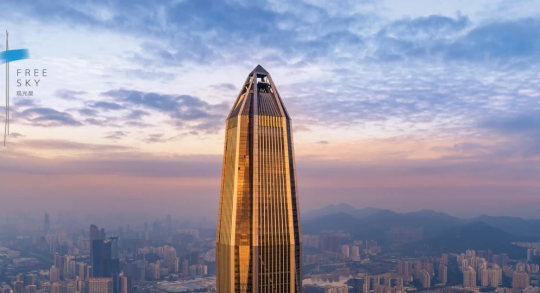
The experience was among the highlights of the ASEAN Media China Tour through Guangdong, organised to commemorate the fifth anniversary of the China–ASEAN Comprehensive Strategic Partnership. The journey brought journalists from Southeast Asia closer to one of China’s most dynamic economic regions, offering a firsthand glimpse of how innovation, connectivity and urban planning are transforming the Guangdong-Hong Kong-Macao Greater Bay Area. From Guangzhou to Qingyuan and Shenzhen, the delegation travelled through cities that each presented a different face of modern China. Yet nowhere was the scale of the region’s transformation more striking than from high above Shenzhen. The adventure began with a ride that seemed almost too quick to comprehend. Inside a high-speed sightseeing elevator, journalists were carried rapidly upwards towards the 116-floor Sky Observation Deck of one of Shenzhen’s iconic towers. As the elevator climbed, the city below gradually shrank, while the skyline seemed to stretch endlessly towards the horizon. Then came the moment the doors opened. Beyond the glass, Shenzhen unfolded like a giant living map. The Futian skyscraper cluster rose in a dense forest of shimmering towers, reflecting the city’s role as a major centre for finance, technology and international business. Far below, Shennan Boulevard cut through the urban landscape like a powerful artery, symbolising the speed and energy of Shenzhen’s economic development. Further into the distance, the Shenzhen Bay coastline provided a striking contrast to the dense urban landscape. Skyscrapers, roads, parks and waterways came together in a single panoramic view, illustrating the delicate balance between urban expansion and the natural environment. For journalists accustomed to reporting on development across Southeast Asia, the view offered more than a spectacular photo opportunity. It provided a rare perspective on the sheer scale of metropolitan planning and infrastructure required to support a city of Shenzhen’s ambition. But the most thrilling moment was still to come. The delegation stepped onto a Guinness World Records-certified cantilevered glass observation platform, where the ground appeared to disappear beneath their feet. Standing on transparent glass high above the streets, journalists could look directly down at the city below. The experience was both exhilarating and slightly nerve-racking, as the transparent platform created the sensation of floating above Shenzhen. For a few moments, the normally fast-paced work of journalism gave way to simple wonder. Cameras came out, photographs were taken and members of the delegation paused to absorb the extraordinary view. Yet beneath the excitement was a deeper message: the observation platform itself reflected the confidence, engineering capability and technological imagination that have become closely associated with Shenzhen’s transformation. Where culture meets the city If Shenzhen offered a glimpse of the future from the sky, Guangzhou presented a different perspective — one where modern urban development meets history, culture and public life. A highlight was a visit to the iconic Haixin Bridge, which stretches across the Pearl River and connects important urban spaces while providing pedestrians with sweeping views of Guangzhou. Walking across the bridge, journalists could observe the city from a more human scale. Instead of viewing the metropolis from hundreds of metres above, they experienced its riverfront, public spaces and architectural landmarks at street level. The contrast between the two experiences was striking. Shenzhen demonstrated the vertical ambition of a modern technological metropolis, while Guangzhou showed how bridges, rivers, public spaces and cultural attractions can become part of a city's everyday life. Together, they offered two complementary visions of urban development. The journey through Guangzhou, Qingyuan and Shenzhen was therefore about much more than sightseeing. For the ASEAN journalists, it was an opportunity to observe how cities within the Greater Bay Area are strengthening connections between people, businesses, technology, transport and public spaces. The tour also offered a valuable reference point for Southeast Asian countries facing their own challenges of rapid urbanisation. As cities across ASEAN expand, questions of connectivity, sustainable development, infrastructure and liveability are becoming increasingly important. Seeing these developments firsthand allowed the journalists to look beyond statistics and official descriptions. They could see, walk through and experience the infrastructure themselves — from towering observation decks to river crossings and modern urban districts. High above Shenzhen, the Greater Bay Area appeared almost limitless. From the ground in Guangzhou, its development could be felt through the movement of people and the connection between the city and its river. Together, these experiences painted a picture of a region constantly reinventing itself. For the ASEAN journalists, the journey was not simply a trip across three Chinese cities. It was a journey into the ideas shaping the cities of tomorrow — where technology meets architecture, infrastructure meets connectivity, and rapid economic development seeks to coexist with culture and public life. And perhaps that is what made the experience memorable: sometimes, to understand how far a city has come, you simply need to rise above it and see the bigger picture. Special thanks go to the Chinese Mission to ASEAN and Xinhua News Agency for organising the programme and providing ASEAN journalists with the opportunity to experience Guangdong and the Greater Bay Area firsthand. Information source: KPL Laos News
Original source
KPL Laos News