Heavy Taxes and Restrictions Cripple Arakan-Bangladesh Border Trade
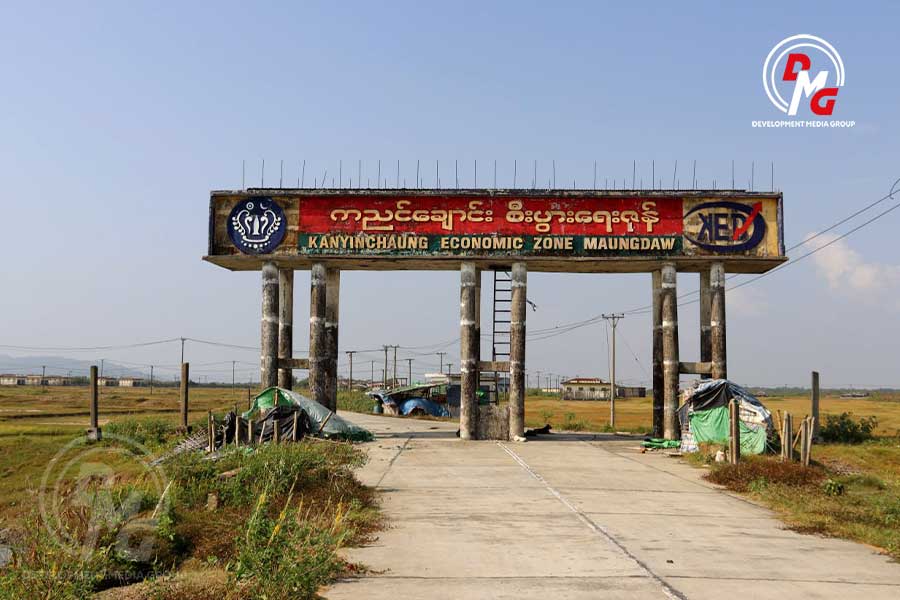
Steep import duties imposed by Bangladesh and tight administrative controls have crippled cross-border trade with Myanmar’s Arakan (Rakhine) State, leaving local merchants struggling despite a worsening regional economic crisis. Cross-border trade between Teknaf in Bangladesh and the Kanyin Chaung Jetty in Maungdaw resumed in May, following disruptions caused by intense fighting between the Myanmar military and the Arakan Army (AA). However, ordinary merchants say high tariffs and restrictive policies prevent them from operating through formal channels. "When buying goods across the border, taxes can amount to half the purchase price—essentially a 50 percent import duty," a local merchant in Maungdaw told Development Media Group (DMG). "On top of that, independent merchants are barred from trading directly through official channels." Instead, official trading privileges are largely restricted to merchant associations overseen by the United League of Arakan (ULA), the political wing of the Arakan Army, which controls vast swaths of Arakan State. While Bangladesh formally recognizes trade under bilateral agreements signed with the Myanmar government, it operates with the ULA on an informal basis to keep essential goods moving. The region has grown increasingly dependent on imports from neighboring India and Bangladesh after the ruling military junta cut off transport routes connecting Arakan State to mainland Myanmar. Current imports through official ports are largely restricted to basic food staples like potatoes and onions, while smaller merchants rely on informal routes through border points such as Taungpyo, Nanthataung, and Bandoola to bring in clothing, cosmetics, and packaged food. "Is border trade happening? Yes and no," said a Maungdaw resident. "There is a small volume of goods coming in, but rather than standardized formal trade, people are doing business through whatever means they can find." Despite ongoing security risks, local merchants note that increased patrols by the Arakan Army have somewhat reduced threats from militant groups like the Arakan Rohingya Salvation Army (ARSA) along informal trade routes. In the 2022–2023 fiscal year—before the AA's offensive that captured multiple townships across Arakan State—annual border trade between Bangladesh and Arakan State totaled nearly $260 million. Local business owners are now calling on authorities on both sides of the border to establish a broader, more inclusive trade framework that accommodates independent traders.
This article requires PRO
This article is outside the free access window or is a special report. PRO unlocks it and the full archive.
Related articles
- Mass layoffs hit Yangon garment sector as foreign brands pull out and economic crisis deepens
Over 1,000 employees at the Sunrise (Myanmar) Fashion Co. Ltd garment factory in Yangon’s Shwepyitha Township Thardukan Industrial Zone 4 are among the estimated 60,000 garment factory workers to be laid off this month.
- Contributing to productivity of the State through agriculture sector
AS the majority of people living in rural areas depend on agriculture and livestock farming for their livelihoods, the government is implementing poverty reduction and the improve- ment of farmers’ livelihoods as one of
- Customs Dept to auction seized electrical appliances in Taunggyi
THE Taunggyi Township Customs Department will auction electrical appli- ances seized as public property through a com- petitive bidding system. Myanmar citizens are invited to participate in the auction, which will be he
- What has disappeared from a bowl of Mohinga?
Article by – Dr. Moe Thit Nay (Ayeyarwaddy Times, October 4) In 1996, Daw Aung San Suu Kyi wrote in her essay “Breakfast Blues” that Mohinga, once abundant with fried items, fish, eggs, and coriander, was gradually losing its ingredients and nutritional value due to rising prices. Now, 30 years later, in a time when military leaders are doing as they please with the country, we are again faced with the need to ask the same question. What has disappeared from a bowl of Mohinga? Mohinga is a representative dish of Myanmar. It is a food deeply ingrained in the daily lives of Myanmar people, evoking morning memories, the Mohinga stall on the street corner, hot fried items, and fragrant fish broth. However, if you look closely at a bowl of Mohinga, you can see the nutritional status, household income, commodity prices, food availability, and the country's economic situation reflected in that bowl. The question “What has disappeared from a bowl of Mohinga?