Cambodian Foreign Minister: Cambodia-Thailand Border Dispute Directly Involves ASEAN
Diplomacy
2026年7月25日
5
Kampuchea Thmey Local
Relations
🇰🇭Cambodia🇹🇭Thailand🇨🇳China🌐United Nations / ASEAN

General articles are free for 24 hours after publish.

Cambodian Foreign Minister: Cambodia-Thailand Border Dispute Directly Involves ASEAN

Share
AI Summary

Cambodian Foreign Minister Prak Sokhonn stated at the ASEAN Regional Forum (ARF) that the border dispute between Cambodia and Thailand is not merely a bilateral issue but directly involves ASEAN and the international community due to its impact on fundamental principles of the ASEAN Charter and the UN Charter. He highlighted ongoing concerns regarding the situation, noting that over 20,000 Cambodian citizens remain unable to return to their homes safely.

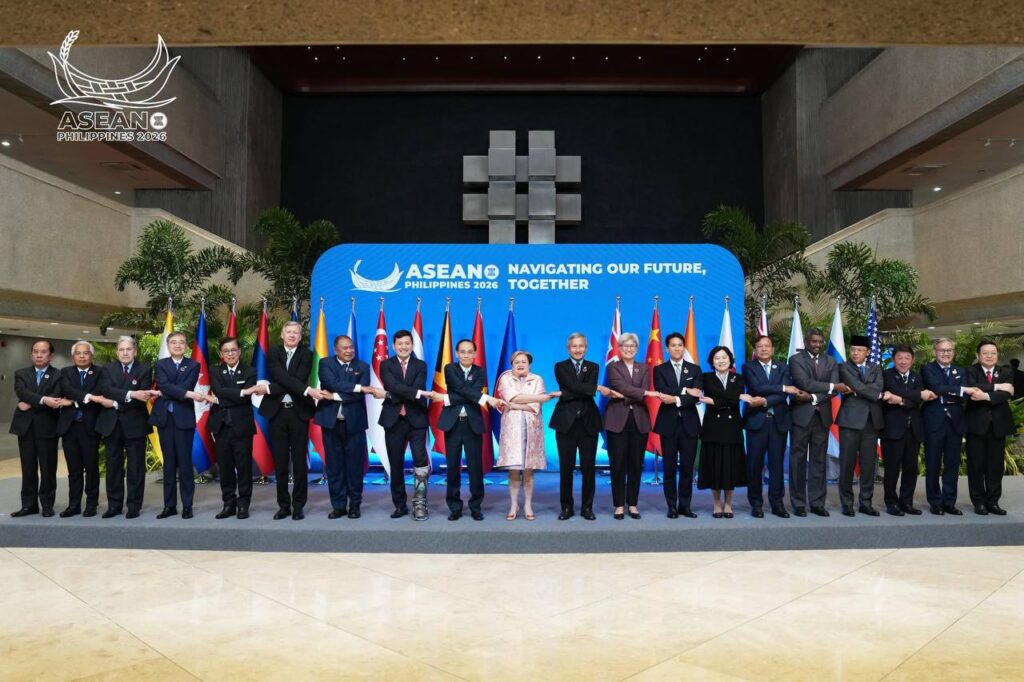
Cambodian Deputy Prime Minister and Minister of Foreign Affairs and International Cooperation, Prak Sokhonn, stated at the ASEAN Regional Forum (ARF) that the border dispute between Cambodia and Thailand is not merely a bilateral issue but directly involves ASEAN and the international community as a whole, as it affects the fundamental principles enshrined in the ASEAN Charter and the UN Charter. This statement was made during his participation in the 27th ASEAN Plus Three Foreign Ministers' Meeting, the 33rd ASEAN Regional Forum (ARF), the 16th East Asia Summit Foreign Ministers' Meeting, and related meetings held on July 23, 2026, in Manila, Philippines. According to a press release from the Ministry of Foreign Affairs and International Cooperation, the Cambodian Foreign Minister reiterated that the core principles of ARF, based on open dialogue, mutual trust-building, and preventive diplomacy, are more important than ever in helping member states resolve differences peacefully, maintain communication channels, and prevent tensions from escalating into conflicts. Regarding the Cambodia-Thailand border issue, the Cambodian Foreign Minister expressed gratitude for the attention, concern, support, and contributions of ARF member states towards the peaceful resolution of the conflict in accordance with international law. He emphasized that the border dispute between Cambodia and Thailand is not just a problem between the two countries but directly involves ASEAN and the entire international community because it affects fundamental principles enshrined in the ASEAN Charter and the UN Charter, including respect for sovereignty and territorial integrity, non-threat or use of force, and peaceful settlement of disputes. Concerning the situation along the border, he pointed out that despite the ceasefire being in effect, the practical situation remains worrying. Blockade measures around villages still under occupation continue to prevent over 20,000 Cambodian citizens from returning to their homes safely, with dignity, and without hindrance, in line with the agreement between the two parties. In this regard, he called for the full and effective implementation of the Joint Declaration of December 27, 2025. Concurrently, he stressed that despite facing these difficulties, Cambodia remains committed to peaceful means of dispute resolution, both for its maritime and land borders. In this regard, Cambodia has initiated the use of the compulsory conciliation mechanism under the UN Convention on the Law of the Sea (UNCLOS) in response to Thailand's unilateral abrogation of the Cambodia-Thailand Memorandum of Understanding (MOU 2001), which was the sole bilateral framework for resolving border issues between the two countries. Currently, both countries are participating in this conciliation process, and Cambodia hopes that the process will be conducted with integrity and lead to a mutually acceptable solution based on international law, similar to the positive outcome in the case between Timor-Leste and Australia. He further clarified that this approach guides Cambodia's approach to the land border issue, which dates back to the French colonial period, along with treaties and maps. Minister Prak Sokhonn emphasized that land and maritime border issues are two separate matters falling under different legal frameworks, thus there is no legal or practical reason to allow one issue to hinder the progress of the resolution of the other. Nevertheless, the Cambodian Foreign Minister reiterated that Cambodia's goal remains a just, peaceful, and lasting solution that will allow both peoples to live side-by-side in peace, stability, and shared prosperity. Source: Kampuchea Thmey Local

0

Original source

Kampuchea Thmey Local

原文を読む