Myanmar Military and Some Rebel Groups Ready For Talks, Thai FM Says
Politics
2026年7月16日
5
The Diplomat Indonesia
Relations
🇮🇩Indonesia🇲🇲Myanmar🇹🇭Thailand🌐United Nations / ASEAN

Myanmar Military and Some Rebel Groups Ready For Talks, Thai FM Says

AI サマリー

Thailand's Foreign Minister revealed that Myanmar's military and some opposition groups are ready for dialogue. An ASEAN envoy met with both sides in Thailand to explore a path to peace, but the National Unity Government (NUG) expressed reservations and was not invited.

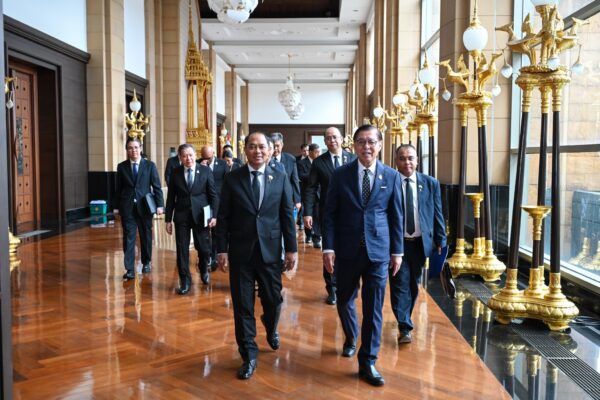
Read The Diplomat, Know The Asia-Pacific ASEAN special envoy Ma. Theresa Lazaro held separate talks with military-backed negotiators and six rebel groups in Pattaya earlier this week. Thai Foreign Minister Sihasak Phuangketkaew (right) and Myanmar Foreign Minister Tin Maung Swe hold talks in Bangkok, Thailand, Jul. 14, 2026. Myanmar’s military and some of its opponents are ready to engage in dialogue, recognizing that there is no military solution to the country’s current conflict, Thailand’s foreign minister said yesterday. Sihasak Phuangketkaew’s comments came after he and Philippine Foreign Secretary Ma. Theresa Lazaro, ASEAN’s current special envoy on Myanmar, held talks with military negotiators and a number of armed rebel groups in Thailand on Monday. “We hope that eventually we could ​find some common ground where we can begin some ​talks,” Sihasak ⁠said yesterday, according to Reuters. “At the moment it is going to be probably talks for talks: How to conduct the talks, where to conduct the talks.” The groups were open to dialogue but had yet to reach a common position, Sihasak said, but added that Thailand is ready to serve as a facilitator and provide a venue for future peace talks. The discussion in Pattaya involved separate talks with the military-backed National Solidarity and Peacemaking Negotiation Committee, and six armed ethnic groups, including the Karen National ‌Union ⁠and the Karenni National Progressive Party, Reuters reported. The meetings were held “to discuss the way forward on an inclusive national political dialogue”, the Philippine Department of Foreign Affairs said in a statement. “All sides expressed openness to the dialogue process and emphasized the importance of constructive dialogue and ensuring careful preparation of all parties involved,” ‌it added. Lazaro then held a separate online meeting with the shadow National Unity Government (NUG) yesterday, The Irrawaddy reported. The NUG said that it was not invited to the Pattaya meeting and expressed strong reservations about the gathering. The talks in Pattaya came a day after ASEAN foreign ministers held an “informal” meeting in Bangkok with Myanmar Foreign Minister Tin Maung Swe, the first to take place since the 2021 coup, which plunged the country into conflict and political chaos. Since late 2021, ASEAN has barred Myanmar from its summits over the military’s refusal to implement the Five-Point Consensus plan for managing the conflict, which calls for an immediate cessation of violence, inclusive dialogue involving “all parties” to the country’s conflict, and unimpeded access for humanitarian aid. Sihasak said after the meeting that ASEAN was embarking on a path of “calibrated engagement” with Naypyidaw, where a new military-backed government took office in April, but that the 11-nation bloc continued to adhere to the Five-Point Consensus. The meeting with Tin Maung Swe was controversial, with civil society groups warning that the turn toward engagement would only embolden the military-appointed government in Naypyidaw and squander ASEAN’s leverage. “The central challenge facing ASEAN today is not the absence of diplomatic engagement,” the NUG said in a statement on July 12. “It is the military junta’s continued refusal to implement the commitments it accepted under the Five-Point Consensus.” Indeed, the new military-backed regime has begun to push back against its exclusion from ASEAN’s summits. The Union Parliament last week went so far as to pass a motion rejecting the Consensus as a form of interference by ASEAN that was inconsistent with the country’s “political reality.” Even if Thailand-brokered peace talks make progress – and that is far from certain – the chance of a lasting resolution to Myanmar’s multi-sided conflict is remote. The six rebel groups that took part in the Pattaya talks represent only a fraction of the groups that oppose military rule. As such, talks with these groups would be very much consistent with the military’s old approach of managing the country’s conflicts by talking to some armed groups, while fighting with others – an approach that has allowed it to exacerbate the divergent goals within its opponents’ camp and prevent armed groups from converging behind a set of shared goals. Talks would also allow the military to maintain its stranglehold over political and economic life in the areas under its control, the very thing that many in the post-coup resistance have pledged to undo. While any end to the fighting will be welcome for civilian populations who have suffered so much over the past five years, the most likely result is that these conflicts will be frozen, rather than properly resolved. Subscribe today and join thousands of diplomats, analysts, policy professionals and business readers who rely on The Diplomat for expert Asia-Pacific coverage. Get unlimited access to in-depth analysis you won't find anywhere else, from South China Sea tensions to ASEAN diplomacy to India-Pakistan relations. More than 5,000 articles a year. Already have an account? Log in. Sebastian Strangio is Southeast Asia editor at The Diplomat. Get briefed on the story of the week, and developing stories to watch across the Asia-Pacific.

多角的分析

経済的影響

ミャンマーの紛争が長期化する中、タイが仲介する和平交渉の動きは、地域経済への影響を考慮すると重要である。紛争による経済活動の停滞は、周辺国、特にタイのサプライチェーンや投資環境にも影響を与えうる。交渉が進展すれば、経済制裁の緩和や人道支援の円滑化につながり、経済復興の糸口となる可能性がある。しかし、交渉が不調に終われば、経済的な不確実性はさらに高まり、投資意欲を減退させるだろう。特に、ASEANの「5点合意」が実質的に機能していない現状は、地域経済の安定化に向けたASEANのリーダーシップに疑問符を投げかけている。

投資家心理

ミャンマー情勢の不確実性は、投資家にとって依然として大きなリスク要因である。軍事政権と一部反体制派との対話の試みは、限定的ながらも安定化への兆しと見なされる可能性がある。しかし、国民統一政府(NUG)が参加せず、軍事政権がASEANの「5点合意」を拒否している現状では、実質的な平和や政治的解決への道筋は依然として不透明である。投資家は、対話の進展、ASEANの対応、そしてミャンマー国内の治安状況を注意深く見守る必要がある。特に、人道支援へのアクセス改善や、紛争当事者間の包括的な合意形成が進まなければ、大規模な投資は困難だろう。タイが仲介役を務めることは、地域的な関与を示すものではあるが、根本的な解決には至らない可能性が高い。

社会的影響

ミャンマー国内の文民人口は、長引く紛争により甚大な苦難を強いられている。タイが仲介する和平交渉は、一部の反体制グループとの対話に留まり、国民全体を巻き込む包括的な解決には至らない可能性が高い。これは、紛争の凍結を招き、根本的な問題解決を遅らせる懸念がある。また、国民統一政府(NUG)が排除されていることは、民主化を求める市民の声が反映されない可能性を示唆しており、社会的な分断をさらに深める恐れがある。タイは仲介役として、より包摂的な対話プロセスを促進し、ミャンマー国民の平和と安全を確保するための努力を続けることが求められる。

市民の声

ミャンマー国民にとって、長引く紛争は日々の生活に深刻な影響を与えている。食料不足、医療へのアクセス制限、そして安全の脅威は、多くの人々を苦しめている。タイが仲介する対話は、一部の武装グループとのものであり、国民全体の生活改善に直結する保証はない。国民統一政府(NUG)が排除されていることは、彼らが求める民主的な未来への希望をさらに遠ざける可能性がある。市民は、紛争の終結と平和な生活を取り戻すことを切望しているが、現状の交渉プロセスでは、その実現は依然として困難であると言える。

背景・歴史的文脈

ミャンマーでは、2021年2月の軍事クーデター以降、軍事政権と民主派勢力、そして長年続く少数民族武装勢力との間で複雑な紛争が続いている。ASEANは、紛争解決に向けた「5点合意」を提唱したが、軍事政権の非協力的な姿勢により、その履行は進んでいない。タイは、ASEAN加盟国として、また隣国として、ミャンマーの和平プロセスにおいて重要な役割を担おうとしている。しかし、過去にも軍事政権は一部の武装勢力との対話を利用して、他の勢力を分断したり、国際社会からの圧力をかわしたりしてきた経緯があり、今回のタイでの会談も、その文脈で分析する必要がある。

原文ソース

The Diplomat Indonesia

原文を読む