General articles are free for 24 hours after publish.
Vietnam Performs First Living-Donor Liver Transplant
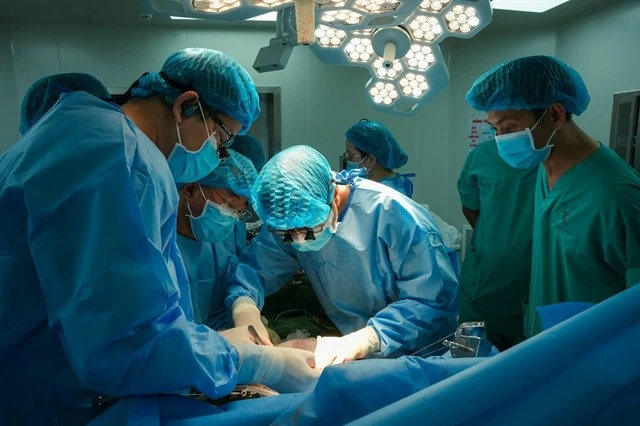
Ho Chi Minh City has successfully performed Vietnam's first living-donor liver transplant, a landmark achievement underscoring the nation's rapidly advancing organ transplantation expertise. This milestone signifies significant progress in the country's medical capabilities and highlights the importance of technological innovation and international collaboration in healthcare.
Ho Chi Minh City has successfully performed Vietnam's first living-donor liver transplant, a landmark achievement underscoring the nation's rapidly advancing organ transplantation expertise. This milestone signifies significant progress in the country's medical capabilities and highlights the importance of technological innovation and international collaboration in healthcare. The surgery was performed by a multidisciplinary team of experts, including specialists in transplantation, andrology, microsurgery, anaesthesia, immunology, and pathology. After months of developing treatment protocols, studying international experience, and assembling the team, the operation was completed in just 65 minutes, marking the shortest operation time among all heart transplants carried out at the Ho Chi Minh City University of Medicine and Pharmacy. This success demonstrates Vietnam's remarkable progress in the medical field, particularly in organ transplantation, in recent years. The healthcare sector has undergone significant transformation to realize the Politburo’s Resolution No. 72-NQ/TW on breakthrough solutions to improve healthcare delivery and public health. Vietnam's medical technology is also gaining international attention in robotic-assisted surgery. While costing hundreds of thousands of dollars in the US and Singapore, robotic-assisted surgeries in Vietnam start from just 3,000 USD. This has led a growing number of international patients to travel to Vietnam for procedures, including robotic cancer surgery for prostate, gynecological, and gastrointestinal cancers. This indicates Vietnam's ability to offer advanced medical services at more affordable prices. Furthermore, Vietnam is experiencing growth in medical tourism. Overseas Vietnamese and visitors from countries like South Korea, Japan, Australia, and several European nations are seeking services such as cosmetic dentistry, assisted reproduction, aesthetic medicine, general health check-ups, and other advanced medical specialties. Vietnam is also focusing on the digitalization and efficiency of its healthcare system. From 2027, a national pre-hospital emergency management platform will be operational, connecting data with the 113 (police), 114 (fire), and 115 (ambulance) emergency call systems. This aims to facilitate rapid emergency dispatch and improve public access to emergency services, showcasing the state-led efficiency in infrastructure and service delivery within Vietnam's one-party system. In terms of infectious disease control, Vietnam is also engaged in international cooperation. Recently, a Vietnam-China cross-border training and exchange centre for infectious disease control was inaugurated, along with a Guangxi facility dedicated to disease surveillance and prevention training. This reflects a practical aspect of Vietnam's foreign relations, managing public health risks through cooperation with neighboring countries. The development of Vietnam's healthcare sector is expected to significantly contribute to the improvement of public health and quality of life for its citizens. However, challenges such as disparities in program implementation across different localities remain. Continued efforts to overcome these challenges are crucial for the further advancement of Vietnam's healthcare system as a whole. Information Source: VietnamPlus English
Original source
VietnamPlus English