General articles are free for 24 hours after publish.
Thailand's AI Strategy: Building for Economy and Public Services
Thailand is advancing its National AI Strategy and Action Plan (2022-2027) to integrate AI into economic growth and public services. The initiative focuses on data infrastructure, talent development, and ethical use frameworks.
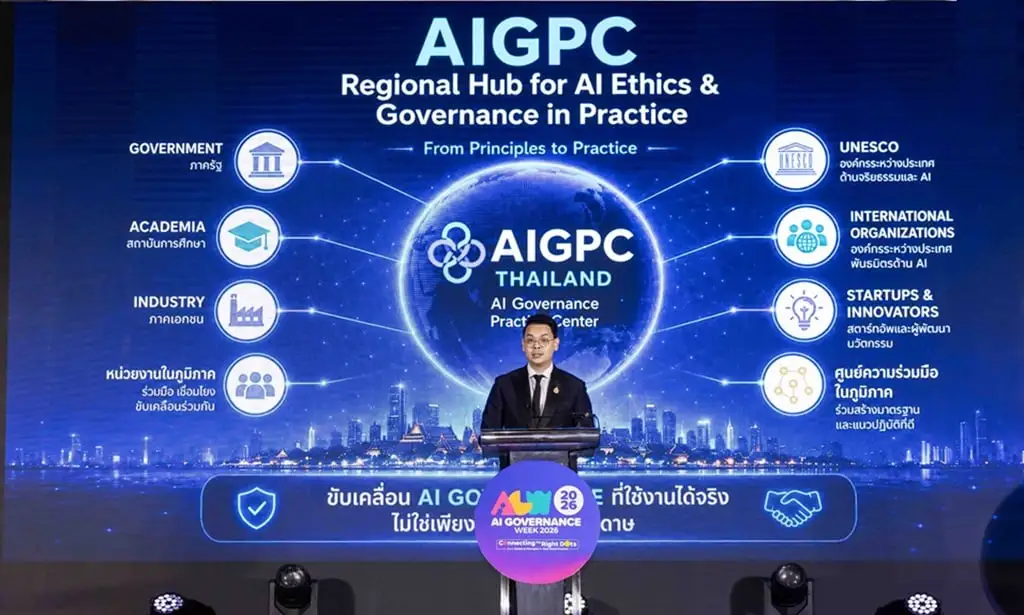
Thailand is actively building its artificial intelligence (AI) capabilities to integrate the technology into its economy and public services. This effort extends beyond a single AI law or project, encompassing a national strategy, data and cloud infrastructure development, Thai-language AI models, workforce training, and rules for responsible use. The cornerstone of this initiative is the National AI Strategy and Action Plan 2022-2027, approved by the Cabinet on July 26, 2022. Its vision is to foster an effective AI ecosystem that supports economic growth and enhances quality of life. The plan is structured around five pillars: readiness in governance, ethics, law, and regulation; sustainable AI infrastructure; human capability and education; research and innovation; and AI adoption across public and private sectors. National oversight and coordination are provided by the National AI Committee, ensuring alignment among government agencies. Key ministries leading specific aspects include the Ministry of Higher Education, Science, Research and Innovation (MHESI) for research and education, and the Ministry of Digital Economy and Society (MDES) for digital policy and facilitating AI adoption. Other agencies like the National Science and Technology Development Agency (NSTDA) and the Office of the National Digital Economy and Society Commission contribute with research capacity and digital economy policy support. Key targets set by the plan include developing over 30,000 AI talents, creating at least 100 AI research and development prototypes, and achieving AI innovation adoption by 600 agencies, alongside an ambition for 10% annual growth in digital infrastructure investment. While these are stated goals and not yet achieved results, they underscore the ambition to boost AI-related economic value and improve social outcomes. Beyond computing power, AI development in Thailand emphasizes secure data sharing and the creation of Thai-language AI models that understand local context. The Government Data Center and Cloud Service (GDCC) provides shared cloud infrastructure for public agencies, supported by a Government Data Catalog and a National Big Data Platform. The development of ThaiLLM, a homegrown open-weight Thai-language large language model supported by the Digital Economy Development Fund, aims to better handle local expressions, spelling, and cultural references. These infrastructure and technological advancements are intended to drive AI adoption in critical sectors such as healthcare, tourism, environmental management, agriculture, trade, and economic development. Potential applications include forecasting hospital service demand or estimating visitor flows. However, the successful implementation of these applications hinges on dependable data, clear data ownership, responsible access controls, and rigorous testing with human oversight. Thailand's AI policy agenda aims to transition AI from isolated experiments to practical applications in public services and businesses. Its success will depend on the government's ability to translate national targets into funded programs, skilled teams, and functional services.
Original source
Chiang Rai Times