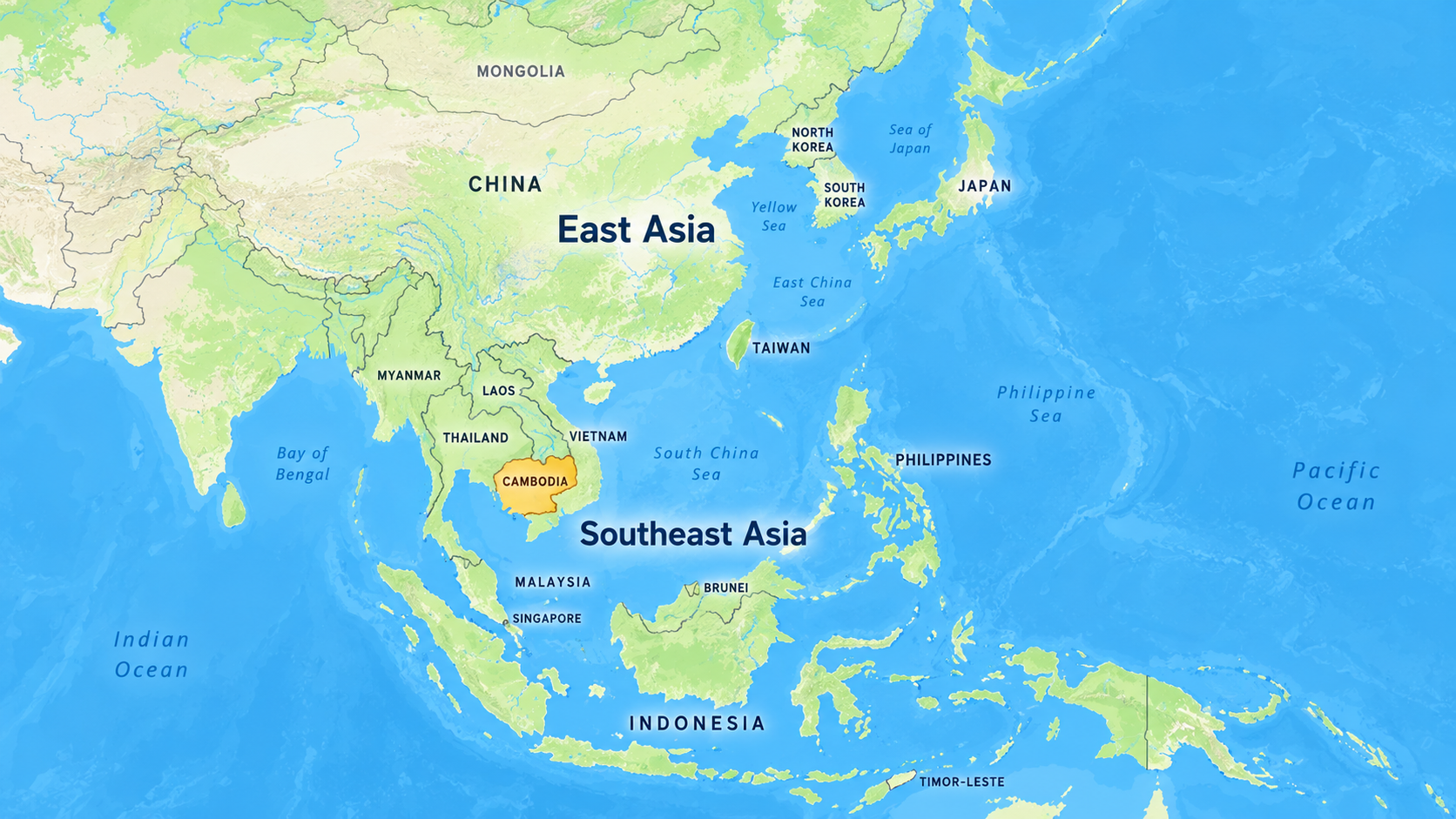
East Asia's Economic Success: Cambodia's Imperative for Inclusive Growth
East Asia's economic integration has boosted employment in Cambodia, but challenges remain in labor conditions, domestic industrial capacity, and wealth distribution. The nation faces pressure to transition from export-led growth to more inclusive development.
Read up to 3 eligible full articles per Japan day (JST) for free
Create a free account to open up to 3 eligible full articles per Japan calendar day (JST). Headlines and summaries remain available across ASEAN 7.
Related articles
- Cambodia to Strengthen Cooperation with Bendigo Kangan Institute (BKI) for Skilled Workforce Development
Cambodian Prime Minister Hun Manet met with Ms. Sharan Burrow, Chair of the Bendigo Kangan Institute (BKI), to discuss strengthening cooperation in skilled labor development. BKI expressed its commitment to supporting Cambodia's economic growth through vocational training.
- Cambodia to Strengthen Cooperation with Bendigo Kangan Institute for Skilled Workforce Development
Cambodian Prime Minister Hun Manet met with Ms. Sharan Burrow, Chair of the Bendigo Kangan Institute (BKI) Board, on October 22nd. BKI pledged to contribute to Cambodia's skilled workforce development and economic diversification. The Prime Minister emphasized human capital investment as a top priority, particularly strengthening Technical and Vocational Education and Training (TVET).
- Cambodia Launches New Strategy to Develop MSMEs, Hailing Them as 'Backbone of National Economy'
Cambodian Prime Minister Hun Manet has launched a national strategy for 2026-2030, designating Micro, Small, and Medium Enterprises (MSMEs) as the 'backbone of the national economy.' The strategy aims to foster MSMEs to create jobs, boost domestic production, and strengthen economic resilience.
- Cambodia to Strengthen 'Backbone of National Economy' Through MSME Development Strategy
Cambodian Prime Minister Hun Manet has launched the "National Strategy for Micro, Small, and Medium Enterprises (MSMEs) Development 2026-2030." MSMEs are deemed the "backbone of the national economy," contributing 63% to GDP and creating over 70% of employment. The government will implement various support measures, including simplified procedures and incentives.