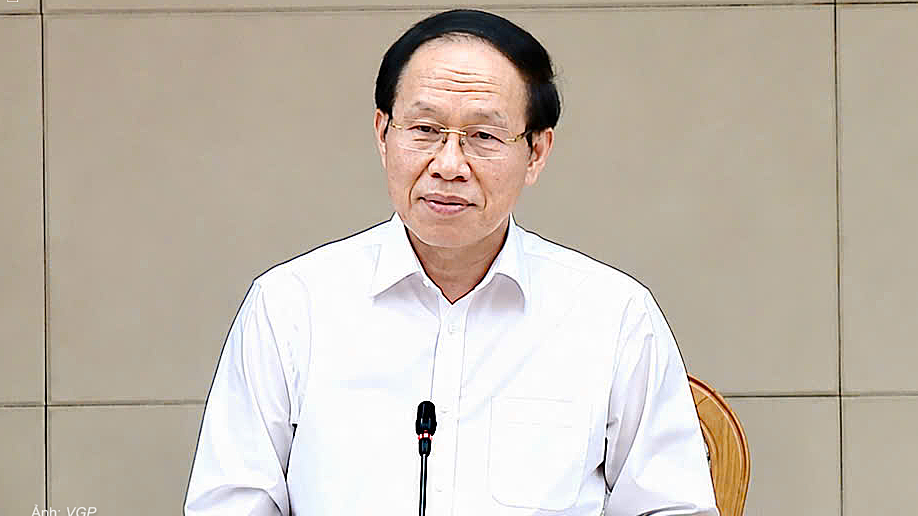
Vietnam to Streamline School Curriculum, Cut Unnecessary Content: Deputy PM
Health
2026年7月9日
5
VnExpress

Vietnam to Streamline School Curriculum, Cut Unnecessary Content: Deputy PM

AI サマリー

Vietnamese Deputy Prime Minister Le Tien Chau has instructed the Ministry of Education and Training to comprehensively review the current high school curriculum, cutting unnecessary content and enhancing practical aspects aligned with technological advancements. This move aims to meet the demands of human resource development in a new era.

Deputy Prime Minister Le Tien Chau has instructed the Ministry of Education and Training to comprehensively review the current high school curriculum, cutting unnecessary content and enhancing practical aspects aligned with technological advancements. This move aims to meet the demands of human resource development in a new era. At a meeting on the afternoon of July 8, Deputy Prime Minister Le Tien Chau requested the Ministry of Education and Training to quickly conduct a comprehensive review of the entire curriculum to meet the requirements of human resource development in the new context. He also suggested that local authorities proactively allocate budgets and mobilize legal resources to support textbooks, school meals, and learning materials for students, where conditions permit. Alongside curriculum simplification, the Deputy Prime Minister directed innovation in the methods of final examinations and assessments for secondary and high school levels, as well as admission plans, with the aim of reducing pressure on students while ensuring fairness and transparency. He stated that overcoming the "achievement disease" (benh thanh tich - the tendency to prioritize academic accolades over genuine learning) must be identified as a key task for the education sector. The Ministry of Education and Training needs to review the evaluation mechanisms for students, teachers, and schools, as well as the processes for examinations, admissions, emulation, and rewards, to reduce score pressure, prevent fraud and negativity, and avoid the recurrence of unfortunate incidents. The current general education curriculum includes 27 subjects and educational activities. At the primary level, there are 11 compulsory subjects and educational activities, including: Mathematics; Vietnamese Language; Morality; Foreign Language 1 (grades 3, 4, 5); Nature and Society (grades 1, 2, 3); History and Geography (grades 4 and 5); Science (grades 4, 5); Information Technology and Technology (grades 3, 4, 5); Physical Education; Arts (Music, Fine Arts); Experiential Activities. Ethnic Minority Languages and Foreign Language 1 (grades 1, 2) are elective subjects. The lower secondary education curriculum comprises 12 compulsory subjects and educational activities: Literature; Mathematics; Foreign Language 1; Civic Education; History and Geography; Natural Science; Technology; Information Technology; Physical Education; Arts (Music, Fine Arts); Experiential Activities and Career Guidance; Local Education Content. Ethnic Minority Languages and Foreign Language 2 are elective subjects. The upper secondary education curriculum includes 8 compulsory subjects and activities: History; Literature; Mathematics; Foreign Language 1; Physical Education; National Defense and Security Education; Experiential Activities and Career Guidance; Local Education Content. Ethnic Minority Languages and Foreign Language 2 are elective subjects. Additionally, students choose four elective subjects from Physics, Chemistry, Biology, Information Technology, Geography, Technology, Economic and Legal Education, Music, and Fine Arts.

多角的分析

経済的影響

ベトナム政府は、教育課程の改革を通じて、将来の経済成長を支える実践的なスキルを持つ人材育成を目指している。特に、技術発展に対応できる人材の育成は、製造業やサービス業といったベトナム経済の主要分野の競争力強化に直結する。カリキュラムの簡素化は、教育コストの削減や、より効率的な学習時間の確保にもつながる可能性があり、長期的な経済生産性の向上に寄与すると考えられる。

投資家心理

教育課程の改革は、将来の労働力の質に影響を与えるため、投資家にとって重要な指標となる。実践的スキルや問題解決能力に重点を置いた教育は、イノベーションを促進し、高度な技術を持つ労働力を供給する可能性を高める。これにより、ベトナムに進出する外国企業、特に製造業やテクノロジー分野の企業にとって、より質の高い人材確保につながり、投資環境の魅力を高める要因となり得る。

社会的影響

現在の教育課程は、生徒に過度の学習負担を強いているとの指摘がある。カリキュラムの簡素化は、生徒の精神的・肉体的負担を軽減し、よりバランスの取れた成長を促す可能性がある。また、学業成績至上主義の克服は、生徒間の過度な競争を緩和し、多様な才能や興味を育む機会を増やすことにつながる。これにより、地域間の教育格差の是正や、家庭における教育費負担の軽減も期待される。

市民の声

教育課程の改革は、ベトナムの国民、特に生徒とその保護者にとって直接的な影響をもたらす。生徒は、より負担の少ない学習環境で、実社会で役立つ知識やスキルを習得できるようになることが期待される。保護者は、子供の学習負担の軽減や、将来の就職に有利なスキル習得への期待を寄せるだろう。一方で、改革が公平かつ透明に進められるか、また、地方の学校や家庭への支援が十分に行われるかが、国民の関心事となる。

背景・歴史的文脈

ベトナムの教育制度は、社会主義体制下で中央集権的に管理されており、教育課程は国家の発展戦略とイデオロギーに基づいて編成されてきた。過去、特に1975年のベトナム統一以降、教育課程は度々見直されてきたが、しばしば詰め込み教育や理論偏重といった批判にさらされてきた。2018年には、2018年教育法が採択され、2022年度から新しい教育課程の導入が段階的に開始されたが、その内容や実施方法については、依然として改善の余地が指摘されていた。今回の副首相の指示は、こうした背景を踏まえ、現代の社会経済的ニーズ、特に技術革新に対応できる人材育成へのシフトを加速させる意図がある。

原文ソース

VnExpress

原文を読む