Hanoi aims for $95,000 income, top global happiness by 2065
Hanoi has unveiled a 100-year master plan aiming to boost per capita income to $95,000 and achieve a $1.92 trillion economy by 2065. The plan focuses on a linked city cluster to manage population growth, extensive underground and airspace development, and environmental improvements.
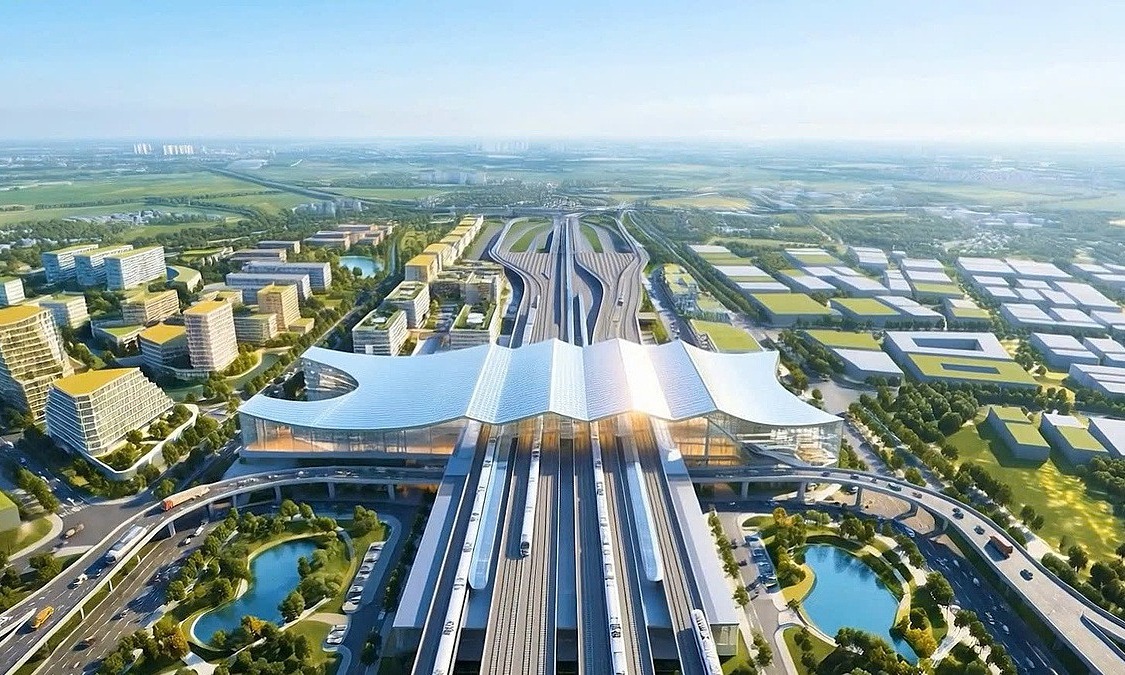
Hanoi on June 29 unveiled the first 100-year master plan in its history, betting that the capital can lift average incomes to US$95,000 and build a $1.92 trillion economy by 2065. Those are first-world numbers for a city whose economy was worth about $63 billion last year, or roughly $7,000 a person. The blueprint, approved in May, drops the idea of Hanoi as a single sprawling city. Instead it envisions a "radial cluster," with Hanoi as the core and neighboring provinces such as Bac Ninh, Hung Yen and Thai Nguyen acting as satellite poles that absorb people and industry. The shift reflects sheer scale. Hanoi's population, about 9 million today, is projected to hit 14 to 15 million by 2035 and 17 to 19 million by 2065, with a hard cap below 20 million after that. The Red River, for decades treated as the city's back edge, becomes its central spine, lined by a planned landscape boulevard. The plan also promises to revive Hanoi's heavily polluted inner-city rivers, including the To Lich, a long-running source of public frustration. At the core of the plan is a metro buildout on a scale Hanoi has never attempted: 18 lines stretching about 979 km, which the city estimates could cost $109.7 billion to $137 billion. After 25 years of effort, Hanoi runs just two lines covering about 21.5 km, roughly 2% of the proposed network. Officials now want 500 km built by 2035. A section of the scale model of Hanoi's 100-year master plan. Photo by Hoang Phong The blueprint also reaches underground, mapping four layers from surface-level shopping and parking down to groundwater reservoirs and defense facilities below 50 meters, with the deepest ground sealed off as a strategic reserve. Above the streets, Hanoi says it will study eVTOL air taxis and drone corridors, reserving airspace over 3,000 meters for aviation, telecommunications and defense. The economic roadmap is staged: GRDP of about $200 billion by 2035, $640 billion by 2045 and $1.92 trillion by 2065, with the digital economy eventually supplying half of output. By the end, the city wants average life expectancy of 80, a Human Development Index of about 0.95 and a place among the world's 10 happiest capitals, all on a "compact-green" model that guards its green belts. City planners describe the 2065 targets as a strategic destination meant to put pressure on present-day policy rather than a precise prediction, acknowledging that a 40-year horizon is clouded by shifts in technology, geopolitics and climate. At the launch, attended by National Assembly Chairman Tran Thanh Man, much of the discussion centered less on the vision than on whether Hanoi can deliver it. The top legislator told delegates a plan has value only when it is carried out effectively. The city says it will finalize detailed zoning for more than 40 sub-areas before the end of 2026. Subsidiary of VnExpress License number: 71/GP-CBC, Ministry of Information andCommunications, September 22, 2021 Editor-in-Chief: Pham Van Hieu Email: [email protected]: 028 7300 9999 - Ext 8556 10th floor, Block A FPT Tower, 10 Pham Van Bach, Cau Giay Ward, Hanoi
多角的分析
ハノイの100年マスタープランは、現在の経済規模から飛躍的な成長を目指す野心的なものだ。2065年までに一人当たり所得を現在の約13倍、経済規模を約30倍に拡大するという目標は、ベトナム経済の高度成長とデジタル経済へのシフトを前提としている。特に、デジタル経済が生産高の半分を占めるという予測は、製造業中心からサービス・技術主導型経済への転換を目指すベトナム全体の国家戦略とも合致する。しかし、この壮大な目標達成には、巨額のインフラ投資(特に地下鉄網)の資金調達、技術革新の推進、そして国際的な経済変動への対応が不可欠となる。過去のベトナムの経済成長は、外国直接投資(FDI)と輸出に大きく依存してきたが、今後は国内経済の多様化と内需拡大がより重要になるだろう。
ハノイの長期計画は、潜在的な投資機会の広がりを示唆している。特に、979kmに及ぶ地下鉄網建設は、建設、資材、エンジニアリング分野に巨額の投資機会をもたらす。また、都市クラスター構想は、バクニン、フンイエン、タイグエンといった周辺地域へのインフラ投資や不動産開発の拡大を意味する。デジタル経済への注力は、テクノロジー関連企業やスタートアップへの投資を促進する可能性がある。しかし、計画の実現には巨額の資金が必要であり、その調達方法(PPP、国際融資、国内貯蓄など)が投資家の関心事となる。また、計画の実行段階での遅延や予期せぬコスト増のリスクも考慮する必要がある。ベトナムの政治的安定性と法制度の透明性も、海外からの直接投資を左右する要因となるだろう。
ハノイの人口増加と都市拡大は、市民生活に大きな影響を与える。1400万~1900万人に達する人口を収容するため、都市クラスター構想は、郊外への居住や通勤の増加を意味する。979kmに及ぶ地下鉄網の建設は、交通渋滞の緩和に期待が持たれる一方、建設期間中の騒音や振動、交通規制といった一時的な不便をもたらす可能性がある。また、長年問題となっている紅河やトーリック川の水質改善は、市民の生活環境の向上に直結する。しかし、計画の恩恵が都市中心部だけでなく、周辺地域や低所得者層にも公平に行き渡るかどうかが問われる。 "世界で最も幸福な首都"という目標は、単なる経済指標だけでなく、生活の質、環境、コミュニティのあり方といった側面も重視されるべきだろう。
ハノイのマスタープランは、市民にとっては希望と不安の両方をもたらす。一人当たり所得が大幅に増加し、生活水準が向上する可能性は魅力的だ。しかし、人口増加による住宅価格の高騰や、都市部への人口集中による混雑の悪化も懸念される。979kmもの地下鉄網建設は、将来的な移動の利便性を大幅に向上させるだろうが、建設期間中の騒音や交通の混乱は、日々の生活に影響を与える。また、水質汚染の改善は、直接的な生活環境の向上につながるため、多くの市民が期待を寄せている。計画の実行が、一部の富裕層だけでなく、一般市民の生活向上にどのように貢献するかが、市民の満足度を左右する鍵となるだろう。
背景・歴史的文脈
ベトナムは、1986年のドイモイ(刷新)政策以降、市場経済化と国際社会への開放を進め、目覚ましい経済成長を遂げてきた。特にハノイは、首都として政治・経済の中心であり、人口増加と都市化が急速に進んでいる。しかし、インフラの老朽化、交通渋滞、環境汚染といった課題も深刻化しており、持続可能な発展のためには抜本的な都市計画が求められていた。今回の100年マスタープランは、こうした課題に対応し、将来のベトナムを牽引する首都としての地位を確立するための、長期的なビジョンを示したものと言える。過去の計画が短期・中期的なものだったのに対し、今回は100年という長期設定により、より大胆な変革を目指している。
原文ソース
VnExpress International