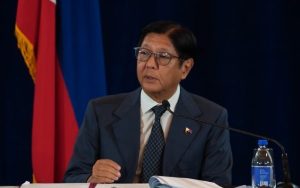
Marcos assures investors of PHL economic resilience in Singapore
President Ferdinand Marcos, Jr. highlighted the Philippines' economic resilience amidst global challenges to business leaders in Singapore. He presented investment promotion strategies including infrastructure projects, deregulation, and free trade agreements, securing commitments in healthcare and digital infrastructure.
PRESIDENT Ferdinand R. Marcos, Jr. told regional business leaders in Singapore that the Philippine economy remains resilient despite global trade and geopolitical challenges, the Palace said on Thursday. Speaking at a roundtable discussion during his working visit hosted by the Milken Institute at the Philippine Embassy in Singapore, Mr. Marcos presented the Philippines as an investment destination backed by sustained eco-nomic growth, a labor force of more than 52 million, and one of the largest consumer markets in the Association of Southeast Asian Nations (ASEAN), according to the Presidential Communications Office (PCO). The meeting, formed part of the President’s working visit aimed at strengthening bilateral ties with Singapore and attracting fresh investment. Mr. Marcos highlighted the administration’s Build Better More infrastructure program, which covers more than 200 projects worth about $170 billion, including the Luzon Economic Corridor. “According to the President, this will serve as the foundation for the expansion of advanced manufacturing, electronics, and critical mineral processing in the country,” the PCO said. “The President also showcased the reforms initiated by the government to encourage more investors,” it added. According to the PCO, these include easing foreign ownership restrictions in public services and retail trade, extending land lease agreements to as long as 99 years and allowing up to 100% foreign ownership in renewable ener-gy projects. The government is aiming to increase the share of renewable energy in the power generation mix to 35% by 2030 and 50% by 2040. Mr. Marcos said qualified investors may receive up to 40 years of tax and non-tax incentives under the country’s revised investment incentive system. He reiterated the government’s goal of concluding and signing at least five new free trade agreements to broaden market access and expand investment opportunities. He said the strategy builds on the Philippines’ existing trade agreements, including the Regional Comprehensive Economic Partnership, the Philippines-European Free Trade Association Free Trade Agreement, the Philip-pines-Japan Economic Partnership Agreement and the Philippines-Korea Free Trade Agreement, alongside ongoing negotiations with the European Union and Canada. The day before, Mr. Marcos met with Singapore Prime Minister Lawrence Wong to discuss expanding bilateral trade and investment, and cooperation in artificial intelligence, healthcare, digitalization and regional security. Palace Press Officer Clarissa A. Castro said the President’s working visit yielded investment commitments in healthcare and digital infrastructure. She said Mr. Marcos separately met officials of ABC Impact, Ayala Group and Temasek Trust. “The objective is to expand hospitals, clinics, pharmacies, and other medical services in the Philippines so that more Filipinos will have access to an affordable and quality healthcare system while creating thousands of jobs in the country,” Ms. Castro said at a Palace briefing. “Together with the Ayala Group, this partnership will support AC Health’s expansion to at least 10 hospitals, 300 clinics and 1,150 pharmacies nationwide by 2027, while creating around 10,000 direct healthcare and retail jobs,” Mr. Marcos said in a social media post on Wednesday. The President also met executives of Singapore Telecommunications Ltd. (Singtel), which has been investing in the Philippines since 1993. “Singtel Group… (promised to) further expand its investment in the country’s digital infrastructure. Included in the plans is the expansion of data centers and other digital facilities expected to improve internet connectivity, cre-ate more jobs, and stimulate the Philippine economy,” Ms. Castro said. “Also among the agreements reached by the two leaders is the maintenance of peace, stability, and prosperity in ASEAN,” she said. “Singapore will succeed the Philippines as the host country of the ASEAN Summit next year.” Mr. Marcos has said that recent economic reforms, including amendments to investment laws and the liberalization of key sectors, have improved the country’s competitiveness and strengthened its appeal to international in-vestors. — Erika Mae P. Sinaking
多角的分析
マルコス政権は、インフラ投資、規制緩和、FTA締結を通じて外国直接投資(FDI)の誘致を最重要課題の一つとしている。特に、再生可能エネルギー分野での外資規制緩和や、ヘルスケア・デジタルインフラ分野での具体的な投資コミットメント獲得は、経済成長の新たな牽引役となりうる。しかし、これらの改革が実際にどれだけ速やかに、かつ広範に実施され、投資家にとっての予見可能性を高められるかが、持続的な経済成長の鍵となる。過去のフィリピン経済は、政治的不安定さや規制の不透明さから投資家を遠ざける傾向があったため、今回の取り組みの実行力が問われる。
マルコス大統領のシンガポールでの投資家へのアピールは、フィリピンの投資環境改善に向けた政権の強い意志を示すものだ。特に、99年間の土地賃借、再生可能エネルギー分野での100%外資所有容認、そして最大40年間の税制インセンティブは、長期的な視点を持つ投資家にとって魅力的な要素となりうる。しかし、投資家は依然として、法制度の安定性、汚職リスク、インフラの未整備といった過去からの懸念材料も注視している。医療・デジタルインフラ分野での具体的な投資コミットメントは、これらの懸念を払拭する一歩となる可能性があるが、その履行状況が今後の投資判断に大きく影響するだろう。
マルコス大統領が強調したヘルスケア分野への投資拡大は、フィリピン国内の医療アクセス改善に直接的な影響を与える。具体的には、Ayala Groupとの提携による病院、クリニック、薬局の拡充は、地方部や低所得者層の医療サービスへのアクセスを改善し、医療格差の是正に貢献することが期待される。また、デジタルインフラへの投資は、インターネット接続の改善を通じて、教育、ビジネス、情報へのアクセスを向上させ、特に若年層や地方住民の機会均 R-01 拡大につながる可能性がある。しかし、これらの恩恵が国民全体に均等に行き渡るか、あるいは都市部と地方部、富裕層と貧困層の間で格差が拡大しないか、社会的な監視が必要となる。
今回のニュースは、フィリピン国民、特に若年層や地方住民にとって、将来の雇用機会や生活の質の向上につながる可能性を秘めている。ヘルスケア分野への大規模投資は、数万件の直接的な雇用創出が見込まれるだけでなく、国民全体の健康増進に貢献するだろう。デジタルインフラへの投資は、インターネット環境の改善を通じて、教育、情報、リモートワークの機会を拡大し、地方にいながら都市部と同等のサービスを受けられる可能性を開く。しかし、これらの投資が、低賃金労働の創出に留まらず、より質の高い雇用を生み出すか、また、インフレや物価上昇といった国民生活に直接影響する経済状況の改善にどれだけ寄与するかが、市民にとっての真の関心事となるだろう。
背景・歴史的文脈
フィリピンは、ASEANの中でも比較的若い人口構成と、豊富な労働力を有する経済大国である。しかし、過去数十年にわたり、インフラの未整備、汚職、政治的不安定さが外国投資の障壁となってきた。特に、インフラ開発は、経済成長のボトルネックと指摘され続けている。マルコス政権は、前政権の「Build, Build, Build」計画を引き継ぎ、より広範な「Build Better More」プログラムを推進し、経済成長の持続化と国民生活の向上を目指している。また、フィリピンは南シナ海における中国の海洋進出に直面しており、経済的安定と安全保障の確保は、政権にとって最重要課題の一つとなっている。
原文ソース
BusinessWorld Economy