Vietnam Enterprises Face Net Zero Test of Practical Capability in New Era
Business
2026年7月10日
5
Vietnam Insider
Relations
🇻🇳Vietnam🇯🇵Japan

Vietnam Enterprises Face Net Zero Test of Practical Capability in New Era

AI サマリー

The Vietnam Chamber of Commerce and Industry (VCCI) hosted the World Energy and Environment Forum, focusing on the role and challenges of businesses in achieving Net Zero goals. While the government is refining policies, challenges in capital and technology persist, especially for SMEs. Large enterprises are expected to leverage their influence across supply chains to drive sustainable development.

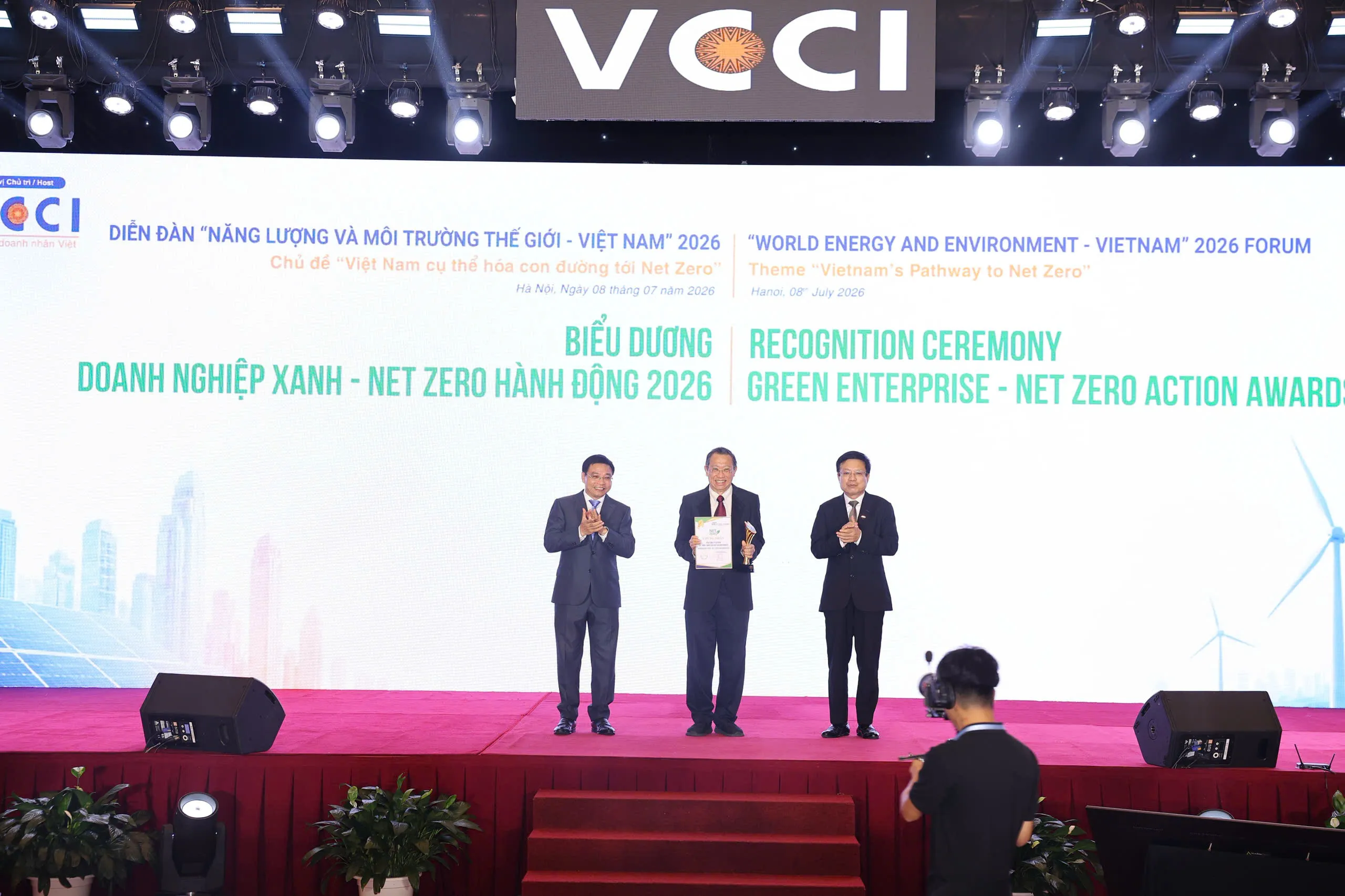
The Vietnam Chamber of Commerce and Industry (VCCI) organized the World Energy and Environment Forum – Vietnam 2026, with the theme "Vietnam Operationalizing the Path to Net Zero." The forum focused on the pressing question for the business community on how to translate sustainable development commitments into reality amidst a dynamic and volatile market. Speaking at the forum, Mr. Nguyen Quang Vinh, Vice Chairman of VCCI, stated that while the government acts as the institution builder, businesses are the vanguard in transforming sustainable development goals into concrete actions. However, he candidly acknowledged that many enterprises, particularly small and medium-sized ones, still face significant challenges in capital, technology, human resources, emissions data, and ESG management capabilities. Also at the event, Deputy Prime Minister Nguyen Van Thang announced that the government is continuing to perfect mechanisms and policies, with environmental protection, green transition, and energy shift as the foundation for development. To realize the Net Zero roadmap, the government is focusing on four major directions: a suitable energy transition, ensuring growth does not come at the expense of the environment, developing green finance and carbon markets, and promoting the proactive role of businesses and localities in investing in clean technology, practicing ESG, and implementing green projects. [Image: Deputy Prime Minister Nguyen Van Thang speaking at the forum] Under pressure from markets, investors, and supply chains, enterprises are now evaluated not just by their stated commitments but by their operations, management, resource utilization, and long-term adaptability. This presents a new test for businesses: practicing sustainable development and demonstrating measurable results. This reality places a greater role on leading enterprises. With their large scale, wide reach, and ability to impact the entire value chain, these enterprises are expected to become leverage points for implementation through changes in operations, supplier selection standards, resource management, and the creation of long-term value. Mr. Larry Lee, Deputy General Director in charge of Strategic Assets and Sustainable Development at Saigon Beer-Alcohol-Beverage Corporation (SABECO), stated: "Every improvement SABECO makes in energy use, water efficiency, packaging optimization, logistics, supplier standards, or human development can create positive impacts across the entire ecosystem. That is why sustainable development at SABECO is not confined to a few isolated projects but is reflected in how the business operates more effectively each day. This is demonstrated through the modernization of operational processes, human resource development, strengthening the product portfolio, and continuously improving operational efficiency to continue accompanying Vietnam's development." [Image: Larry Lee – Deputy General Director of SABECO – presenting at the forum] SABECO operates 26 breweries, 11 trading companies, a supply chain company, a transportation company, and a distribution network covering over 200,000 points of sale nationwide. Given its scale, any innovation in energy use, water management, waste reduction, supplier standard enhancement, or human resource development has a significant influence on the entire value chain, from suppliers and distributors to consumers and the community. According to SABECO, the company has proactively linked key ESG factors with operational challenges, risk management, and long-term adaptability, moving beyond mere policy compliance. Recognizing these efforts, SABECO was awarded the "Green Enterprise – Net Zero Action 2026" title at the forum by Deputy Prime Minister Nguyen Van Thang and VCCI Chairman Ho Sy Hung. The evaluation was based on references to tools, assessment frameworks, and specialized publications from the World Energy Council (WEC), combined with VCCI's implementation experience in Vietnam. Participating enterprises were assessed on various criteria, including emission reduction, socio-economic efficiency, technological innovation, and sustainable development impact. With over 150 years of development alongside the country, SABECO is entering a new phase with a dual challenge: maintaining growth while remaining relevant in an economic context that demands greater corporate responsibility to achieve Net Zero goals. Mr. Lee affirmed: "The next ten to twenty years will be a crucial period of transformation for Vietnam. And certainly, SABECO will remain a part of that development momentum. We will continue to modernize our operations, improve processes, develop our people, strengthen our product portfolio, and grow responsibly alongside the country." [Image: Deputy Prime Minister Nguyen Van Thang and VCCI Vice Chairman Nguyen Quang Vinh visiting SABECO's exhibition booth at the forum] Through the content presented and discussed at this year's forum, strong shifts from both government and businesses towards realizing Net Zero commitments are clearly evident and are gradually moving into orbit. If previously scale or market share were important metrics, in this stage, corporate competitiveness is determined by responsible transformation capabilities, efficient management, and the ability to create sustainable value for the entire ecosystem. On the path ahead, sustainable development will become an integral part of the operational machinery, as well as part of the long-term adaptation plans and preparations for the next development phase for the business community in Vietnam.

多角的分析

経済的影響

ベトナム経済は、国際的な気候変動対策の潮流と、国内の産業構造の転換という二重の圧力に直面している。Net Zero目標達成は、エネルギーインフラへの大規模投資、再生可能エネルギーへのシフト、そして製造業における低炭素技術の導入を必要とする。これは、新たな産業の創出と雇用機会の拡大をもたらす可能性がある一方、既存の化石燃料依存型産業からの移行に伴うコスト増加や、技術移転・導入の遅れが経済成長の足かせとなるリスクも内包している。特に、中小企業が直面する資金・技術・人材の不足は、経済全体のグリーン転換のペースを鈍化させる要因となりうる。政府によるグリーン金融や炭素市場の整備は、これらの課題を克服するための重要なインセンティブとなるだろう。

投資家心理

投資家にとって、ベトナムのNet Zero目標達成に向けた動きは、新たな投資機会とリスクの両方をもたらす。再生可能エネルギー、省エネルギー技術、ESG関連サービスへの投資は、長期的な成長が見込まれる分野である。特に、SABECOのような大手企業がサプライチェーン全体で持続可能性を追求する姿勢は、投資家が重視するESG評価を高める要因となる。しかし、中小企業の技術・資金不足は、サプライチェーン全体の安定性に影響を与える可能性があり、投資家は個々の企業の財務状況だけでなく、サプライチェーン全体のリスク管理能力も評価する必要がある。また、政策の実行力や、国際的な基準との整合性なども、投資判断における重要な要素となる。

社会的影響

Net Zero目標達成に向けた企業の取り組みは、ベトナム社会全体に広範な影響を与える。環境負荷の低減は、大気汚染や水質汚染といった、都市部を中心に深刻化している環境問題の改善に寄与し、市民の健康増進につながる可能性がある。また、グリーン技術の導入やESG経営の実践は、新たな雇用機会を創出し、労働者のスキルアップを促進する。一方で、化石燃料産業からの転換は、関連産業で働く人々の雇用を脅かす可能性もあり、公正な移行(Just Transition)のための社会的セーフティネットの整備が求められる。SABECOの事例のように、地域社会やサプライヤーとの共存共栄を目指す企業の取り組みは、持続可能な社会の実現に向けた重要な一歩となる。

市民の声

ベトナム市民、特に都市部に住む人々は、環境汚染の深刻化を日々実感している。Net Zero目標達成に向けた企業の具体的な行動は、大気や水質の改善を通じて、直接的に生活の質向上に繋がることが期待される。例えば、SABECOのような企業が、サプライヤー選定基準に環境配慮を盛り込むことは、よりクリーンな製品やサービスが市場に流通することを意味する。しかし、中小企業が技術や資金不足でグリーン化に遅れをとる場合、その影響はサプライチェーン全体に及び、最終的には消費者が負担するコストの増加や、環境負荷の高い製品が市場に残存する可能性も否定できない。政府が掲げる「環境を犠牲にしない成長」という原則が、市民生活の現場でどのように実現されるかが問われている。

背景・歴史的文脈

ベトナムは2021年のCOP26で、2050年までに温室効果ガス排出量を実質ゼロにする「Net Zero」目標を掲げた。これは、国際社会からの気候変動対策へのコミットメントを強化する一方で、国内経済の構造転換を促す契機となった。特に、ベトナムは製造業のハブとして急速な経済成長を遂げてきたが、その過程でエネルギー消費量の増加や環境負荷の増大も指摘されてきた。政府は、エネルギー移行、グリーン金融、炭素市場の整備などを柱とした政策パッケージを打ち出しており、企業、特に大手企業には、サプライチェーン全体での持続可能性の追求と、中小企業への技術・ノウハウの波及が期待されている。しかし、中小企業の資金・技術・人材不足は、目標達成に向けた大きな障害となっている。

原文ソース

Vietnam Insider

原文を読む