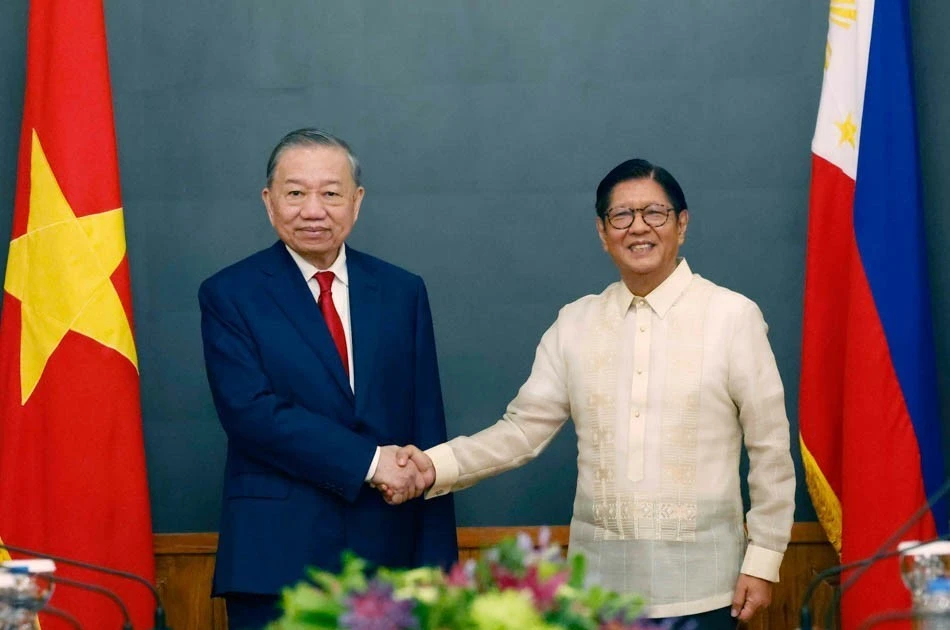
Vietnam, Philippines Build Broader, Substantive Ties for Half a Century
Vietnam and the Philippines have deepened bilateral ties over half a century, with two-way trade reaching $7.8 billion. Naval cooperation and cultural exchanges have also expanded, underscoring a shared commitment to regional peace and international law.
Vietnam and the Philippines have built broader and more substantive ties over the past half-century, founded on friendship. Two-way trade reached $7.8 billion in 2025, with the Philippines remaining one of Vietnam's largest importers of rice. Cooperation in education, cultural exchanges, and other areas has also continued to expand. The ninth friendship exchange between Vietnamese and Philippine navies was held on Song Tu Tay island in Vietnam's Truong Sa (Spratly) archipelago. This event aimed to further strengthen friendship, cooperation, mutual trust, and understanding between the armed forces and navies of both nations, while effectively implementing bilateral naval cooperation agreements. On June 12, General Secretary of the Communist Party of Vietnam and State President To Lam and Prime Minister Le Minh Hung sent congratulatory messages to Philippine President Ferdinand Romualdez Marcos Jr on the occasion of the 128th anniversary of the Declaration of Independence of the Republic of the Philippines. Vietnam has reaffirmed its role as a proactive, responsible, and reliable member of the international community through humanitarian assistance, economic diplomacy, and regional cooperation. The country's clear and consistent stance is that maritime disputes must be resolved peacefully, respecting diplomatic and legal processes, without the use or threat of force, and in accordance with international law, particularly the 1982 UN Convention on the Law of the Sea (UNCLOS). Vietnam has called on the Belgian Senate to continue supporting stronger Vietnam-EU relations, including the effective implementation of the EU-Vietnam Free Trade Agreement (EVFTA), the ratification of the EU-Vietnam Investment Protection Agreement (EVIPA), and promoting the European Commission's early removal of its "yellow card" warning against Vietnamese seafood exports. This recognition is for Vietnam's efforts to improve its legal framework and promote sustainable fisheries management. Furthermore, Vietnam emphasized the crucial, core, and frontline role of the People's Security Force in advising and organizing the implementation of the National Security Strategy. It urged for urgent innovation in working methods, active application of scientific and technological advances, and adjustments to plans and strategies to ensure proactive security in all situations. Vietnam's commitment to strengthening international cooperation in building a safe, secure, trusted, and sustainable cyberspace was underscored by its efforts in implementing the United Nations Convention against Cybercrime (also known as the Hanoi Convention). These activities highlight Vietnam's proactive engagement in various international arenas. In a separate report, the Vietnamese Ministry of National Defence has gifted Laos a border station to enhance coordination between border guard forces and reaffirm solidarity. This gesture reflects Vietnam's commitment to regional stability and strong bilateral ties within Southeast Asia. Vietnam's active participation in international affairs is further evidenced by its signing of over 1,400 international commitments and agreements since the start of the 13th National Party Congress's term, with over 350 new pacts inked since early 2026, driven by high-level diplomatic activities. Other news includes the commemoration of six Cuban military experts who died 60 years ago supporting Vietnam's resistance war, reaffirming enduring solidarity. Vietnam's assistance to Venezuela following an earthquake was also highlighted as an expression of solidarity and goodwill. The country's rescue team recovered 57 bodies and worked under hazardous conditions. Vietnam's first honorary consulate in Phuket, Thailand, signifies a commitment to enhancing cooperation with the Andaman Sea economic gateway and supporting its citizens abroad. The Vietnamese community in Vienna, Austria, was praised for its unity and contributions to the city's development. Japan's Aichi Prefecture has maintained economic cooperation with Vietnam for over a decade, including support for businesses and a friendship agreement with Ho Chi Minh City. The twinning relationship between Thuy Phong village in Vietnam and Xop Tuong village in Laos serves as a model for fostering a shared border of peace and cooperation. General Secretary To Lam hosted farewell receptions for outgoing ambassadors from Belgium, Norway, the Netherlands, and Brazil, indicating ongoing diplomatic engagements.
多角的分析
ベトナムとフィリピン間の貿易額78億ドルという数字は、両国経済の相互依存の深さを示唆している。特にフィリピンがベトナムの米の主要輸入国である点は、食料安全保障の観点からも重要である。ベトナムがEVFTAやEVIPAの推進、水産物への「イエローカード」解除をEUに働きかけていることは、輸出主導型経済の成長戦略の一環であり、国際的な基準への適合と市場アクセスの拡大を目指すベトナムの経済政策の方向性を示している。
ベトナムがEUとの経済連携強化を推進する動きは、海外からの投資を呼び込むための環境整備の一環と見られる。EVFTAやEVIPAの批准、水産物に対する貿易障壁の撤回は、EU市場へのアクセスを改善し、ベトナム企業、特に輸出関連産業への投資魅力を高める要因となる。一方で、国際法遵守や海洋紛争の平和的解決への言及は、地政学的な安定性を重視する投資家にとって、ベトナムが地域における信頼できるパートナーであることを示すシグナルとなる。
ベトナムがフィリピン海軍との友好交流を深めていることは、地域における信頼醸成と安全保障協力の重要性を示唆する。また、ベトナムの「500日キャンペーン」や、犠牲者への追悼は、国民の愛国心や国家への貢献を重んじるベトナム社会の価値観を反映している。ベトナムの国際社会への貢献(人道支援、サイバー空間の安全確保など)は、国民の国際的な視野を広げ、グローバルな課題への関心を高める可能性がある。
ベトナムとフィリピンの海軍交流や、ベトナムがEUに働きかけている水産物輸出の障壁撤廃は、直接的には一般市民の生活に大きな影響を与えないかもしれない。しかし、これらの外交努力は、ベトナム経済全体の安定と成長に繋がり、結果として雇用機会の創出や物価の安定に寄与することが期待される。また、国際法遵守への言及は、ベトナム国民が国際社会で尊重される存在であるという意識を高めるだろう。
背景・歴史的文脈
ベトナムとフィリピンは、ASEAN加盟国として、地域安全保障と経済協力において緊密な関係を維持してきた。特に、南シナ海における領有権問題は、両国にとって共通の懸念事項であり、国際法に基づく平和的解決の重要性を共有している。ベトナムの一党体制下での外交政策は、国家の主権と安全保障を最優先しつつ、経済成長と国際社会での地位向上を目指すという一貫した目標に基づいている。EUとの経済連携強化は、中国への経済的依存度を低減し、経済成長を加速させるための多角化戦略の一環である。
原文ソース
VietnamPlus English