General articles are free for 24 hours after publish.
Vietnam Promotes Elderly Engagement with New Strategy, Recognizing Them as 'Valuable Assets'
Vietnam is promoting a new strategy to foster the social participation and engagement of its elderly population, recognizing them as 'valuable national assets' in response to rapid aging. Initiatives include enhancing healthcare and welfare, supporting digital inclusion, and promoting entrepreneurship and cultural preservation.
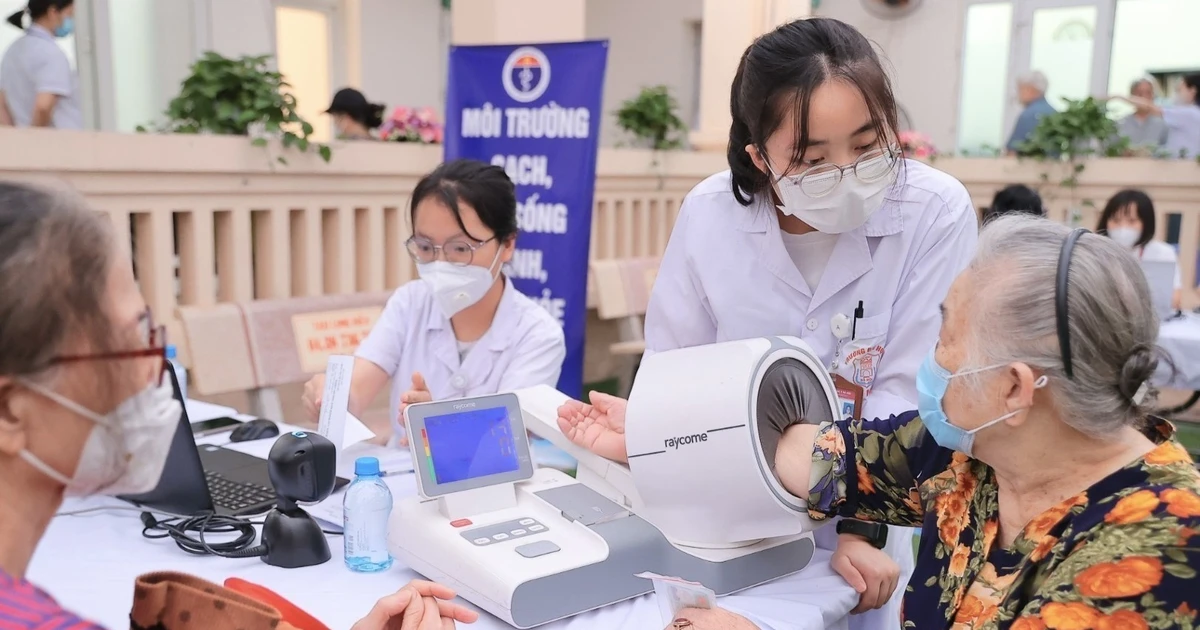
Vietnam is strategically shifting its approach to its aging population, moving away from viewing the elderly solely as recipients of social security or a burden on families, and instead recognizing them as 'valuable national assets.' This aims to foster their social participation and active engagement as a crucial resource for national construction and development in the new era. This direction is reflected in Politburo Resolution No. 72-NQ/TW dated September 9, 2025, on breakthrough measures to strengthen the protection, care, and improvement of people's health, designating the elderly as a priority group for policies. Specific initiatives include providing healthcare services, developing diverse elderly care facilities, offering free annual health check-ups, and establishing nursing homes based on concepts like 'happy villages' and 'happy cities.' Currently, 95% of the elderly receive support for health insurance cards, and over 600 nursing homes operate nationwide. Furthermore, Politburo Resolution No. 57-NQ/TW dated December 22, 2024, on breakthrough development in science, technology, innovation, and national digital transformation, signals a strategic mindset for adapting to the digital age and artificial intelligence. In 2025, the Vietnam Association of the Elderly proactively advised the Prime Minister to approve the project 'Elderly Participation in Accelerating Digital and Green Transformation, Entrepreneurship, and Job Creation.' The association has also partnered with enterprises to form organic agricultural value chains and circular economy models, and promotes tree-planting campaigns involving the elderly. Digital literacy is also being enhanced, with multiple training sessions on digital knowledge and skills conducted nationwide for provincial-level association officials. In Hanoi, a project titled 'Digital Support Points for the Elderly' has been developed in coordination with the Youth Union. Economically, Politburo Resolution No. 68-NQ/TW dated May 4, 2025, on the development of the private economy, encourages citizens to leverage all resources to legitimately enrich themselves, their families, and the nation. The elderly have opportunities to utilize their accumulated wisdom and experience in entrepreneurship and job creation. Approximately 10 million elderly individuals are currently directly involved in labor, production, and business, creating jobs for millions, including some who are major corporate leaders and recipients of the 'Labor Hero in the Renovation Period' title. Culturally, Politburo Resolution No. 80-NQ/TW on the development of Vietnamese culture emphasizes culture as the spiritual foundation of the nation. The elderly serve as a bridge between traditional culture and contemporary life, transmitting long-standing traditional values to younger generations through festivals like singing contests and traditional folk music festivals. The elderly actively participate in key positions within party committees, authorities, organizations, and mass associations from the grassroots level upwards, contributing with dedication. During the preparations for the 14th Party Congress, about 1.2 million elderly people provided direct feedback on draft documents. They also played an exemplary role in encouraging family members to exercise their civic rights and duties during the election of the 16th National Assembly deputies and People's Council deputies for the 2026-2031 term. In times of crisis, such as the COVID-19 pandemic and natural disasters, many elderly individuals have demonstrated exemplary contributions to maintaining social peace. Commemorations for Martyrs' and Wounded Soldiers' Day (July 27) feature activities of gratitude and remembrance, passing on the moral value of 'remembering those who planted the trees when eating the fruit' to society and the youth. Various levels of the association annually provide millions of gifts, support the construction of thousands of houses for impoverished elderly, and donate to Cuba. The annual 'Month of Action for the Elderly' is celebrated with diverse and practical activities, often linked to humanitarian programs like 'Bright Eyes for the Elderly,' which has provided eye treatments to millions. The 'Intergenerational Self-Help Club' model has proven successful, with over 9,000 clubs nationwide attracting nearly 500,000 members. Source: Nhan Dan
Original source
Nhan Dan