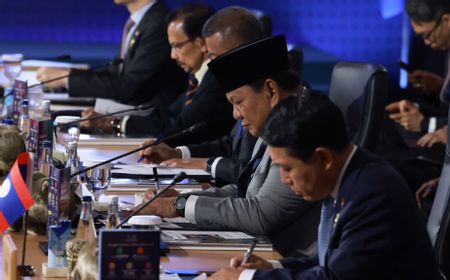
Indonesia Supports Dialogue to Ease Korean Peninsula Tensions at ASEAN-ROK Summit
Indonesian President Prabowo Subianto expressed support for dialogue and peaceful settlement to ease tensions on the Korean Peninsula at the 27th ASEAN-Republic of Korea Summit. He emphasized the importance of regional stability for economic growth and called for strengthened cooperation between ASEAN and South Korea.
Read up to 3 eligible full articles per Japan day (JST) for free
Create a free account to open up to 3 eligible full articles per Japan calendar day (JST). Headlines and summaries remain available across ASEAN 7.
Related articles
- Prabowo Urges ASEAN-China to Finalize South China Sea Code of Conduct
President Prabowo Subianto urged the swift finalization of the Code of Conduct (CoC) in the South China Sea at the ASEAN-China Summit. He emphasized a peaceful and collaborative approach based on international law, stressing ASEAN's centrality and adherence to international legal principles.
- ASEAN-Australia Summit: Prabowo Emphasizes Regional Stability
At the ASEAN-Australia Summit, Indonesian President Prabowo Subianto stressed that regional peace and stability are crucial for the sustainability of the strategic partnership between ASEAN and Australia. He specifically called for cooperation in maritime security, combating transnational crime, and developing future industries and the digital economy.
- Prabowo Wears Barong Tagalog at 49th ASEAN Summit Gala Dinner
Indonesian Defense Minister Prabowo Subianto was seen wearing a Barong Tagalog, a traditional Filipino garment, at the 49th ASEAN Summit gala dinner. This sartorial choice highlighted a cultural element during the international summit.
- Indonesia Navigates Countermeasures to China's University Campus Strategy
As China seeks to expand its influence through university campuses, Indonesia is exploring strategies to implement necessary safeguards while preserving educational innovation. This move represents an attempt to balance academic autonomy with national security interests.