THE UNWINNABLE GAME: Why the Myanmar Junta Cannot Buy Legitimacy
Diplomacy
2026年7月6日
3
SHAN News
Relations
🇲🇲Myanmar🇱🇦Laos🌐United Nations / ASEAN

THE UNWINNABLE GAME: Why the Myanmar Junta Cannot Buy Legitimacy

AI サマリー

On July 3, 2026, General Min Aung Hlaing arrived in Vientiane for a state visit that marked a calculated turning point in his diplomatic strategy: his first trip to any ASEAN member state since seizing power in 2021. Arr

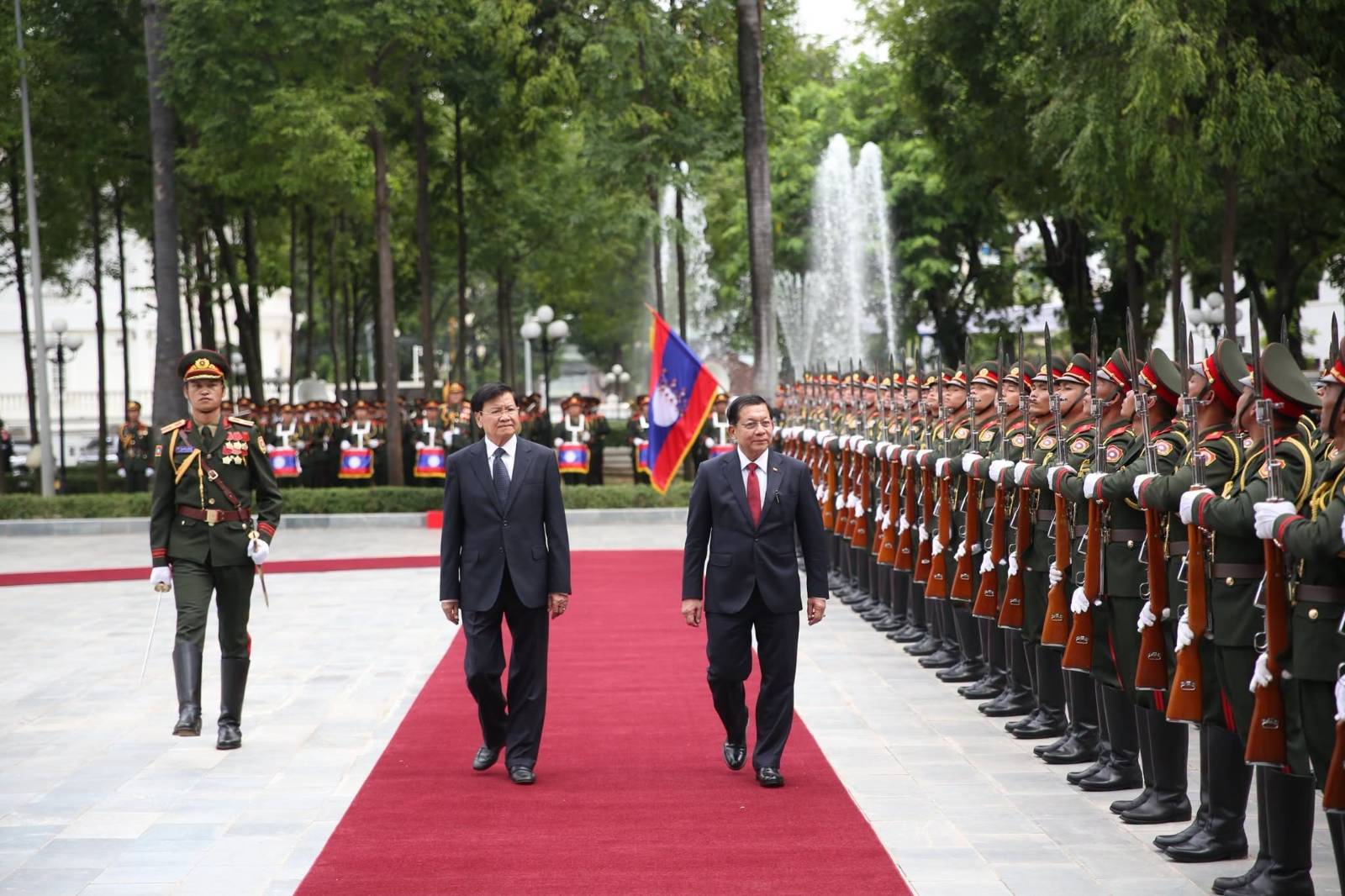
On July 3, 2026, General Min Aung Hlaing arrived in Vientiane for a state visit that marked a calculated turning point in his diplomatic strategy: his first trip to any ASEAN member state since seizing power in 2021. Arriving just weeks after a high-profile state visit to Beijing, the Myanmar military chief’s presence in Laos was not merely a diplomatic courtesy but a deliberate attempt to shatter his international isolation. He met Lao President Thongloun Sisoulith to sign a suite of bilateral agreements, including a symbolic deal on space technology, while framing the visit as a necessary step toward regional stability and the normalization of his administration. This visit was engineered to exploit the fractures within the Association of Southeast Asian Nations, where the unified front of condemnation against the junta has been steadily eroding. By securing a warm reception from a fellow socialist-leaning state like Laos, Min Aung Hlaing sought to create a precedent that would legitimize his rule as the de facto head of state, effectively bypassing the ASEAN Five-Point Consensus that had previously barred him from regional summits. The trip signaled a shift from defensive isolation to an offensive push for recognition, relying on the backing of China and the “stability-first” approach of like-minded neighbors to force the rest of ASEAN to treat the junta as a legitimate government. However, beneath the surface of these diplomatic courtesies lay the fundamental question that the visit could not answer: whether the military’s control of the capital could ever truly substitute for the popular sovereignty of the Myanmar people. The Distinction Between Statehood and Representation The international community has never questioned Myanmar’s existence as a sovereign state. The crisis is strictly about who holds the legitimate mandate to speak for the people. The junta’s strategy relies on the principle of “effective control,” arguing that because they hold the capital and the military, they are the government. However, this legal fiction collapses when confronted with the reality of the 2021 coup, which was a direct theft of the popular mandate expressed in the 2020 elections. The National Unity Government (NUG) and Ambassador U Kyaw Moe Tun’s continued presence at the UN are not merely symbolic; they are the legal embodiment of the principle that sovereignty resides with the people, not with the entity holding the guns. As long as the international community recognizes that a military regime lacking popular consent cannot legitimately represent the state, the junta’s claim remains a hollow shell, regardless of how many Memorandums of Understanding it signs. The Fractured ASEAN Consensus and the Normalization Trap The visit to Laos was designed to exploit the fractures within ASEAN to create a “new normal” where the junta is treated as a peer. By securing a high-profile visit from a member state that prioritizes stability over democracy, Min Aung Hlaing hoped to set a precedent that would erode the bloc’s Five-Point Consensus. The strategy relied on the “Normalization Front” of Laos, Cambodia, and Vietnam acting as a shield to dilute the isolation imposed by the “Principled Opponents” like Malaysia, Singapore, and Timor-Leste. However, this approach has hit a wall. The presence of the principled opponents ensures that ASEAN cannot reach a consensus on full recognition. The bloc remains paralyzed by its own diversity of interests, preventing the junta from gaining the unified regional endorsement it desperately needs. The visit to Laos was a tactical success for bilateral engagement, but it failed to shatter the collective ASEAN barrier required to legitimize the regime as a whole. The “two-track” engagement that emerged only highlights the regime’s inability to secure a unified regional mandate, leaving it isolated within the very bloc it seeks to join. The Limits of Chinese Strategic Patience China’s support for the junta is often viewed as an unconditional lifeline, but it is actually a transactional relationship driven by Beijing’s own security and economic interests rather than a belief in the junta’s legitimacy. China’s primary goal is stability along its border and the security of its Belt and Road Initiative investments, not the democratic validation of a military dictatorship. While Beijing has provided diplomatic cover and blocked UN resolutions, it has also repeatedly pressured the junta to crack down on border crimes like scam centers, demonstrating that its support has limits. Furthermore, China’s attempt to challenge the credentials of Ambassador U Kyaw Moe Tun in the UN Credentials Committee is unlikely to succeed. The committee’s history of avoiding direct votes on such contentious issues, combined with the strong opposition from the US, the EU, and the Global South, means that China cannot unilaterally force a change in representation. The “sovereignty shield” China offers is a defensive wall, not a bridge to international acceptance. The Final Verdict: A Failed Quest for Legitimacy The ultimate takeaway is that the junta’s quest for legitimacy, even with China’s full backing, is a failed attempt. The international community is increasingly unwilling to accept “effective control” as a substitute for “popular mandate.” The continued presence of U Kyaw Moe Tun at the UN, the persistent opposition from key ASEAN members, and the growing global consensus on human rights accountability mean that the junta cannot simply buy its way into legitimacy through bilateral deals or regional diplomacy. The visit to Laos and the space technology agreements may provide temporary economic relief and diplomatic cover, but they cannot erase the fundamental reality that the junta rules against the will of the people. As long as the question of “who represents the people” remains unanswered, the junta will remain a pariah in the eyes of the global community, unable to transition from a military occupier to a recognized government. The path to legitimacy is not paved with MOUs or high-level visits, but with the restoration of the people’s will—a goal the junta has explicitly rejected.

多角的分析

経済的影響

実務協力は短期の投資案件に直結しなくても、人材育成、技術移転、行政能力の底上げにつながる可能性があります。ただし制度透明性が低いままでは、協力の実効性は限定されます。

投資家心理

投資家にとっては、どの国との実務協力が残っているかがリスク評価の材料になります。外交接点の継続はプラス材料ですが、政治的正統性や制裁環境を切り離して見ることはできません。

社会的影響

主要ASEANメンバーの生活者から見れば、国際協力は遠い話に見えます。だからこそ、SHAN Newsの報道では、合意文書ではなく安全に触れる具体策が出るかを追う必要があります。

市民の声

市民にとっては、会談そのものよりも、雇用、教育機会、公共サービスの改善として実感できるかが焦点です。成果が見えなければ公式報道への信頼は高まりません。

背景・歴史的文脈

このニュースは、ミャンマー政府が対外関係を通じて行政分野の協力を維持しようとする動きです。国際的な孤立や制裁圧力が続く中でも、科学技術、教育、金融など実務分野の会談は、政府間チャネルを保つ意味を持ちます。

原文ソース

SHAN News

原文を読む