General articles are free for 24 hours after publish.
Ex-CJ Davide: 16 votes not necessarily required to convict Sara Duterte in impeachment trial
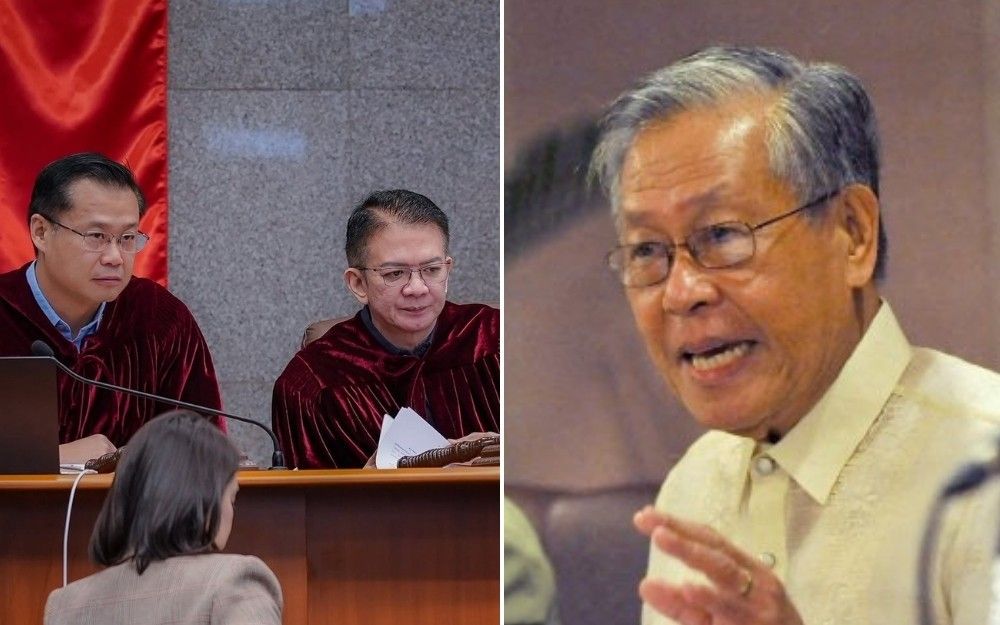
Former Chief Justice Hilario Davide Jr. has argued that the two-thirds threshold for conviction in an impeachment trial should be based only on senators qualified and able to vote, not automatically on all 24 Senate seats. This would allow for conviction based on a reduced number of eligible voters.
MANILA, Philippines — Retired chief justice Hilario Davide Jr. has put forth a new interpretation regarding the vote threshold required for conviction in impeachment trials. In a memorandum submitted as an amicus curiae (friend of the court) to the Senate impeachment court, Davide argued that the two-thirds threshold for conviction should be based only on senators qualified and able to vote, rather than automatically on all 24 Senate seats. Davide's position suggests that senators facing legal or physical restraints that prevent them from participating in the trial should be excluded from the denominator used to determine the required two-thirds vote. This would include senators who have resigned, are detained, or are incapacitated due to serious physical or mental conditions. Drawing on his experience as a delegate to the 1971 Constitutional Convention and a member of the 1986 Constitutional Commission, Davide stated that the framers understood "members" to mean senators capable of performing their duties. He contended that any other interpretation would "tolerate an absurdity, and perpetuate an injustice." This perspective comes as the Senate impeachment court considers an appeal of the presiding officer's earlier ruling that 16 votes, or two-thirds of the full 24-member Senate, are required to convict Vice President Sara Duterte. Davide's argument, referencing past Supreme Court rulings, distinguishes the vote calculation in impeachment trials from that of ordinary legislative sessions. Davide cited Supreme Court rulings holding that public officials in detention cannot exercise the functions of their office while detained. Davide also addressed the 1949 Supreme Court ruling in *Avelino v. Cuenco*, which has figured in arguments over how the Senate should count its membership. He said the case was not directly controlling because it dealt with quorum during an ordinary Senate session rather than the constitutionally required vote in an impeachment trial. Davide nevertheless said the ruling had persuasive value. In Avelino, two senators were absent, one confined in a hospital and another in the United States. Davide said this effectively left 22 senators capable of acting, making 12 the majority that elected Mariano Cuenco as Senate president. Applying that reasoning to the impeachment court, Davide argued that senators who are detained, abroad, suspended or otherwise unable to take part in the proceedings should not be counted when determining the voting threshold. Davide is one of four former Supreme Court justices tapped as amici curiae to advise the impeachment court on the constitutional question. Retired Chief Justices Artemio Panganiban and Reynato Puno and retired Associate Justice Adolf Azcuna were also invited to give their views. Davide submitted a written memorandum instead of appearing personally. In the Philippine political landscape, impeachment proceedings are a critical mechanism for accountability, and the procedural standards are often subject to intense scrutiny, particularly amidst political polarization.
Original source
Philstar Nation