Vietnam Pushes National Project to Identify War Martyrs' Remains Amidst Enemy Interference
Business
2026年7月21日
7
Nhan Dan

General articles are free for 24 hours after publish.

Vietnam Pushes National Project to Identify War Martyrs' Remains Amidst Enemy Interference

Share
AI Summary

Vietnam is advancing a national project, the '500-Day Campaign,' to identify and collect the remains of war martyrs, rooted in the national tradition of 'returning favors.' The government is also warning against interference from hostile forces through disinformation and historical distortion.

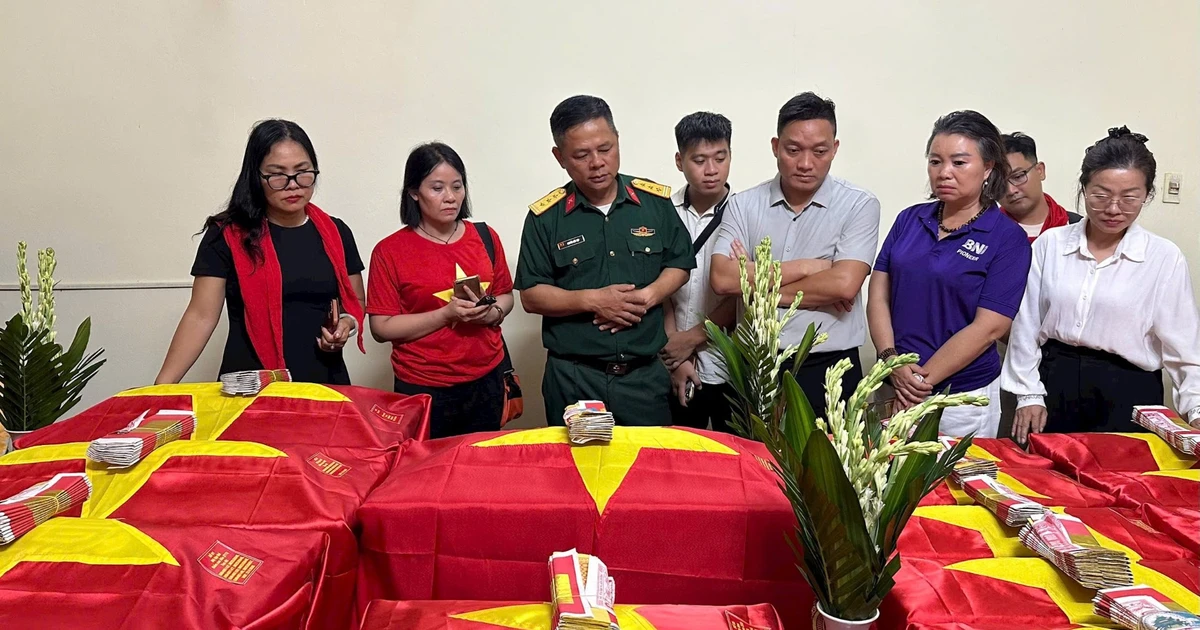
Vietnam is accelerating a national effort to collect and identify the remains of war martyrs, many of whom have remained unidentified for decades. The '500-Day Campaign to Promote the Search, Collection, and Identification of War Martyrs' Remains,' launched on March 15, 2026, and scheduled to conclude on July 27, 2027, is being spearheaded by the National Steering Committee 515. This initiative is deemed to hold profound political, historical, and humanitarian significance. On July 17, General Secretary and President Tô Lâm visited the site of the remains collection operation at Lê Thị Riêng Park in Ho Chi Minh City to encourage the personnel involved. He stated, "For the Party, State, and people of Vietnam, searching for, collecting, and identifying the remains of martyrs is a sacred responsibility to the Fatherland and the people; it is the conscience and aspiration of every Vietnamese person. Our people and Party will never forget those who sacrificed for the country and the nation; this is the moral code and cultural tradition of Vietnam." Currently, approximately 175,000 martyrs' remains are yet to be found, and around 300,000 collected remains have not been identified. As time passes, witnesses become scarce, and direct relatives are largely elderly. Therefore, the campaign aims to collect about 7,000 sets of remains, complete DNA sampling from unidentified graves nationwide, and conduct DNA testing on approximately 18,000 samples. However, this national endeavor has become a target for disinformation and sabotage by hostile forces and political opportunists, who seek to diminish public trust in the Party and State's correct policies. Tactics include fabricating claims that DNA sample collection is for citizen surveillance, underestimating domestic scientific and technological capabilities, making unreasonable demands to equate martyrs from different historical contexts, and distorting historical records to sow doubt about the sacrifices of heroes and martyrs. In response, the government clarifies that DNA sample collection is for creating reference data for identification and will be managed under strict legal regulations. It acknowledges the difficulty of DNA testing on long-preserved remains but asserts that it can be overcome through technological investment and process standardization, emphasizing that giving up is not an option. Furthermore, Vietnam's policy of national reconciliation is consistent, but reconciliation does not equate to re-evaluating history, nor does humanitarianism mean inverting values. Actual achievements demonstrate the effectiveness of the Party and State's policies. From 2021 to 2025, nearly 7,000 martyrs' remains were collected, and over 2,500 individuals were identified through DNA testing and empirical methods. Since the campaign's launch, the pace of collection has markedly accelerated. As of July 8, 2026, 1,312 sets of remains have been collected, with samples taken from numerous graves and a significant number of relatives' DNA samples collected and digitized. The Vietnam Academy of Science and Technology is mastering next-generation sequencing technology (NGS-SNP), achieving a 93% DNA extraction success rate in trials, thereby enhancing identification capabilities. Despite progress, challenges such as slow implementation in some localities, a gap between current results and campaign objectives, insufficient coordination, and a lack of proactive leadership are acknowledged. The government is calling for improvements in these areas. With just over a year remaining, while the vast scale of war and complex field conditions mean not all remains may be identified, the determination remains strong, and efforts will continue to seize every rare opportunity. Source: Nhan Dan

0

Original source

Nhan Dan

原文を読む