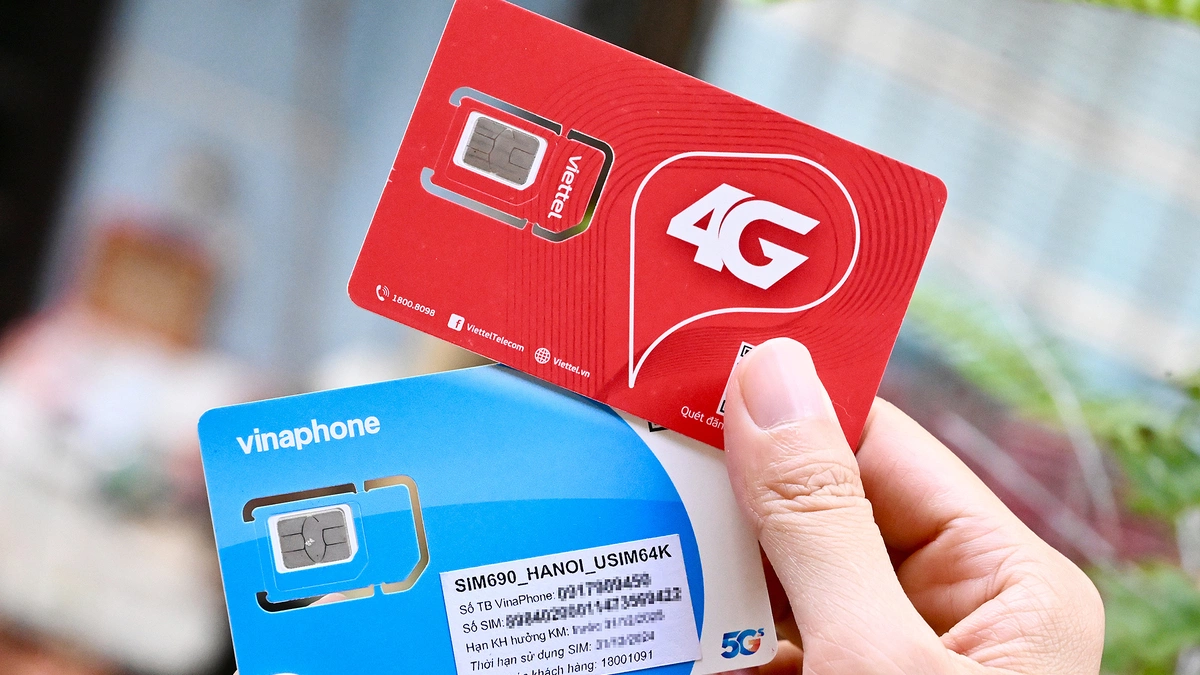
Vietnam: 13 Million Mobile Subscriptions Face Revocation Amid SIM Verification Mandate
Approximately 13 million mobile subscriptions in Vietnam are at risk of revocation if owners fail to complete SIM verification by August 20. This measure aims to prevent SIM misuse and clean up the telecom database. Affected users must verify their identity via the VNeID app or at carrier service points.
Approximately 13 million mobile phone numbers in Vietnam are at risk of being revoked if their owners fail to complete identity verification by August 20. According to the Telecommunications Authority under the Ministry of Information and Communications, following the implementation of Circular 08 for over two months, telecommunications enterprises have transferred data of more than 114 million subscriber numbers to the national population database. Among these, over 96 million have been "successfully confirmed and authenticated," indicating they belong to the legitimate owners. Circular 08, effective from April 15, requires users to verify their SIM card usage status through the VNeID application. Since June 15, SIMs that have not completed the verification process have been subject to one-way service suspension. Network operators' reports indicate that more than 3.8 million subscribers have subsequently updated their information. However, the remaining nearly 13 million numbers are still under one-way service suspension. If verification is not completed by August 15, these SIMs will face two-way service suspension. Five days later, on August 20, the phone numbers will be revoked if the subscriber owner still fails to complete the standardization process. A representative from a network operator stated that if a SIM is suspended one-way, users can restore the service in two ways. The first method involves logging into the operator's application and using VNeID for self-verification. Alternatively, users can visit a service point with their chip-embedded citizen identification card (CCCD) for assistance. This ongoing comprehensive review is the next step in cleaning up the mobile subscriber database. Previously, during a standardization drive in 2023, approximately 6 million SIMs were revoked and had their services terminated by network operators. The Telecommunications Authority asserts that the new regulation ensures that SIMs, after registration, are still used by the person in whose name they are registered. Mobile SIMs are "among the tools exploited to spread spam calls and messages," thus, the verification of legitimate SIM owners will contribute to limiting this situation. The authority advises all subscribers, especially vulnerable groups, to proactively access the VNeID application and monitor notifications from telecommunications enterprises to check and confirm the phone numbers registered under their names. According to the agency, proactive verification and management will not only "minimize risks and protect the rights of users themselves" but also contribute to building a safe and transparent telecommunications environment, promoting digital transformation. In addition to Circular 08, Decree 174, effective from July 1, stipulates fines for telecommunications subscribers who use inaccurate documents or the identification documents of another person, or the legal entity documents of another organization, to enter into standard form contracts. The penalty ranges from VND 200,000 to VND 500,000 for each SIM number. Fines increase to VND 5-10 million for violations involving 11 to 200 SIMs, VND 10-20 million for 201 to 500 SIMs, and VND 30-50 million for 501 or more SIMs. The decree also penalizes the failure to update changes in identification documents, or failure to update information upon receiving notification from the network operator about inaccurate subscriber details. Subscribers who fail to request reissuance or terminate contracts when a SIM is lost or no longer in use will also be fined depending on the number of SIMs involved.
多角的分析
今回のSIM照合義務化は、ベトナムの通信市場における「シャドーエコノミー」の縮小と、より透明性の高いデータ管理体制の構築を目指す経済政策の一環と見られる。不正利用されるSIMカードは、詐欺やスパム送信など、経済活動に悪影響を与える犯罪に利用されるケースが多い。これらの不正行為を抑制することで、健全な市場環境を醸成し、デジタル経済への信頼を高める狙いがある。また、国民データベースとの連携強化は、将来的なデジタルID基盤の整備にもつながり、行政サービスの効率化や新たなビジネス機会の創出にも寄与する可能性がある。
今回のSIM照合義務化は、通信事業者にとっては短期的に顧客基盤の縮小リスクを伴うものの、長期的にはデータベースの精緻化と不正利用の抑制に繋がり、市場の健全化に寄与すると考えられる。投資家にとっては、通信事業者の顧客獲得・維持戦略の変化や、それに伴う収益への影響を注視する必要がある。一方で、VNeIDアプリの普及やデジタルID関連技術への投資は、関連するテクノロジー企業やサービスプロバイダーにとって新たなビジネスチャンスとなる可能性があり、セクター全体での投資機会を評価する上で重要な要素となるだろう。
約1300万件のSIMカードが失効する可能性は、多くのベトナム国民の日常生活に影響を与える。特に、情報へのアクセス手段としてSIMカードに依存している層、高齢者や地方住民など、デジタルリテラシーが低い層は、手続きの遅れや理解不足から不利益を被るリスクが高い。SIMカードは、家族との連絡、情報収集、行政サービスへのアクセスなど、現代社会における生活必需品とも言える。今回の措置は、不正利用防止という公益性を目的とする一方で、情報格差を広げ、一部の人々の社会参加を困難にする可能性も孕んでいる。通信事業者は、これらの層への丁寧な情報提供とサポート体制の強化が求められる。
今回のSIM照合義務化は、多くの市民にとって、手続きの煩雑さや情報不足による不安を生じさせている。特に、地方に住む人々や高齢者は、スマートフォンやVNeIDアプリの操作に不慣れな場合が多く、期日までに手続きを完了できるか懸念している。SIMカードは、家族との連絡手段としてだけでなく、仕事や行政手続きにも不可欠であるため、失効は生活に大きな影響を与える。通信事業者の窓口での手続きも、都市部では混雑が予想され、時間的な制約も課題となる。市民からは、より分かりやすい案内と、手続きの簡略化を求める声が上がっている。
背景・歴史的文脈
ベトナムでは、通信インフラの急速な発展と携帯電話の普及が進む一方で、SIMカードの不正利用による詐欺や迷惑行為が社会問題化していた。これに対し、政府は2019年にもSIMカードの本人確認強化策を打ち出したが、完全な解決には至らなかった。今回の通達08は、国民データベースとの連携を強化し、VNeIDという国家主導のデジタルIDアプリを活用することで、より厳格な本人確認とSIMカードの管理体制を構築しようとする試みである。これは、ベトナム政府が一貫して進めるデジタルトランスフォーメーション政策の一環であり、通信市場の透明性向上と国民生活の安全確保を目指すものと考えられる。
原文ソース
VnExpress