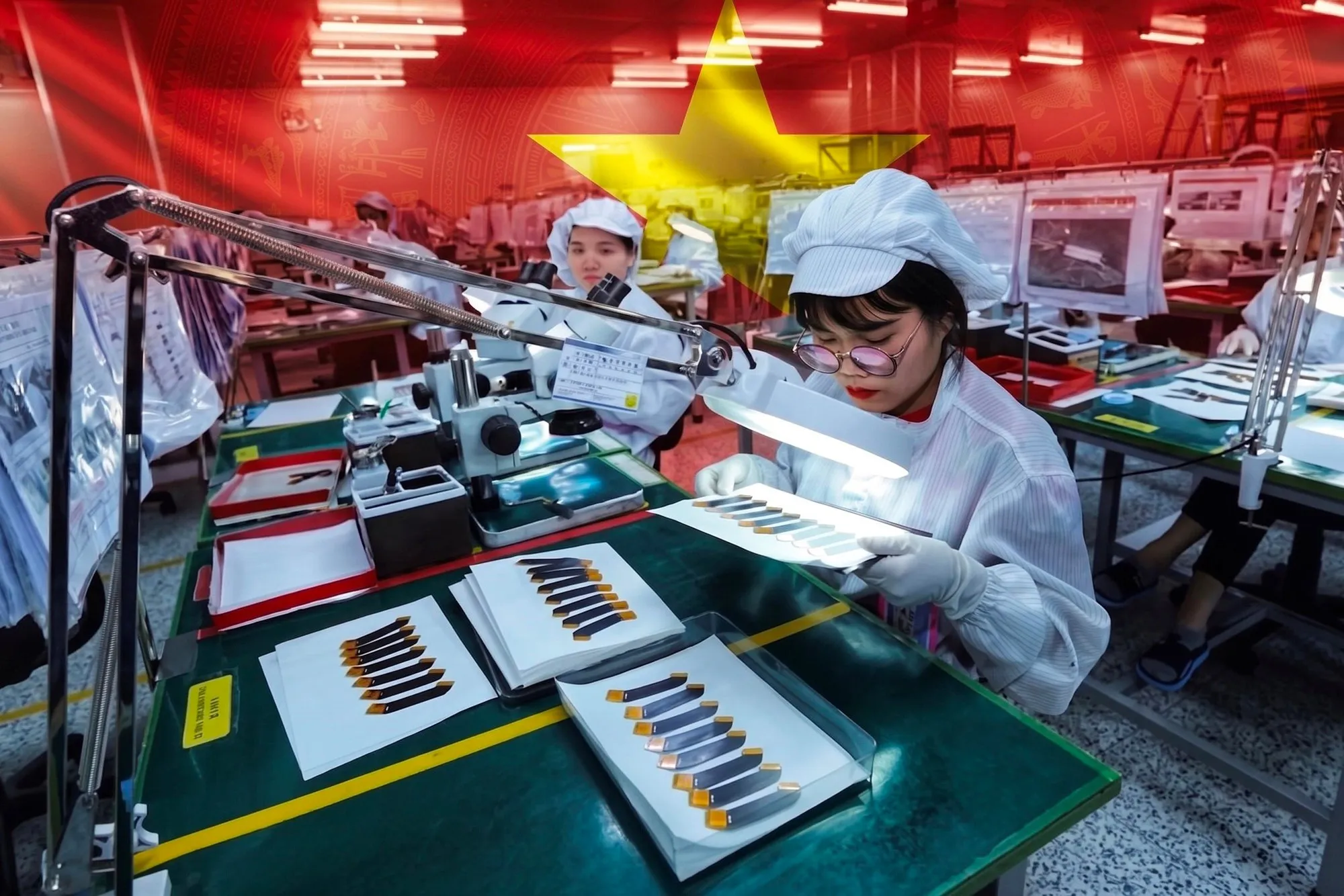
Vietnam Crowned 'Undisputed Champion' of Southeast Asia Amidst Supply Chain Realignment
Diplomacy
2026年7月22日
5
Vietnam Insider
Relations
🇻🇳Vietnam🇨🇳China

General articles are free for 24 hours after publish.

Vietnam Crowned 'Undisputed Champion' of Southeast Asia Amidst Supply Chain Realignment

Share
AI Summary

As of 2026, massive capital is flowing into Southeast Asia driven by geopolitical pressures and the 'China+1' strategy. Vietnam has emerged as the undisputed champion of this supply chain realignment, leveraging its geographical advantage, competitive labor costs, and extensive FTA network.

The year 2026 marks a fresh chapter for the global economy. Under relentless geopolitical pressure, the old era of globalization has formally closed. For the first time in history, foreign direct investment into China registered a record net deficit near $170 billion. Rather than vanishing, this massive capital pool is flowing directly into Southeast Asia through the “China + 1” strategy. According to The Diplomat, five Southeast Asian nations have gained significantly from this realignment, with Vietnam taking the crown as the undisputed champion. The “China + 1” approach initially surfaced back in the 2000s as Chinese labor costs began to climb. However, three major catalysts transformed that subtle shift into a full-scale exodus. First, US-China trade tensions since 2018 brought tariffs and export controls that pushed costs too high for exporters serving the US market. Second, “Zero-COVID” measures and port blockades during the pandemic severely disrupted supply lines, exposing the fatal flaw of relying on a single manufacturing hub. Third, rising global geopolitical friction forced multinational firms to seek safer shelters for risk mitigation. As a result, foreign direct investment into Southeast Asia surged to $236 billion. Home to nearly 700 million people, the region sits right next door to China, offering labor costs at half the price alongside an expansive network of free trade agreements like RCEP and various FTAs. The Diplomat highlighted five Southeast Asian nations leading this transformative wave. Indonesia boasts a massive economy larger than Vietnam, Malaysia, and Singapore combined, featuring a young workforce with a median age of 29. Exports surged rapidly from $180 billion in 2019 to $290 billion in 2023, marking the fastest growth rate across Southeast Asia. Unlike its neighbors, most capital entering Indonesia targets raw commodities, metals, minerals, and chemicals. This reflects the government’s industrial downstreaming strategy. By banning raw mineral exports such as nickel, officials forced global corporations—including Chinese firms—to construct local processing plants and electric vehicle battery supply chains. However, challenges persist. Indonesia ranks 73rd out of 190 countries in Ease of Doing Business. It faces lower workforce skill levels, fragmented logistics infrastructure, and unpredictable economic policies that cause investor hesitation. Thailand features deep-rooted industrial infrastructure built through decades of integration into global auto and electronics chains. In 2024, investment applications hit a ten-year peak across digital networks, advanced electronics, and the electric vehicle sector. Aggressive incentive programs transformed Thailand into the premier destination for Chinese EV manufacturers expanding overseas. Even so, Thailand faces a severe population aging crisis. Informal, low-skilled workers make up over half the labor force, and a shortage of high-tech labor stalls manufacturing wage growth. This dynamic hinders movement into higher-value tiers, especially as automation adoption remains below expectations. Nevertheless, direct rail connections extending through Laos to Bangkok, Malaysia, and Singapore offset these obstacles through strong overland logistics. As a premier global financial and logistics hub, Singapore ranks first in Asia for business environment quality. The island nation bypasses cheap labor competition to serve as the strategic central command for capital allocation. When multinational groups shift manufacturing bases to Vietnam, Malaysia, or Indonesia, roughly 90% establish holding entities or regional headquarters in Singapore to supervise supply chains. Singapore directly captures top-tier capital investments in Deep Tech, biological research and development, and semiconductor equipment manufacturing. The primary barrier remains extremely high operating and living costs, restricting entry to the highest tier of the value chain. Malaysia ranks 12th globally in Ease of Doing Business, offering an English-fluent workforce and a high Human Development Index score. Malaysia’s sharpest edge in this industrial shift lies in semiconductors. Driven by US tech sanctions on China, global chipmakers sought supply chain diversification, making Malaysia a top pick due to its rich history in chip packaging and testing dating back to the 1960s. Beyond attracting integrated circuit facilities, Malaysia experiences a surge in data center projects fueled by affordable, reliable power supplies. Under Prime Minister Anwar Ibrahim, a non-aligned, neutral geopolitical stance renders Malaysia a safe harbor for Western and mainland Chinese enterprises alike. Business advisor Marco Forester highlighted Vietnam as the absolute prime beneficiary of the global supply chain migration. Hard figures clearly reflect this trend: Vietnam’s exports to the US soared from $49.1 billion in 2018 to $66.5 billion in 2019, and have now surged past $193 billion. Vietnam holds an unmatched geographic edge, as its northern region connects directly to southern China’s industrial heartland. Existing supply chains in Shenzhen or Guangdong link directly to facilities in Bac Ninh or Hai Phong by road within 12 hours. Businesses can relocate assembly lines into Vietnam without dismantling established supplier networks in China. Furthermore, Vietnam maintains significantly more competitive labor costs compared to Thailand and Malaysia. Vietnam stands out among ASEAN members by holding next-generation bilateral and multilateral free trade agreements with key global markets. Key partnerships include the EU (EVFTA), the UK (UKVFTA), Japan, South Korea, and core membership in the CPTPP. The Diplomat concluded that every Southeast Asian nation pursues a distinct path aligned with its core strengths—from Indonesia’s raw resources to Singapore’s high tech. Collectively, the region—with Vietnam leading the pack—solidifies its standing as the primary substitute for China’s manufacturing engine. Subscribe to get the latest posts sent to your email. Type your email… Subscribe

0

Original source

Vietnam Insider

原文を読む