Vietnam's Southeast Region Accelerates Eco-Industrial Park Transformation for Green Economy
Economy
2026年7月28日
5
Nhan Dan
Relations
🇻🇳Vietnam🇹🇭Thailand

General articles are free for 24 hours after publish.

Vietnam's Southeast Region Accelerates Eco-Industrial Park Transformation for Green Economy

Share
AI Summary

Vietnam's Southeast region, particularly Dong Nai and Tay Ninh provinces, is accelerating the transition to eco-smart industrial parks to reduce environmental impact and attract investment. This marks a significant step towards Vietnam's green growth and 2050 carbon neutrality goals.

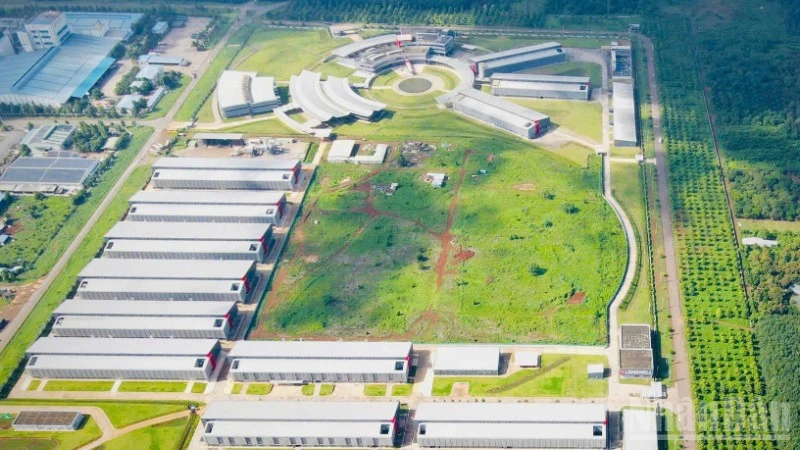
Vietnam's Southeast region, particularly Dong Nai and Tay Ninh provinces, is accelerating the transition towards eco-smart industrial parks, aiming to reduce environmental impact and attract high-quality investment. This move is a significant step towards realizing Vietnam's green economy and sustainable development goals. On July 28, the People's Committee of Dong Nai province, in collaboration with the Vietnam Chamber of Commerce and Industry (VCCI) and relevant units, organized a forum on building eco-smart industrial parks. Dong Nai currently has 44 operational industrial parks out of a total of 58 established ones. The province has issued a plan to orient the transformation of existing industrial parks into green and eco-industrial models by 2030, with a vision towards 2050. This initiative aims to reshape the region's industrial development model towards modernity, intelligence, efficiency, and low emissions. Nguyen Kim Long, Standing Vice Chairman of the Dong Nai Provincial People's Committee, emphasized that building eco-smart industrial parks is not merely about meeting environmental standards but is a process of reorganizing production towards modernity, resource saving, cost reduction, increased productivity, and enhanced participation in global supply chains. Dong Nai plans to selectively attract investment, prioritizing high-tech, clean technology, high value-added projects that are resource-efficient and environmentally friendly. The province will also gradually convert existing industrial parks towards an ecological model, promoting energy saving, water reuse, waste circulation, and fostering symbiosis among enterprises within the same industrial park. Tay Ninh province, facing increasing demands for sustainable development, also identifies the construction of eco-smart industrial parks as a driver for enhancing competitiveness and attracting high-quality capital flows. The province focuses on developing industrial parks that efficiently utilize resources, promote the circular economy, strengthen the application of digital technology in management and operation, and encourage the use of clean and renewable energy. The 400-hectare Prodezi Industrial Park has already transitioned to an eco-industrial park model, representing a significant step towards replicating this model across the province. Ho Sy Hung, Chairman of VCCI, noted that while traditional industrial parks have significantly contributed to economic growth and job creation, they have also revealed issues such as environmental pollution, resource waste, and a lack of inter-enterprise linkages. Therefore, the development of eco-industrial parks has become an urgent necessity for Vietnam amidst climate change and environmental degradation. Enterprises participating in this model not only gain economic benefits but also demonstrate their commitment to sustainable development, the circular economy, and carbon neutrality to the international community. However, the number of industrial parks investing in new, ecological standards remains low. Statistics indicate that out of approximately 425 industrial parks in Vietnam, only about 1-2% are transitioning to the eco-industrial park model. Contributing factors include higher initial investment costs (15-30% more than traditional parks), a lack of incentive policies, insufficient resource sharing and collaboration among businesses, slow technological conversion, difficulty accessing green finance, and a shortage of specialized personnel in sustainable development. To promote the substantive and sustainable development of eco-industrial parks, relevant authorities and sectors must comprehensively implement solutions encompassing institutions, policies, infrastructure, and technology, aligning with international practices and standards. Source: Nhan Dan

0

Original source

Nhan Dan

原文を読む