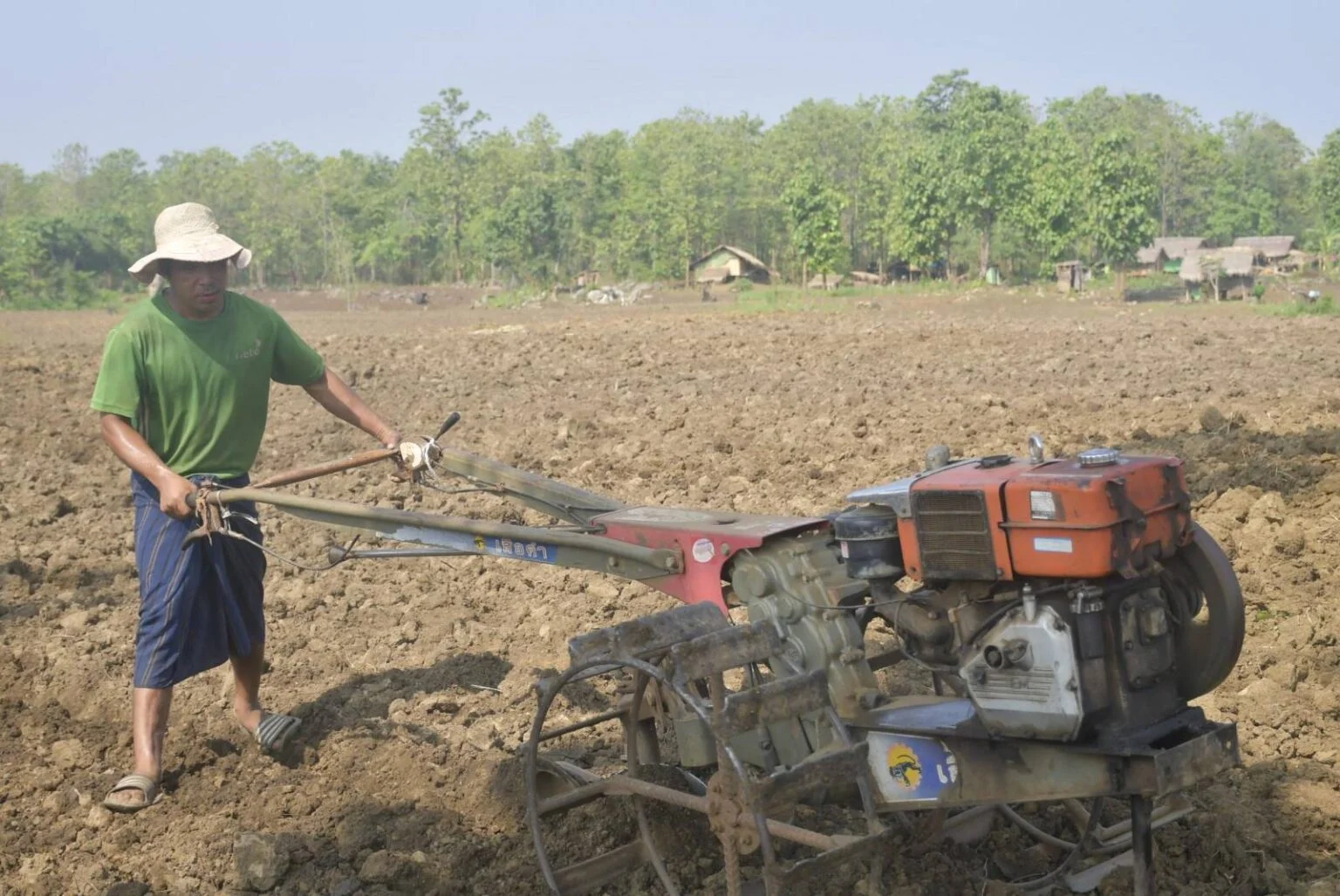
Declining Agriculture and the Livelihoods of the Karenni People
When the rainy season arrives, the rural areas of Karenni State are usually transformed into a beautiful landscape filled with upland rice, corn, peanuts, and other crops. The fresh scent of soil drifting from cultivated fields has long been a defining feature of this mountainous region. However, since the military coup in 2021, the armed conflict that spread across Karenni State has significantly impacted its agricultural system and devastated the socio-economic lives of its farming communities. Due to the ongoing conflict situation, the agricultural livelihoods of local farmers have changed. While farming was once their primary source of income, they now face numerous difficulties in continuing their agricultural activities. Today, farming in Karenni is no longer simply about preserving a traditional way of life, but it has become a struggle for survival. For generations, Karenni communities cultivated seasonal crops such as rice, corn, sesame, and peanuts. Farmers and agricultural laborers were generally able to maintain self-sufficient livelihoods. At the beginning of each rainy season, fields would come alive with activity, providing both food and income for local families. Today, however, due to the current instability, farmers are unable to plow their fields, and the lack of safety has disrupted agricultural activities across the state. Most farmers have been displaced by the fighting and are no longer able to look after their land. As a result, they can no longer cultivate the main crops they once relied on, instead growing only a limited number of crops that are relatively easy to plant. At the same time, obtaining essential farming inputs, including seeds, fertilizers, and agricultural equipment, has become increasingly difficult. Farmers are also unable to transport and sell their produce in markets, leading to a significant decline in income. The conflict has also affected food security. Around 80 percent of Karenni’s population has been forced to flee their homes, while many others have migrated to different parts of Myanmar or abroad in search of work. As agriculture deteriorates, the livelihoods of Karenni communities, which have traditionally depended on farming, have steadily declined. Today, many families cultivate crops simply to feed themselves rather than to earn a living. According to statistics compiled in 2018 by the former Kayah State Government’s Investment Committee, Karenni State had approximately 90,000 acres of cultivable farmland. In 2026, however, only just over 20,000 acres are expected to be cultivated, according to Ko Tint Swe, Deputy Director (1) of the Agriculture, Livestock and Irrigation Department under the Interim Executive Council (IEC). “I think around 20,000 acres can be cultivated, just a little over 20,000 acres,” he shared during an interview with Kantarawaddy Times in May. Not only local residents but also internally displaced people (IDPs) are now struggling to sustain their livelihoods using whatever limited resources remain within their reach. In the past, families cultivated large ancestral farmlands passed down through generations. Today, many have been forced to abandon those fields due to the threats posed by artillery shelling, drones, and airstrikes. “The biggest concern while we’re working is the drones flying overhead. Another worry is whether we’ll be able to harvest what we’ve planted. If fighting breaks out during harvest season, will we have to leave everything behind? It is a 50-50 gamble. If we don’t farm, we won’t have anything to eat. But if we do farm, we’re afraid we won’t be able to harvest our crops,” said a displaced woman from eastern Loikaw Township. Small backyard vegetable gardens beside makeshift shelters in displacement camps have become one of the main sources of food for Karenni IDPs. However, limited space, living in remote forested areas, shortages of cultivable land, and inadequate access to water have all contributed to declining agricultural production. Despite these hardships, solidarity among Karenni communities has grown stronger. Collective farming initiatives, seed-sharing among neighbors, and assistance from local administrative bodies have helped sustain agricultural activities under extremely difficult conditions. Departments under the interim government, along with civil society organizations, continue to support displaced communities so they can carry on farming wherever possible. In turn, displaced families are making every effort to cultivate whatever land is available. “Last year, when we went to harvest peanuts and rice, people from the village, including some of us, were hit by drone attacks. This year, we don’t even know whether we should plant or not. But if we don’t plant, we won’t have anything to eat. We can also no longer rely on donors, and even if we wanted to, there aren’t any left,” said another displaced woman from Hpruso Township. Although the war has dramatically reshaped Karenni’s landscape, it has not destroyed the resilience of its displaced people. Today, agriculture in Karenni is no longer pursued for profit; instead, it has become a stronghold for survival and the struggle for freedom. While the state’s agricultural sector has suffered a severe decline because of the conflict, the determination of displaced Karenni farmers has not diminished. The small household gardens surrounding displacement camps and the courage to continue farming amid countless dangers have become powerful symbols of the Karenni people’s resilience and their determination to survive.
This article requires PRO
This article is outside the free access window or is a special report. PRO unlocks it and the full archive.
Related articles
- House building material shop owner stabbed and robbed to death in North Dagon, 3 perpetrators on the run
A male owner of a house building material shop was attacked and killed by robbers in his home in North Dagon Township, Yangon Region, on the afternoon of October 5, yesterday, according to a local social assistance organ
- Mae Tao Clinic highlights Thai-Myanmar border crisis after winning Okinawa Peace Prize
In an exclusive interview with DVB following the announcement of the 13th Okinawa Peace Prize, Dr. Cynthia Maung, founder and director of the Mae Tao Clinic, reflected on the clinic’s recognition as the first non-Japanes
- MAA calls for a one-day work stoppage to protest the visit of the interim president Min Aung Hlaing to Malaysia
Ayeyarwaddy Times October 5 Myanmar Affairs Alliance (MAA) has urged Myanmar nationals residing in Malaysia to participate in a "work stoppage strike" by refraining from going to work entirely on the upcoming October 7th
- Skeletons of 12 Civilians Discovered in Mass Graves in Myanmar’s Myaing Township
The human remains of 12 civilians abducted by Myanmar military forces in June 2023 have been discovered in two mass graves near Wetpoke Village in Magway Region’s Myaing Township, according to local resistance fighters a