General articles are free for 24 hours after publish.
Vietnam, China Bolster International Cancer Care Through Remote Consultations
Vietnamese and Chinese medical experts are collaborating to build an international network for remote consultations and second opinions in cancer treatment. This initiative aims to enhance access to advanced therapies for Vietnamese patients.
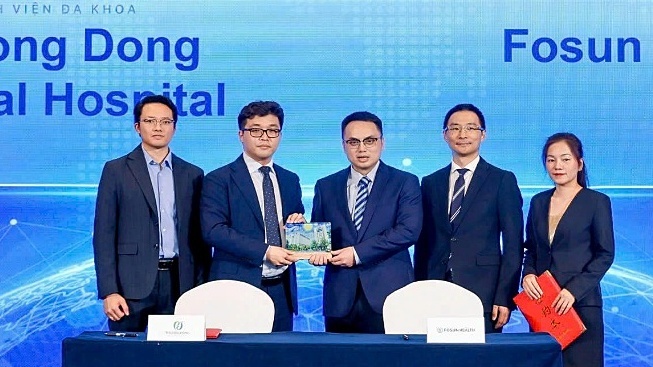
Vietnamese and Chinese medical experts are strengthening cooperation to build an international network for remote consultations and second opinions in cancer treatment. This was revealed at the "First International Cancer Treatment Forum" held on September 19 in Foshan City, Guangdong Province, China. The forum, organized by Fosun Health, saw the participation of representatives from Vietnamese medical facilities including Hung Vuong General Hospital and Phuong Dong General Hospital. Discussions at the event focused on international medical services, and Fosun Health signed cooperation agreements on cancer care with several Vietnamese healthcare institutions, emphasizing remote healthcare, expert collaboration, and patient services. Through this partnership, Vietnamese doctors can conduct online discussions with Chinese expert teams on complex cancer cases, receiving multidisciplinary treatment recommendations tailored to individual conditions. The collaboration will also explore mechanisms for patient transfer and medical service coordination between the two countries, aiming to support patients requiring more advanced specialized treatment. This cooperation is expected to improve Vietnamese patients' access to new treatment methods such as CAR-T cell therapy and CyberKnife radiotherapy. Specifically, the application of CAR-T therapy in cancer treatment and research advancements in China were shared, with discussions on the potential for wider adoption of this technology in the region. CyberKnife is a non-invasive radiotherapy method that uses robots and image-guided systems to focus radiation on tumors. The remote consultation and second opinion mechanism will assist patients in receiving expert evaluations from Chinese specialists from the early stages of treatment without needing to travel. Subsequently, "cross-border care" may be arranged based on individual conditions and medical recommendations. This model, combining remote evaluation with necessary transfers, also contributes to reducing unnecessary time and costs for patients. Furthermore, enhancing expertise and academic exchange are key focuses of the collaboration. Vietnamese oncologists will participate in online case discussions, exchanging professional knowledge and technical training with multidisciplinary Chinese teams. Both sides aim to share experiences in handling difficult cases, treatment protocols, and clinical practices, thereby improving capabilities in diagnosing and treating complex cancers and accessing new medical technologies. Moving forward, Fosun Health plans to further develop this cooperation platform to promote expert exchange, remote healthcare, and patient service cooperation between Chinese and Vietnamese medical institutions. The cross-border healthcare cooperation system will be progressively refined to offer a wider range of professional and cost-effective options to more patients. Fosun Health, established in 2010, is a subsidiary of Shanghai Fosun Pharmaceutical (Fosun Pharma), operating in the medical services sector. The company has developed a system comprising general hospitals, specialized hospitals, clinics, and laboratories, with a focus on areas such as oncology and orthopedics. As of June 2026, Fosun Health operates 18 medical facilities with a total of 6,470 beds and holds 8 internet hospital licenses. The company is also expanding its international medical cooperation, including activities in Vietnam.
Original source
VnExpress