6.3 Million PKK Cadres: The Driving Force Towards Indonesia's Golden Era in 2045
Over 6.3 million cadres of the PKK (Family Empowerment and Welfare Movement) across Indonesia are highlighted as crucial social capital for national development, driving towards the 'Golden Era of Indonesia' in 2045. The PKK aims to strengthen coordination with government priority programs and integrate them into regional planning.
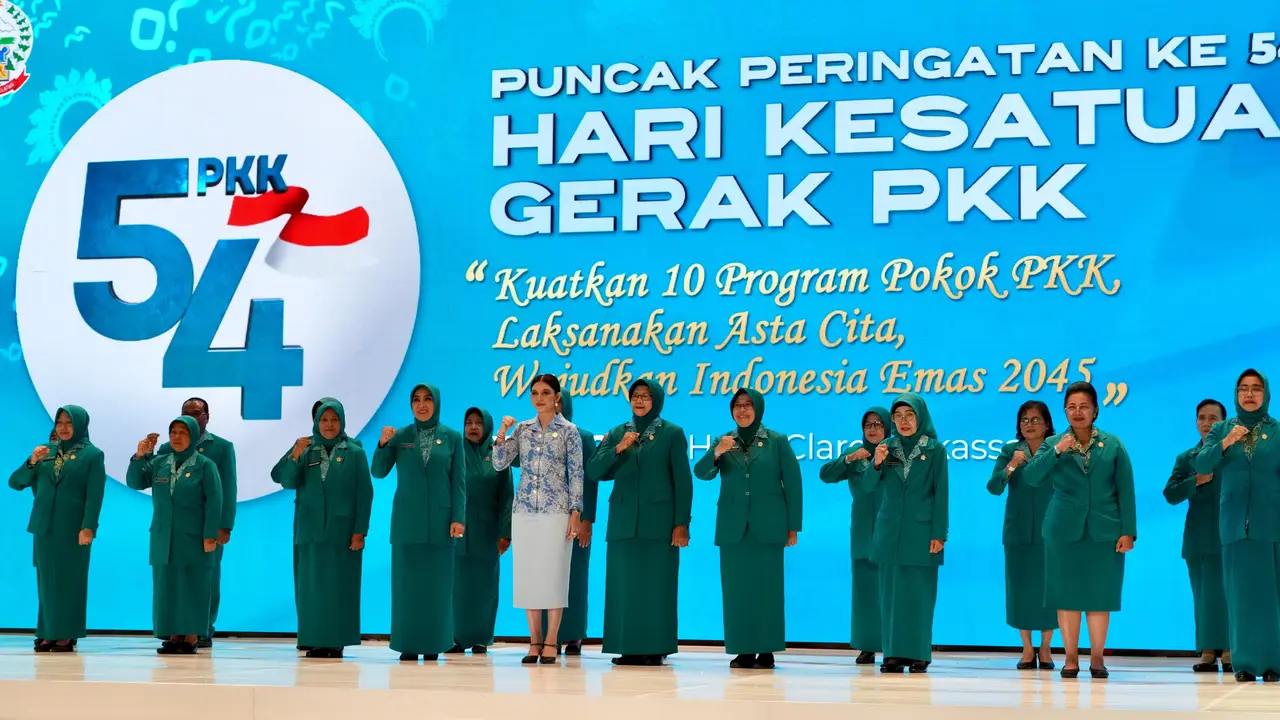
The network of PKK (Family Empowerment and Welfare Movement) cadres across Indonesia, numbering over 6.3 million, is being highlighted as a crucial social capital for national development, driving towards the realization of Indonesia's 'Golden Era' in 2045. Tri Tito Karnavian, the Chairperson of the National PKK Movement, urged administrators and cadres to strengthen the 10 core programs of the PKK, aligning them with the 'Asta Cita' (Eight Promises) of the President and Vice President. This initiative aims to contribute to Indonesia's Golden Era in 2045. "This theme underscores the commitment of the PKK movement to strengthen the implementation of the 10 core PKK programs in harmony with the 'Asta Cita' of the President and Vice President of the Republic of Indonesia, serving as a concrete contribution towards Indonesia's Golden Era in 2045," Tri stated during the peak event of the 54th PKK Unity Movement Day (HKG PKK) in Makassar, South Sulawesi, on July 12, 2026. The PKK's strategic role in national development is reinforced by Presidential Regulation No. 99 of 2017 concerning the Family Empowerment and Welfare Movement, and further mandated by the Minister of Home Affairs Regulation No. 36 of 2020, which requires the development of the PKK Master Plan and Strategic Plan for 2025-2029, aligned with the National Medium-Term Development Plan (RPJMN) 2025-2029. According to the 2026 Village and Sub-district Profile Data (Prodeskel) from the Ministry of Home Affairs, there are currently 6,364,671 PKK cadres spread across 38 provinces, 514 regencies/cities, and 83,762 villages/sub-districts throughout Indonesia. Tri emphasized that the strength of this cadre network serves as a significant social capital for accelerating the implementation of various government priority programs. Tri also stressed the importance of strengthening coordination between regional PKK bodies and regional government apparatus organizations (OPD) to ensure PKK programs are integrated into regional planning and budgeting documents. He noted that even amidst government efforts to improve budget efficiency, the PKK movement must remain consistent in supporting government programs. During the 54th HKG PKK celebration, the PKK also signed Memorandums of Understanding (MoUs) with nine ministries, government institutions, and non-governmental partners to enhance collaboration. Additionally, the PKK presented the "Adhi Bhakti Utama" award, a gold pin, to cadres who have served continuously for over 25 years. Tri also reported on the successful series of HKG PKK activities, including a synchronized intake of multiple micronutrient supplements (MMS) by 54,000 pregnant women in 24 regencies/cities in South Sulawesi, which set a MURI (Indonesian Museum of Records) record. Tri expressed his appreciation to all PKK cadres, Dasawisma groups, ministries, institutions, regional governments, the business sector, academics, media, and all partners who have supported the PKK movement. He reaffirmed that the PKK will continue to strengthen its role as a strategic partner of the government in realizing empowered and prosperous families. Attendees at the event included the Patron of the PKK, Selvi Gibran Rakabuming, accompanied by members of the Indonesian Women's Solidarity (Seruni) of the 'Merah Putih' Cabinet, the Minister of Health, the Minister of Women's Empowerment and Child Protection, the Head of the Food and Drug Supervisory Agency (BPOM), the Governor of South Sulawesi, and officials from the central, provincial, and regency/city PKK bodies across Indonesia, along with other relevant dignitaries.
多角的分析
PKKの630万人以上のカドレという広範なネットワークは、政府の社会経済開発プログラムの実施において、人的資源としての大きな潜在力を持つ。特に、地方レベルでの情報伝達、プログラムの浸透、そして地域社会の動員において、その役割は大きい。2045年のインドネシア黄金期という長期目標達成のためには、これらのカドレが地方経済の活性化や、貧困削減、健康増進といった具体的な社会経済指標の改善にどれだけ貢献できるかが鍵となる。予算効率化が進む中で、PKKのような草の根組織の活用は、低コストで効果的な開発戦略となり得る。
PKKカドレのネットワークは、直接的な投資対象ではないものの、インドネシアの社会インフラの安定性と開発の推進力として、間接的に投資環境に影響を与える。特に、地方での政府プログラムの円滑な実施は、地域経済の活性化や社会問題の軽減につながり、結果として投資リスクの低減に寄与する可能性がある。企業は、PKKとの連携を通じて、地域社会への浸透やCSR活動の実施において、より効果的なアプローチを取れる可能性がある。長期的な視点では、社会の安定と発展は、あらゆる投資にとって不可欠な要素である。
630万人を超えるPKKカドレは、インドネシアの社会構造において、家庭や地域社会に深く根差した影響力を持つ。彼らは、保健、教育、経済、環境など、PKKの10の主要プログラムを通じて、国民生活の様々な側面に直接関与する。特に、地方や農村部では、政府の政策やサービスが届きにくい層への情報提供や支援の担い手となる。今回の「インドネシア黄金期2045」という国家目標との連携強化は、カドレたちの活動のモチベーションを高めると同時に、彼らの活動がより国家的なビジョンに結びつくことを意味する。一方で、カドレの活動が政治的な影響を受けないよう、中立性と効率性を保つことが、社会的な信頼を得る上で重要となる。例えば、地方の妊婦がMMSを摂取した記録がMURIに登録されたことは、PKKの活動が具体的な成果として社会に認知され、健康意識の向上に寄与する一例である。
PKKカドレの活動は、ジャカルタのような大都市から地方の村落部まで、インドネシア国民の日常生活に直接的な影響を与える。特に、貧困層や情報へのアクセスが限られる地域では、PKKカドレが健康相談、栄養指導、教育支援、さらには小規模ビジネスの支援といった形で、生活の質の向上に貢献する。2045年の黄金期を目指すという国家目標は、市民にとっては、より良い未来への希望となるが、その実現には、カドレたちの活動が、地域社会の具体的なニーズに応え、公平に行き渡ることが不可欠である。市民は、PKKの活動を通じて、政府の政策が身近な生活にどのように還元されるかを実感することになる。
背景・歴史的文脈
PKK(家族福祉・発展推進運動)は、1970年代初頭にスハルト政権下で、家庭の福祉向上と女性の社会参加促進を目的として設立された。当初から、中央政府の政策を地方の家庭レベルに浸透させるための重要なチャネルとして機能してきた。大統領令や内務大臣令によってその法的地位と役割が強化されており、特に地方行政との連携が重視されている。2045年の「インドネシア黄金期」という目標は、インドネシア独立100周年を記念する長期開発計画の一環であり、PKKはその達成に向けた社会基盤の強化を担う組織として位置づけられている。
原文ソース
Liputan6