Loy Krathong vs Yi Peng: Understanding Thailand's Iconic Festivals
Culture
2026年7月26日
5
Chiang Rai Times

General articles are free for 24 hours after publish.

Loy Krathong vs Yi Peng: Understanding Thailand's Iconic Festivals

Share
AI Summary

Thailand's iconic Loy Krathong and Yi Peng festivals, often confused, are distinct events with different origins, rituals, and regions. Their overlap, especially in Chiang Mai, leads to common misconceptions, highlighting the importance of understanding their unique characteristics for a richer experience.

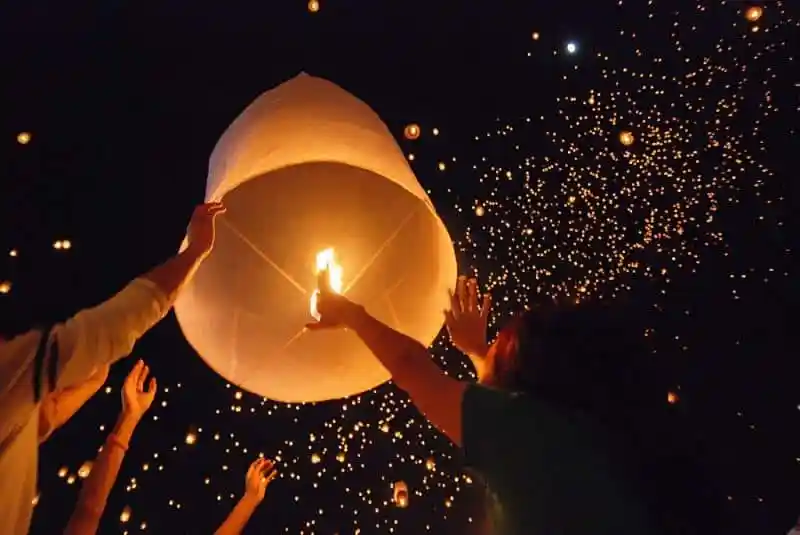
Every November, thousands of photos flood social media showing glowing lanterns drifting over a Thai river or rising into a starlit sky. Most captions call it “Loy Krathong.” Many call it “Yi Peng.” Few explain the real difference between Loy Krathong and Yi Peng, even though they are two separate festivals with different origins, different rituals, and different rules for visitors. This guide breaks down Loy Krathong vs Yi Peng in plain terms, covers the 2026 dates, shows you where to watch each one, and explains the legal rules most travel guides skip. Loy Krathong is a nationwide Thai festival where people float small decorated baskets, called krathongs, on rivers and canals. Yi Peng is a regional festival from Northern Thailand, mainly Chiang Mai, where people release paper lanterns into the sky. Loy Krathong happens all over the country. Yi Peng happens almost only in the north. In Chiang Mai, the two festivals usually fall on the same nights, which is the main reason people struggle to tell Loy Krathong and Yi Peng apart. Loy Krathong dates back centuries and blends old Thai beliefs with Buddhist and Brahmin influence. The word “loy” means “to float,” and a “krathong” is a small raft, traditionally made from a slice of banana trunk, folded banana leaves, flowers, incense sticks, and a candle. On the night of the festival, people carry their krathong to the nearest river, canal, or even a hotel pool, light the candle, make a wish, and set it on the water. The act is a way of thanking Phra Mae Khongkha, the goddess of water, for the year’s rain and rivers, and asking forgiveness for polluting the waterways. Many people also see it as a way to let go of anger, bad luck, or a difficult year. Because Loy Krathong depends only on access to water, you can join it almost anywhere in Thailand, from a canal in Bangkok to a river in Chiang Rai. Yi Peng comes from the old Lanna Kingdom, which once covered much of Northern Thailand, including Chiang Mai and Chiang Rai. The name means “full moon of the second month,” based on the old Lanna lunar calendar, which counts months differently from the standard Thai calendar. The centerpiece of Yi Peng is the khom loi, a paper lantern held open by a bamboo frame and lifted by hot air from a small fuel cell, similar to a mini hot air balloon. Locals light the lantern, say a wish or a prayer, and release it. As it rises, it is believed to carry away bad luck and misfortune along with it. Unlike Loy Krathong, Yi Peng is not officially a national holiday. It survives mainly as a strong regional tradition, and Chiang Mai has turned it into one of the most photographed events in Thailand. In Chiang Mai, Loy Krathong and Yi Peng usually land on the same days or overlap by a day, because both follow lunar calendars tied to the November full moon. Over the years, the two events have blended into what locals now often just call the Chiang Mai Lantern Festival, even though they remain two separate traditions with separate meanings. Outside the north, this overlap does not happen. In places like Bangkok, Sukhothai, or Chiang Rai, you will find Loy Krathong celebrations with krathongs on the water, but you will rarely see organized sky lantern releases, since Yi Peng stays largely a Northern Thai custom. Both festivals follow lunar calendars, so the exact date shifts every year. For 2026, most official sources point to celebrations falling around November 24 and 25, with the main Loy Krathong night and the peak Yi Peng lantern release close together. Because lunar dates can be confirmed only closer to the event, check local listings or your hotel a few weeks before you travel to lock in the exact night. If you are planning your trip around this time of year, late November also falls right at the start of Chiang Rai’s cool season, which makes it a comfortable stretch for evening festivals. Both cities sit in the old Lanna region, but the experience of Loy Krathong and Yi Peng differs a lot between them. Chiang Mai is the bigger, busier option. The Ping River draws the largest crowds for krathong floating, especially near Nawarat Bridge and the riverside restaurants around the Old City. For sky lanterns, the official ticketed events, such as the Yeepeng Lanna International Festival, take place outside the city center in open fields, away from the flight path restrictions. Expect heavy traffic, booked-out hotels, and higher prices during festival week. Chiang Rai offers a calmer version of the same tradition. Local Loy Krathong celebrations happen along the Kok River and in public parks around the city center, with far smaller crowds than Chiang Mai. Yi Peng-style lantern displays appear at temples and public spaces, though large-scale ticketed sky lantern releases are rare here. If you want the spectacle of thousands of lanterns lighting up the sky, Chiang Mai delivers that better. If you want a relaxed evening with real local participation and lower prices, Chiang Rai is the better base, especially if you are already exploring the city’s temples and markets. Joining Loy Krathong costs very little. A ready-made krathong from a street vendor typically runs a small amount in baht, and making your own from banana leaves and flowers costs even less. There is no entry fee to walk up to a river and float one. Yi Peng works differently if you want the full sky lantern experience. Watching lanterns released by others at public viewpoints is usually free. Joining an official, organized mass release, where hundreds of people light and release lanterns together, requires a ticket. These tickets generally range from around 4,900 to 15,900 baht, depending on the event, seating, and whether food is included. Prices rise closer to the festival date, so book in advance if this is the main reason for your trip. If you plan to release a sky lantern in Chiang Mai, know this before you go: releasing lanterns freely inside the Old City and other central zones is against the law. Local authorities enforce “no-fly zones” near the airport and city center for safety reasons, since stray lanterns have caused fires and disrupted flights in the past. Fines for breaking this rule can run into the hundreds of thousands of baht. To release a lantern legally, you need to join an official, ticketed event held outside these restricted zones. Walking up to a riverside and lighting your own khom loi in the city center is not allowed, no matter how common it looks in photos online. Floating a krathong does not carry this restriction. You can do that on almost any river, canal, or pond, in Chiang Mai, Chiang Rai, or anywhere else in Thailand, without a ticket or permit. Loy Krathong is a nationwide Thai festival centered on floating krathongs on water. Yi Peng is a regional Northern Thai festival centered on releasing sky lanterns. They often happen around the same nights in Chiang Mai, which is why people confuse them. No. Floating a krathong on a river or canal is permitted. Releasing sky lanterns freely in central Chiang Mai is illegal. Information Source: Chiang Rai Times

0

Original source

Chiang Rai Times

原文を読む