Vietnam Boosts National Competitiveness Through Digital Government and Advanced Technologies
Technology
2026年7月30日
5
VietnamPlus English

General articles are free for 24 hours after publish.

Vietnam Boosts National Competitiveness Through Digital Government and Advanced Technologies

Share
AI Summary

Vietnam is aiming for national competitiveness and sustainable growth by expanding digital government services, investing in AI and quantum technologies, and fostering talent. The development of the semiconductor industry is a key element of its national strategy.

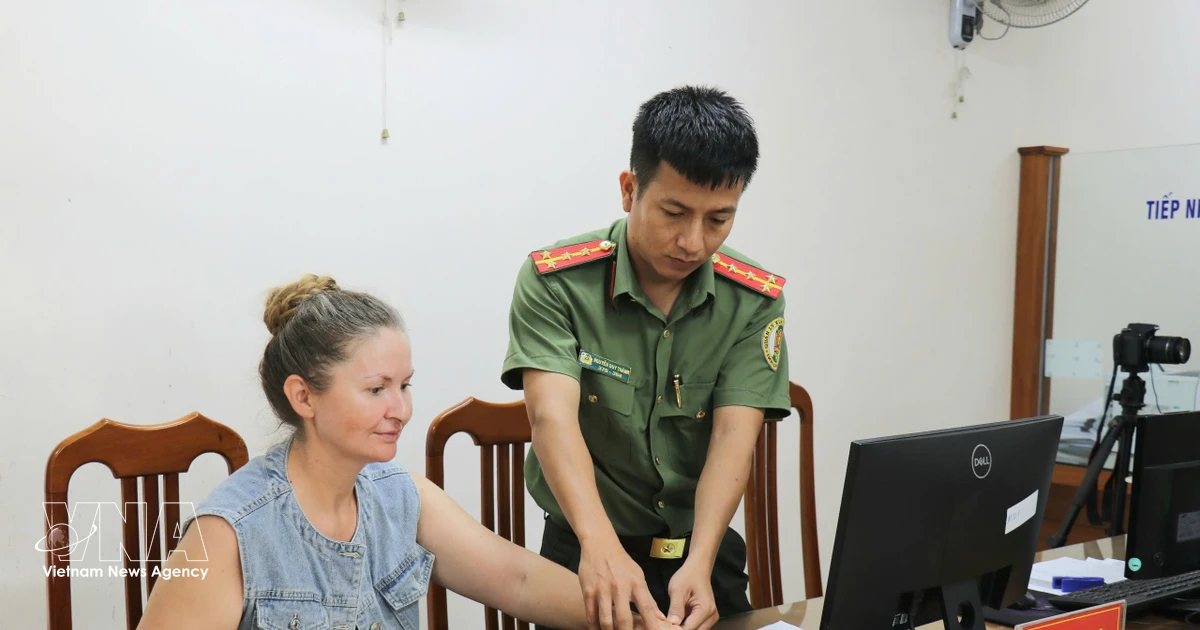
To improve service quality and ease congestion during peak hours, Noi Bai International Airport has introduced biometric check-in kiosks. From June 15, 2026, mobile subscribers who transfer a SIM card to another mobile device must complete facial biometric re-authentication within two hours. Failure to do so may lead to one-way service suspension and, ultimately, service termination. The biometric system, built on the VNeID platform, allows passengers to be identified through pre-verified biometric data, enabling faster and more secure processing throughout their journey. The Vietnam Global Innovation Connect (VGIC) 2026 serves as a platform for dialogue among policymakers, enterprises, startups, investors and the global Vietnamese expert community to transform knowledge, technology and resources into practical initiatives and projects that contribute to the country's development. Held under the theme "Quantum Connectivity – Mastering Technology – Breakthrough Development", Quantum Year 2026 centres on four pillars: science, technology, education and training, and innovation ecosystem development. Dr. Ho Duc Thang, a full-time member of the National Assembly’s Committee for Cultural and Educational, said productivity is the key to sustaining double-digit economic growth, and AI has greater potential to improve productivity than any previous technology. Raising the level of scientific and technological development is the only way to break out of the middle-income trap. Without it, Vietnam will remain stuck in low-value segments, said Dr. Le Xuan Sang, Deputy Director of the Institute of Vietnam and World Economy. Stronger networks linking government agencies, research institutes, universities, businesses and scientific organisations will provide a solid foundation for faster and more effective development of quantum technology, contributing to the sustainable development of each country and the region as a whole, said a Gia Lai official. Held annually since 2013, the Vietnam School on Astrophysics was established by the Rencontres du Vietnam Association and ICISE to train, mentor and inspire young scientists pursuing astronomy and astrophysics. The work has just been published in Nature Communications – one of the world’s leading prestigious scientific journals – opening up an important foundation for genetics research, precision medicine and preventive medicine in Vietnam. As a leading centre for science, technology, and innovation, Ho Chi Minh City is taking proactive steps to build capacity for the quantum computing era, with a strong focus on developing talents to seize arising technological opportunities. During a working visit to Austria from July 19-23, a VAST delegation led by Vice President Prof. Dr. Tran Tuan Anh held a series of meetings with leading research institutions and international organisations, including the International Institute for Applied Systems Analysis (IIASA), the Austrian Academy of Sciences, the Vienna University of Technology (TU Wien), and the International Atomic Energy Agency. As a key activity within the technology component of the Gia Lai Quantum Year 2026, the event brings together nearly 100 contestants across 26 teams, including students, PhD candidates, young researchers, startups, and tech talents, alongside 50 domestic and international experts, mentors, and judges. HORECFEX Vietnam 2026 will take place on August 20–21 at the Ariyana International Convention Centre in the central city of Da Nang, showcase digital solutions and innovation aimed at improving efficiency and competitiveness across Vietnam's hospitality and tourism industry. For Assoc. Prof. Ta Duc Tung, the biggest gift overseas researchers can give isn’t simply handing over technology; it’s linking up knowledge, people and entire research ecosystems. For digital government, stronger investment is needed in shared digital infrastructure, particularly critical infrastructure, AI infrastructure and high-performance connectivity. The capital city of Hanoi aims for the digital economy to contribute around 40% of its Gross Regional Domestic Product (GRDP) by 2030, with the Hoa Lac Hi-Tech Park serving as the core research and development hub. The signing and implementation of the five projects mark a concrete step toward realising the Party and State’s policies on science – technology development, innovation and digital transformation, with the semiconductor industry identified as one of strategic technologies fundamental to national competitiveness and technological autonomy. Data has become a strategic asset and a key resource for socio-economic development, as well as a foundation of national competitiveness. As a result, effective data governance, utilisation and protection have become increasingly urgent for organisations and businesses. Building a national talent ecosystem is a long-term development strategy that will underpin Vietnam's competitiveness and innovation-driven growth. Building a national electronic archives system is not merely a matter of investing in technological infrastructure. It must be designed in an integrated manner from the outset, encompassing system architecture, governance procedures, and data protection mechanisms, to ensure long-term security, integrity, and data sovereignty. Vietnam’s biggest takeaway from Taiwan isn’t just cutting-edge technology alone, but how to build an entire semiconductor ecosystem from the ground up, said Dr. Vo Duc Thang, Assistant Professor at the National Taiwan University of Science and Technology (Taiwan Tech) and President of the Vietnam Innovative and Intellectual Network in Taiwan (China) (VIN Taiwan) told the Vietnam News Agency. According to the Agency for Radiation and Nuclear Safety under the Ministry of Science and Technology, human resources will be among the decisive factors determining whether the country can successfully implement its nuclear power programme on schedule. Copyright, VietnamPlus, Vietnam News Agency (VNA) Editor-in-chief, Mr. Tran Tien Duan.

0

Original source

VietnamPlus English

原文を読む