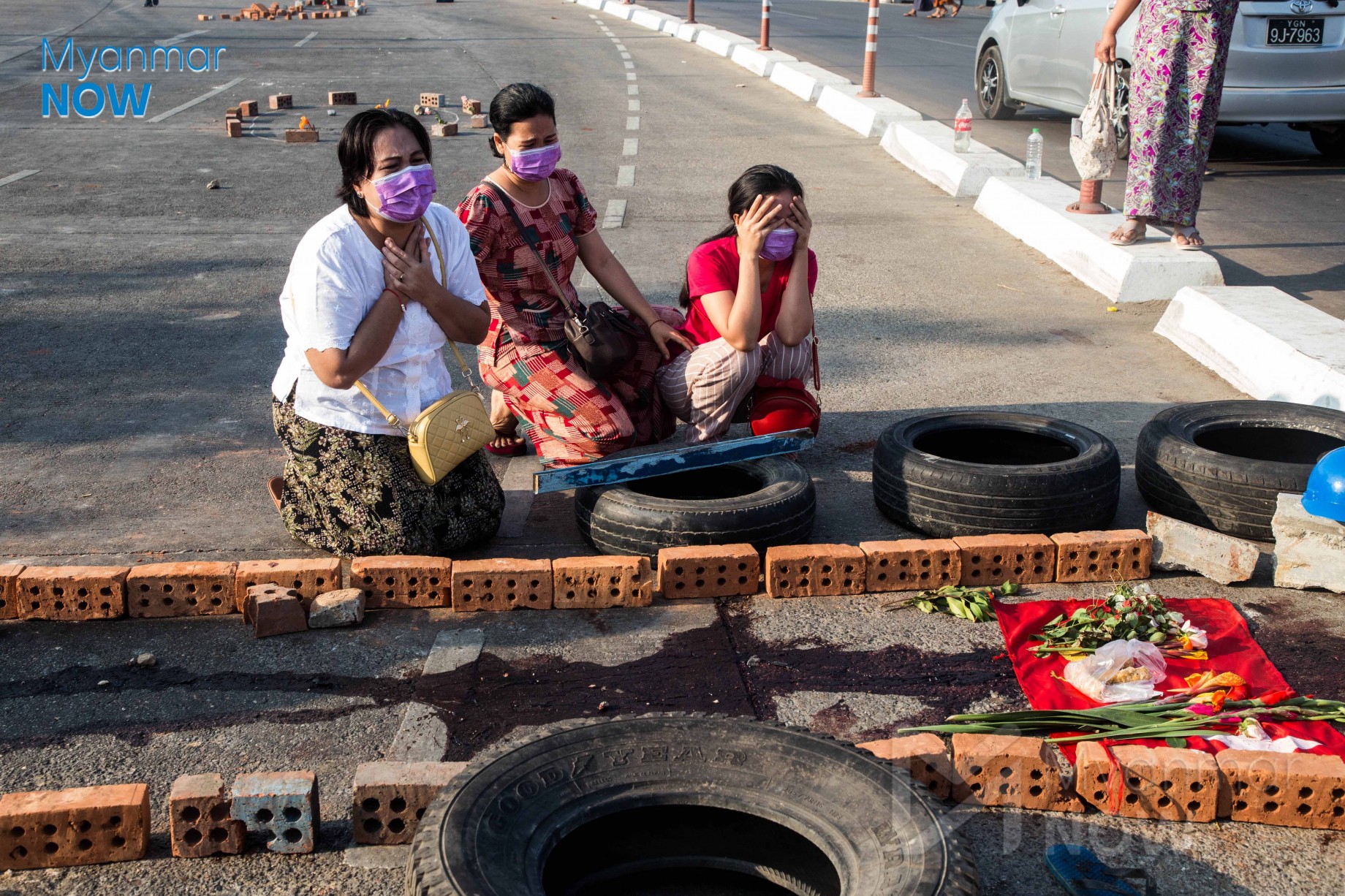
‘Nothing left except death’: Myanmar families grieve huge war toll
Ranks of bereaved Myanmar families bow in silent grief to pray for their dead, some of the latest victims in a years-long conflict now estimated to have claimed 100,000 lives. Clasping their hands at the monastery hall in central Magway Region, they offer alms for the deceased: small cash notes, rice and curry—all they can spare while living through a civil war. “How many more young people will have to die? ” asked Soe Gyi, recounting how his nephew was killed in combat after he quit training as a monk to fight for pro-democracy rebels. “Only the elderly and the very young children are left,” said the 49-year-old last month, speaking under a pseudonym to protect his security, like all others in this story. “The generation in between has been cut down.” Monitor organisation Armed Conflict Location & Event Data (ACLED) said on Wednesday that the number of conflict-related fatalities across all sides since a 2021 coup now stands at 100,114. ACLED tallies media reports of violence. There is no official verified figure, and estimates vary widely. Indiscriminate killing But all around Magway’s Myit Chay area—on the banks of the Ayeyarwady River bisecting Myanmar—the emotional toll is unquestionable. Thaung Sein said her civilian son was killed as their family was displaced by a recent military offensive. “If our younger generation of children can survive until they grow up, there might still be a chance for a better future,” said the 45-year-old from her temporary shelter in the jungle. “But if they cannot even make it that far and things continue like this, there will be nothing left except death.” Her son’s body was discovered burned and pierced with puncture wounds in a bleak landscape of charred villages, she said. Rescuers took pictures of his remains but refused to show her, fearing she would be overwhelmed at the sight. “In this war, they are simply killing people indiscriminately,” she said. “There is no regard at all for whether someone lives or dies.” AFP has not been able to independently verify the accounts of interviewees in this story. Widowed by war The civil war began when a 2021 coup deposing the elected government of Aung San Suu Kyi prompted pro-democracy activists to take up arms against the military, which was already fighting long-running conflicts with ethnic minority armies. Analysts say that after five years, the military is now on the front foot, making advances across the country and signing strategic truces with some ethnic factions. But rebel groups defiantly patrol Myit Chay: a sign there is still more violence to come. “Before the coup, our family lived happily and laughed together, sharing whatever we had,” recalled 39-year-old Yin Than, whose husband went to war in the name of democracy before being killed in April 2024. “It wasn’t a natural death, he died like a dog,” she said. “Now that he is gone, who are my child and I supposed to rely on?
This article requires PRO
This article is outside the free access window or is a special report. PRO unlocks it and the full archive.
Related articles
- ‘Nothing left except death’: Myanmar families grieve huge war toll
Ranks of bereaved Myanmar families bow in silent grief to pray for their dead, some of the latest victims in a years-long conflict now estimated to have claimed 100,000 lives. Clasping their hands at the monastery hall in central Magway region, they offer alms for the deceased: small cash notes, rice and curry — all they can spare while living through a civil war. “How many more young people will have to die? ” asked Soe Gyi, recounting how his nephew was killed in combat after he quit training as a monk to fight for pro-democracy rebels. “Only the elderly and the very young children are left,” said the 49-year-old last month, speaking under a pseudonym to protect his security, like all others in this story. “The generation in between has been cut down.” Monitor organisation Armed Conflict Location & Event Data (ACLED) said on Wednesday that the number of conflict-related fatalities across all sides since a 2021 coup now stands at 100,114. ACLED tallies media reports of violence. There is no official verified figure, and estimates vary widely. But all around Magway’s Myit Chay area — on the banks of the Irrawaddy river bisecting Myanmar — the emotional toll is unquestionable. Thaung Sein said her civilian son was killed as their family was displaced by a recent military offensive. “If our younger generation of children can survive until they grow up, there might still be a chance for a better future,” said the 45-year-old from her temporary shelter in the jungle. “But if they cannot even make it that far and things continue like this, there will be nothing left except death.” Her son’s body was discovered burned and pierced with puncture wounds in a bleak landscape of charred villages, she said. Rescuers took pictures of his remains but refused to show her, fearing she would be overwhelmed at the sight. “In this war, they are simply killing people indiscriminately,” she said. “There is no regard at all for whether someone lives or dies.” AFP has not been able to independently verify the accounts of interviewees in this story. – Widowed by war – The civil war began when a 2021 coup deposing the elected government of Aung San Suu Kyi prompted pro-democracy activists to take up arms against the military, which was already fighting long-running conflicts with ethnic minority armies. Analysts say that after five years, the military is now on the front foot, making advances across the country and signing strategic truces with some ethnic factions. But rebel groups defiantly patrol Myit Chay: a sign there is still more violence to come. “Before the coup, our family lived happily and laughed together, sharing whatever we had,” recalled 39-year-old Yin Than, whose husband went to war in the name of democracy before being killed in April 2024. “It wasn’t a natural death, he died like a dog,” she said. “Now that he is gone, who are my child and I supposed to rely on?