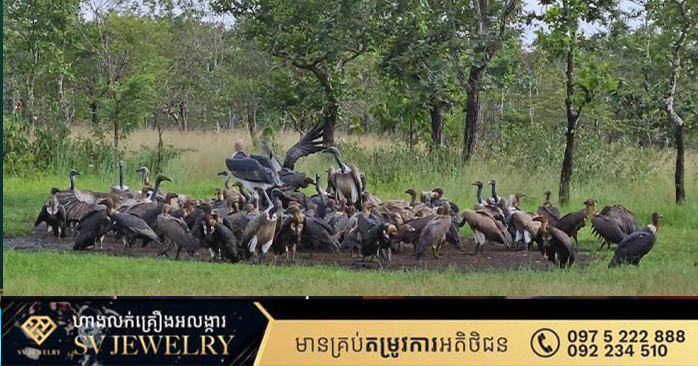
Cambodia Shows Hopeful Signs in Vulture Conservation: Population Stabilization and 10-Year Plan Underway
Cambodia's efforts to conserve critically endangered vulture species are showing positive signs, with populations stabilizing and even increasing in some cases. After over two decades of dedicated conservation work by the government and NGOs, a 22% increase in the estimated minimum population was recorded. A 10-year conservation plan is also in development, highlighting Cambodia's crucial role in Asian vulture survival.
This article requires PRO
This article is outside the free access window or is a special report. PRO unlocks it and the full archive.
Related articles
- Cambodia and UN FAO Strengthen Partnership for Natural Resource Protection and Climate Resilience
Cambodia's Ministry of Environment and the UN Food and Agriculture Organization (FAO) have agreed to expand strategic cooperation to enhance natural resource management and community resilience against climate change impacts. Emphasis was placed on addressing plastic waste pollution and risks from the El Niño phenomenon.
- Cambodia and Germany Pledge Stronger Cooperation on Waste Management, Climate Change
Cambodia's Minister of Environment and the German Ambassador held talks, agreeing to strengthen bilateral cooperation on waste management, climate change response, and environmental protection. Progress in the plastic reduction campaign was particularly noted.
- Cambodia and FAO Enhance Cooperation for Community Sustainability and Natural Resources
Cambodia's Ministry of Environment reaffirmed cooperation with the UN's Food and Agriculture Organization (FAO) to enhance natural resource sustainability and community resilience. While acknowledging FAO's contributions to climate change adaptation and forest restoration, joint efforts to address pressing issues like plastic waste and El Niño were also confirmed.
- Banteay Meanchey Province Urges Farmers to Conserve Water Amid Drought Fears
The Governor of Banteay Meanchey Province has strongly urged farmers to conserve water in anticipation of severe shortages during the upcoming dry season. This follows recent floods that damaged over 20,000 hectares of rice fields, raising concerns about water scarcity.