General articles are free for 24 hours after publish.
Six Javan Slow Lorises Released into Ujung Kulon National Park Habitat
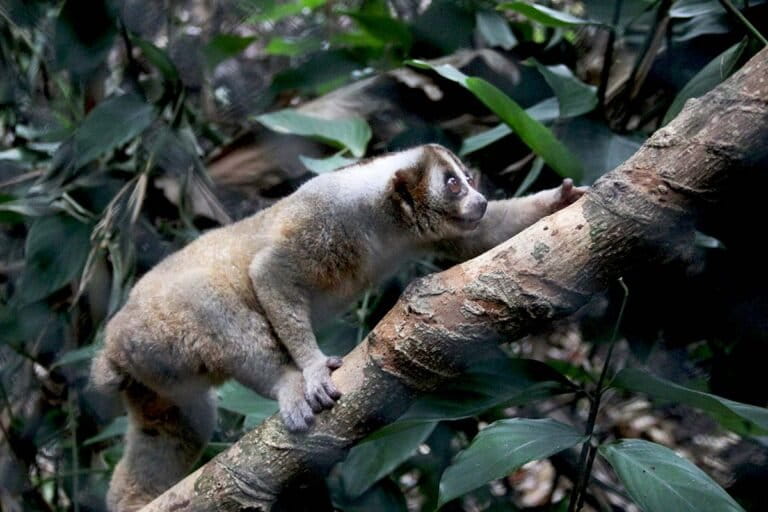
Six Javan slow lorises have been released into the Ujung Kulon National Park, a UNESCO World Heritage site, as part of rehabilitation efforts aimed at reintroducing them into their natural habitat. Local community members also participated in the release, raising awareness for the conservation of this endangered species.
Rosid (40), a neighborhood chief in Rancapinang Village, Cimanggu District, Pandeglang Regency, Banten, never imagined he would be part of a team escorting Javan slow lorises back into the wild. While he had occasionally encountered the Nycticebus javanicus in nature, this afternoon was different. He joined in carrying the primates to a release site in the Ujung Kulon National Park (TNUK). "This is the first time I've experienced this directly," he said. Six individuals of the Javan slow loris were brought to the TNUK area for release. Photo: Falahi Mubarok/Mongabay Indonesia. Through the release initiated by the Indonesian Nature Rehabilitation Initiative Foundation (YIARI), Rosid also learned that slow lorises are protected animals. "This venomous primate holds significant ecological importance and must be conserved." The local community refers to this slow-moving animal as 'muka'. For Rosid, returning the slow lorises to the forest is not just about escorting them, but also ensuring their well-being in their habitat. "We must prevent them from being hunted." He hopes they can live safely, with the forest serving as a secure home free from human disturbance. The route to the release site in TNUK involved a trek through the forest. Photo: Falahi Mubarok/Mongabay Indonesia. Release is not a simple matter. Indri Saptorini, a veterinarian who treats and rehabilitates wildlife, particularly slow lorises, at the YIARI rehabilitation center, stated that returning slow lorises to the forest is a complex process. Before release, each individual must undergo a lengthy rehabilitation, ensuring their physical condition and natural behaviors are fully prepared for life in the wild. The six slow lorises translocated consist of one male and five females, named Eid, Durga, Buzz, Faki, Olivec, and Hormuz. They were brought from the YIARI facility.
Original source
Mongabay Indonesia