General articles are free for 24 hours after publish.
Vietnam Boosts Export Produce Traceability: Đắk Lắk Province Secures 331 Codes for Cultivation Areas
Vietnam's Đắk Lắk Province has assigned export codes to 331 cultivation areas to enhance quality and market access for agricultural products. This initiative aims to strengthen traceability and boost competitiveness in international markets.
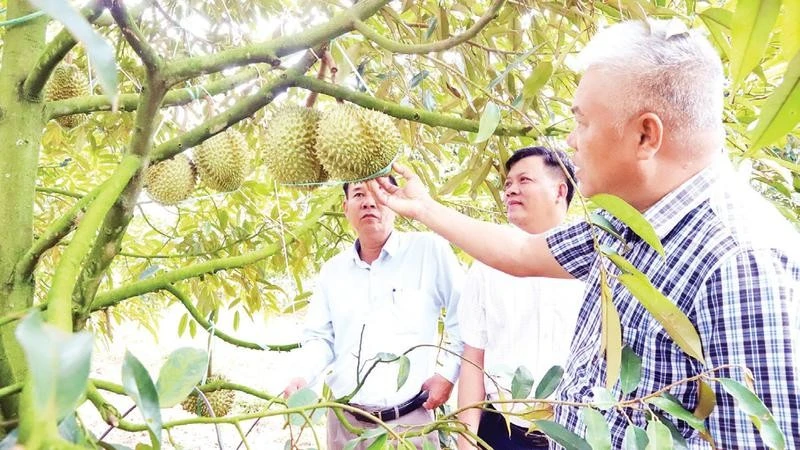
Dak Lak Province in Vietnam's Central Highlands is advancing efforts to enhance the export competitiveness of its agricultural products. According to the provincial Department of Agriculture and Rural Development, as of August 31, 2023, 331 export cultivation area codes (mã số vùng trồng xuất khẩu) had been granted, covering a total area of 9,773.35 hectares. Additionally, 75 domestic cultivation area codes, spanning 1,260.57 hectares, have also been registered. Among the listed produce, durian leads with 280 codes and 7,649.09 hectares. This is followed by lychee with 15 codes, bananas with 9 codes, mangoes with 6 codes, longan with 6 codes, jackfruit with 3 codes, chili peppers with 9 codes, passion fruit with 2 codes, and coconut with 1 code. Furthermore, 53 export packaging facility codes have been issued, including 41 for durian, 7 for bananas, 4 for fresh fruits, and 1 for jackfruit. The issuance of these codes is a crucial step in ensuring the traceability of agricultural products, thereby improving quality management and building consumer trust in international markets. The Vietnamese government prioritizes agricultural exports as a pillar of economic growth and is actively seeking to diversify export destinations beyond its heavy reliance on the Chinese market. The initiatives in Dak Lak Province are expected to contribute to achieving these national objectives. (Supplementary Information) Under Vietnam's one-party system, the government prioritizes economic growth and actively promotes policies to boost agricultural exports. The assignment of cultivation area codes is a concrete measure to encourage quality control and compliance with international standards, thereby increasing competitiveness in export markets. To reduce over-reliance on the Chinese market, ensuring traceability is essential for expanding exports to markets with stricter quality requirements, such as the European Union and the United States.
Original source
Nhan Dan