General articles are free for 24 hours after publish.
Vietnam Aims to Master Global Value Chains for Agricultural and Forestry Exports
Vietnam holds significant global export volume in agricultural and forestry products, but its participation in high-value processes remains limited. Experts advocate for increased investment in design, branding, sustainability, and traceability, alongside a shift towards market demand forecasting.
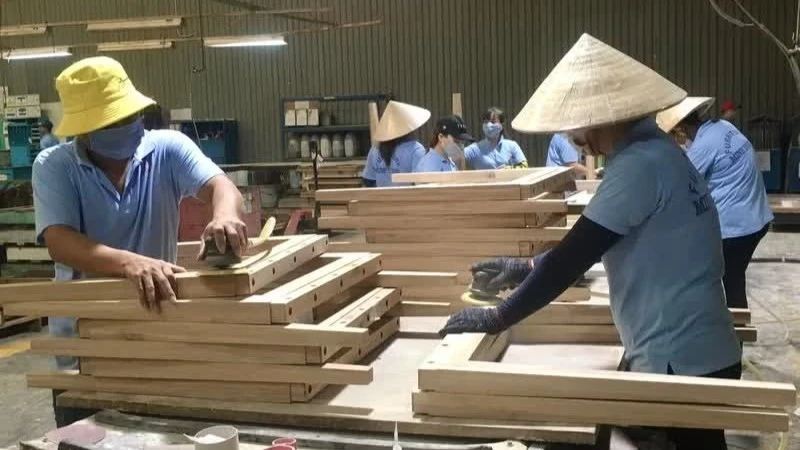
Vietnam has established a significant position in the global market for timber, coffee, and rubber. However, domestic enterprises primarily focus on production, processing, and export, with limited engagement in high-value-added segments, according to recent discussions. A recent online seminar, "Transitioning from Compliance to Leading Global Agricultural and Forestry Value Chains: Vietnam's Reality and Future Opportunities," highlighted that large supply volumes do not automatically translate to a strong position within value chains. Experts pointed out that a substantial portion of added value, technology, branding, standards, data, finance, and decision-making power remains outside Vietnam. Domestic companies are largely concentrated on manufacturing and export, while market standards and business models are often shaped externally. Nguyen Quoc Khanh, Chairman of the Vietnam Timber and Forest Product Association (VIFOREST) and AA Corporation, stated that Vietnam's timber, furniture, and handicraft exports have grown from approximately $300 million 20 years ago to $17.2 billion in 2025, with an export surplus of nearly $12 billion. He noted that while Vietnam has formed a relatively complete supply chain, from forest cultivation to logistics, and created about 1 million jobs, market decision-making power has not kept pace with production capacity. Vietnam largely remains a "manufacturing hub." Most businesses still operate on an OEM (Original Equipment Manufacturer) basis, producing according to client designs. ODM (Original Design Manufacturer) and OBM (Original Brand Manufacturer) models, which allow deeper involvement in design, product development, and brand building, are not yet widespread. Khanh urged the timber sector to invest more in design, branding, sustainability, transparency, and traceability, and to shift from merely meeting requirements to forecasting market trends and proactively adapting to changes in consumer preferences, technology, and standards. Thai Nhu Hiep, Vice Chairman of the Vietnam Coffee and Cocoa Association, emphasized that while Vietnam leads in coffee production, especially Robusta, high volume alone is insufficient without mastery of quality and data. He noted that markets increasingly demand proof of origin, sustainable practices, and reduced emissions. "We need to produce according to market and buyer standards, rather than just producing what we have and then trying to sell it," he stated. A lack of strong linkage and common data systems among businesses was also identified as a challenge. Nguyen Viet Tuong, former Vice Chairman of the Vietnam Rubber Association, reported that Vietnam ranks fourth globally in natural rubber production and third in exports. However, export value is dominated by natural rubber and less processed products, with high-value-added technical rubber and products holding a small share. He called for a shift in focus from volume to value, promoting advanced processing technology, product development, standards, traceability, and branding. To Xuan Phuc, Executive Director of Forest Trends, suggested that Vietnam must transition from being a production and supply base to a reliable partner in global value chains. He argued that traceability, supply chain transparency, standards, and data are crucial for building trust and securing opportunities in higher-value segments. Experts concluded that for sectors with strong export positions, the goal is not just to increase export turnover but to enhance the proportion of retained value, master high-value stages, and gradually participate in shaping standards, technologies, and market rules.
Original source
Nhan Dan