General articles are free for 24 hours after publish.
Cambodia Accuses Thailand of Ceasefire Violations Amid Border Tensions
Cambodian Minister of Information, Net Pheaktra, accused Thailand of violating the December 27, 2025, ceasefire agreement and illegally occupying Cambodian territory. He emphasized that a ceasefire does not legitimize territorial occupation and criticized Thailand's attempts to unilaterally change the status quo, signaling rising tensions over border issues between the two nations.
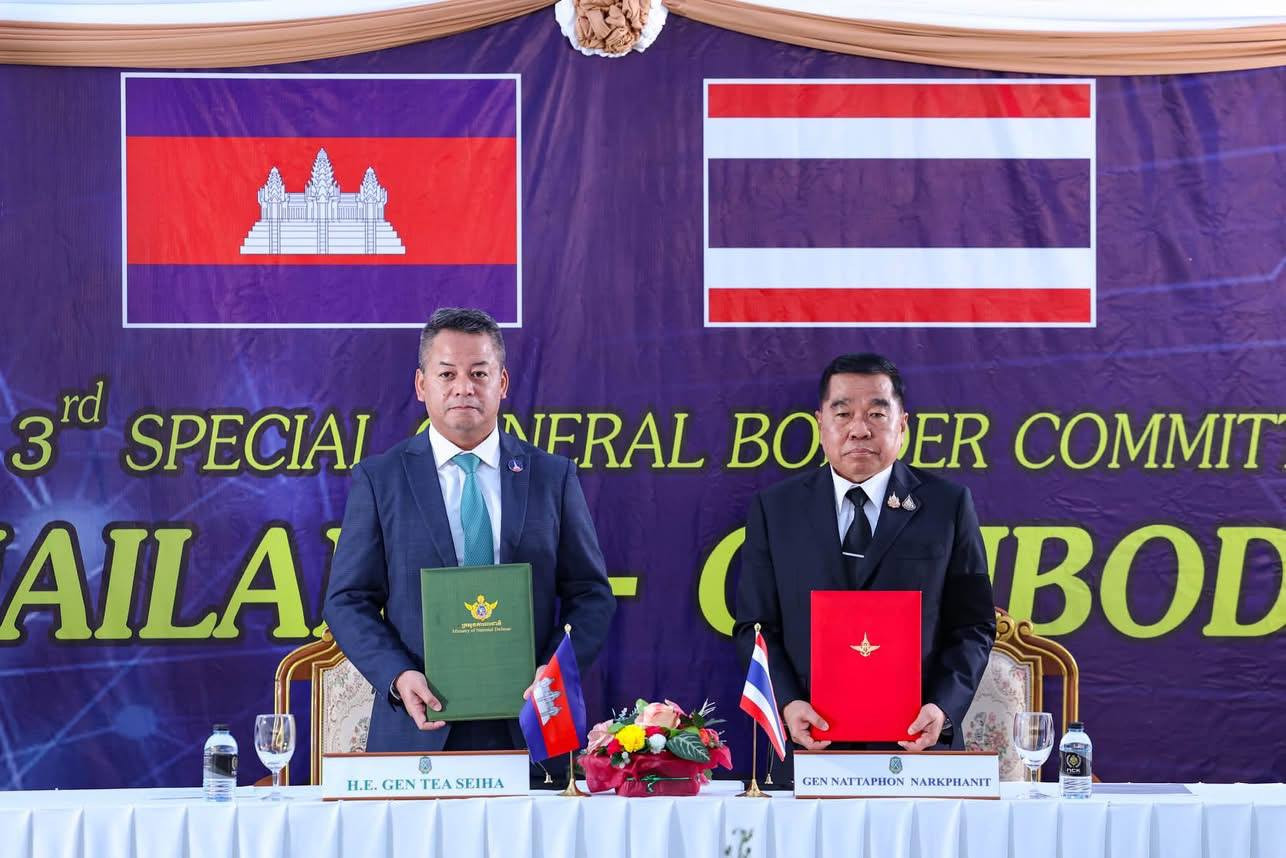
Cambodian Minister of Information, Net Pheaktra, on September 8, 2026, strongly accused Thailand of violating the ceasefire agreement signed on December 27, 2025, and illegally occupying Cambodian territory. The minister emphasized that a ceasefire means "no advancing, no creating new situations on the ground, and no setting new border lines." Regarding the Cambodia-Thailand border situation, Pheaktra posed a simple question: "Can territory illegally occupied by the use of force be transformed into the legal territory of the occupier?" He answered that it is impossible. He stated that this position is not merely Cambodia's stance but aligns with the fundamental principles of international law, which do not recognize border changes made by force, and importantly, adheres to the spirit of the Joint Declaration signed by Cambodia and Thailand on December 27, 2025. The minister pointed out that the Thai military has not respected many provisions of the ceasefire agreement. Specifically, he countered Thailand's argument that maintaining its current troop positions constitutes adherence to the ceasefire. Pheaktra argued that paragraph 2 of the Joint Declaration (maintaining current troop positions) cannot be interpreted independently from paragraphs 3 (not affecting border demarcation and international boundaries), 4 (return of affected residents), and 6 (avoiding construction or reinforcement of infrastructure and military fortifications beyond one's own area). He stated that a ceasefire is a temporary measure to stop fighting and not an acknowledgment of sovereignty over occupied areas. Furthermore, he criticized that after the ceasefire, the Thai military has deeply penetrated Cambodian territory and engaged in illegal occupation and construction activities, even exceeding international borders and Thailand's own unilateral border lines. He warned that this could lead to illegal annexation, violating Cambodia's sovereignty and territorial integrity. Pheaktra also pointed out that if Thailand claims to "fully respect the ceasefire agreement" while simultaneously using the term "current military positions" to maintain control over areas that Cambodia legally claims as its territory, then both claims are contradictory. He stated that Thailand cannot pick and choose only the parts of the agreement that benefit it while ignoring the obligations attached. He emphasized that a ceasefire is not a title deed to territory, and the military's location at 12:00 PM on December 27, 2025, does not determine the international border. Military positions are temporary de facto situations; borders are legal matters. He concluded that any advancement after the ceasefire, the installation of barbed wire, containers, digging trenches, or construction of roads, fortifications, or other infrastructure within Cambodian territory cannot create sovereign rights for Thailand. He asserted that control by force does not create legal ownership, and a fait accompli cannot become an international border. The minister stated that if Thailand respects the ceasefire agreement, it means concretely not advancing, not creating new situations, not strengthening control by force, not obstructing the return of Cambodian citizens, and not using temporary military positions as a basis for territorial claims. This, he said, is the core of a ceasefire: no advancement, no fait accompli, no new border lines. Source: CPP Cambodia
Original source
CPP Cambodia