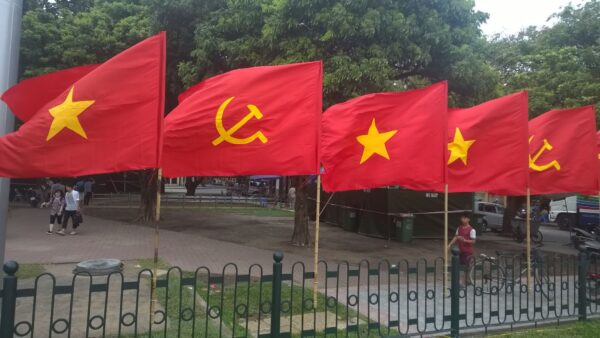
Vietnam Sees New 'Wave of Repression,' Arrests Spike, Rights Group Says
Bangkok-based Project88 documented 56 political arrests in Vietnam in 2025, the highest since 2018, doubling the number from 2022. A human rights group calls this a new 'wave of repression.'
Project88, a Bangkok-based advocacy group, has documented 56 political arrests in Vietnam in 2025, marking the highest number since 2018 and double that of 2022. Fifteen individuals have already been sentenced, while 41 await trial or are held without one. The report attributes this surge in arrests to the ascendance of To Lam, the former minister of public security, who became general secretary of the Communist Party of Vietnam (CPV) in 2024 and was elected president this year. Project88 argues that under Lam, Vietnam has become a "police state" where the government "routinely weaponizes criminal law to arrest and imprison its citizens for exercising their human rights." Among those arrested were dissident writer Huynh Ngoc Tuan, charged under Article 117; Y Quynh Bdap, an activist for the Montagnard minority group who was arrested in Thailand and extradited to Vietnam in December; and Pham Viet Cong, a land rights campaigner who had assisted residents in Ha Tinh province seeking fair compensation for land expropriated for the North–South Expressway project. In June 2025, authorities also arrested three men behind the YouTube channel Nguoi Da Tin (The Messenger), who were charged with publishing videos that "distorted content targeting individuals and organizations within the political system." Project88 contends that this new wave of repression aims to preempt threats of "peaceful evolution" and "color revolution," which the Ministry of Public Security has previously identified as strategies by "hostile forces, led by the U.S. and the West, to overthrow Vietnam’s socialist regime and eliminate the leadership role of the Communist Party of Vietnam." As Project88 has documented previously, the CPV in mid-2023 issued Political Bureau Directive 24, which called on the Party to counter the influence of "hostile and reactionary forces" exploiting the country's growing integration with the outside world. These forces, the directive stated, were taking advantage of this greater openness to "increase their sabotage and internal political transformation activities… forming ‘civil society’ alliances and networks, ‘independent trade unions,’ creating the premise for the formation of domestic political opposition groups." As Project88 noted in its latest report, the promulgation of Directive 24 "marked the intensification of a new wave of repression" and chilled the relatively tolerant climate of the 2010s. "The Vietnamese government has dealt alarmingly severe punishments to longstanding targets like journalists and human rights activists, while displaying an increasing willingness to attack groups previously thought safe, such as political exiles and legal petitioners," the report stated. Another significant trend reported by Project88 was a change in what charges have been used in political cases. Of particular note was the growing use of Article 331, a previously "seldom utilized" provision that makes it a crime to "abuse democratic freedoms to infringe upon the interests of the state." Article 331, which carries a punishment of up to seven years in prison, was invoked in 64 percent of the arrests recorded by Project 88 in 2025, up from 51 percent of arrests in 2024. These included the arrests of Pham Viet Cong and the three men behind The Messenger YouTube channel. The other standby was Article 117, which outlaws the conducting of "propaganda against the state," which was used in a further 14 percent of last year’s arrests, including the case of dissident writer Huynh Ngoc Tuan. As Project88 notes, Articles 117 and 331 are useful weapons against dissidents, in that they "both punish speech, both are deliberately vague, both view the state as the protected party, and neither recognizes truth as a defense."
多角的分析
ベトナムにおける逮捕者急増は、直接的な経済活動への影響は限定的かもしれないが、長期的な投資環境には不確実性をもたらす可能性がある。特に、表現の自由や情報へのアクセスが制限されることで、イノベーションや起業家精神が阻害されるリスクが懸念される。また、当局による恣意的な法執行への懸念は、外国投資家にとってリスク要因となりうる。
この報告は、ベトナムへの投資を検討している投資家にとって、無視できないリスク要因を示唆している。特に、政治的安定性や法の支配に対する懸念が高まる可能性がある。表現の自由や言論の自由への締め付け強化は、透明性や予測可能性の低下を意味し、資本の流入を抑制する可能性がある。投資家は、現地の法規制や人権状況に関するデューデリジェンスを一層強化する必要があるだろう。
ベトナムにおける逮捕者急増は、市民社会の活動や表現の自由に対する深刻な懸念を引き起こす。反体制作家のフイン・ゴック・トゥアン氏や、モンタニャール少数民族の活動家Y・クイン・ブダップ氏、土地権利活動家のファム・ベト・コン氏といった逮捕事例は、政府批判や権利擁護活動が厳しく抑圧されている実態を示している。特に、刑法第331条のような曖昧な条項の拡大適用は、市民の萎縮効果を招き、自由な意見交換を困難にする。
ベトナム市民にとって、この「弾圧の新たな波」は、日々の生活における自由な発言や情報へのアクセスをさらに制限する可能性を示唆している。特に、SNSでの発言や、政府の政策に対する意見表明が、刑法上の罪に問われるリスクが高まっている。これにより、市民は自己検閲を強め、社会全体の閉塞感を増大させる可能性がある。土地収用に対する補償を求める活動家が逮捕される事例は、市民の権利擁護活動の困難さを示している。
背景・歴史的文脈
ベトナムにおける政治的弾圧の歴史は、共産党による一党支配体制の維持と深く結びついている。特に、冷戦終結後、「平和的進化」や「カラー革命」といった外部からの影響による体制転覆の脅威は、ベトナム共産党にとって常に警戒すべき課題であった。2023年半ばに発令された政治局指令24号は、こうした警戒感の表れであり、国内外の「敵対勢力」による社会変革活動への対抗を党に指示した。トー・ラム氏のような公安畑出身者が党の要職に就くことは、治安維持と情報統制を重視する政権の姿勢を反映しており、過去の類似事例と比較しても、統制強化の傾向は顕著である。
原文ソース
The Diplomat Indonesia