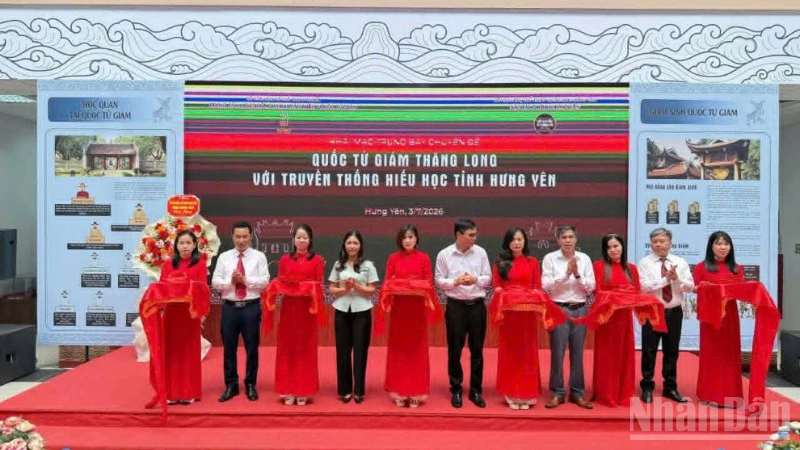
Temple of Literature - Imperial Academy Featured Exhibition in Hung Yen Province Honors Scholarly Tradition
The Temple of Literature - Imperial Academy Center in Hanoi, in collaboration with the Hung Yen Provincial Museum, has organized a special exhibition showcasing Hung Yen's scholarly tradition and the heritage value of the Temple of Literature - Imperial Academy. This event is part of activities commemorating the 950th anniversary of the Imperial Academy's founding in 1076, Vietnam's first institution of higher learning.
On July 3, in Hung Yen province, the Center for Cultural and Scientific Activities of the Temple of Literature - Imperial Academy (under the Hanoi Department of Culture and Sports), in coordination with the Hung Yen Provincial Museum, organized a special exhibition themed “The Imperial Academy of Thang Long and Hung Yen Province's Tradition of Respect for Learning”. This event is one of the practical activities towards the 950th anniversary of the founding of the Imperial Academy (1076-2026). The event aims to introduce and promote the cultural heritage values of the Temple of Literature - Imperial Academy relic site and the tradition of respect for learning in Hung Yen province to the public within the province. The special exhibition features nearly 100 documents, images, and models, helping the public to better understand the tradition of respect for learning, national pride, and love for the homeland. The Imperial Academy of Thang Long, established in 1076 during the Ly Dynasty, was the first national academy of Vietnam and the largest center for education and training of talents in the country during the feudal period. The Temple of Literature - Imperial Academy relic site today still preserves many precious artifacts that attest to the rich tradition of scholarship in Vietnam. Notably, the 82 stone steles engraved with the names and hometowns of 1307 individuals who passed the doctoral examinations from 1442 to 1779 serve as tangible evidence and symbols of the nation's intellect, tradition of respect for learning, and the importance placed on talented individuals. The Imperial Academy of Thang Long also served as a model and a driving force for the formation of scholarly regions and families across the country, spreading the Vietnamese tradition of learning, including in Hung Yen – the homeland of many scholars whose names and hometowns are inscribed in historical records and on the steles at the Temple of Literature - Imperial Academy relic site. Through the exhibition's content, the public will have the opportunity to learn about the connection between the nation's highest educational center in history and the tradition of respect for learning in the land of Hung Yen. They will witness the continuity of values such as respect for learning and valuing talent from the past to the present, contributing to fostering love for cultural heritage and enhancing awareness of preserving and promoting the nation's fine values in contemporary life. The exhibition also serves as an occasion to connect and collectively enhance awareness of preserving and promoting heritage values between the capital city of Hanoi and Hung Yen province, thereby fostering increasingly strong cooperation between the cultural and educational agencies of the two localities.
多角的分析
今回の展示は直接的な経済効果を目的としたものではないが、文化遺産保護への関心を高めることで、将来的な観光客誘致や地域経済活性化に繋がる可能性がある。特に、フンイエン省のような地方都市における文化イベントは、地域住民のエンゲージメントを高め、文化観光資源としての価値向上に貢献しうる。
投資家にとって、このニュースは直接的な投資機会を示すものではない。しかし、ベトナム政府が歴史的・文化的遺産の保存と普及に力を入れている姿勢は、国の安定性や文化への敬意を示す指標となりうる。これは、長期的な視点でのベトナム市場への信頼性を間接的に補強する要素となりうる。
この展示は、フンイエン省の住民にとって、自身の地域が持つ学問への伝統と、国の歴史的中心である文廟・国子監との繋がりを再認識する機会となる。特に、科挙合格者の石碑に刻まれた先祖の名前を見つけることは、個人的な誇りやアイデンティティの形成に寄与する可能性がある。また、若い世代が歴史や伝統文化に触れることで、国家への帰属意識や教育への価値観を育むことが期待される。
フンイエン省の市民は、この展示を通じて、自分たちの地域がベトナムの学問の歴史において重要な役割を果たしてきたことを再認識できる。これは、地域への誇りや、子孫への教育の重要性についての意識を高めるきっかけとなるだろう。また、ハノイとの文化交流は、地域間の連携強化にも繋がる。
背景・歴史的文脈
ベトナムにおける学問への敬意は、1076年に李朝によって設立されたタンロン国子監に端を発する。これはベトナム初の高等教育機関であり、科挙制度を通じて優秀な人材を育成し、国家統治を支えた。文廟・国子監に設置された石碑は、合格者の功績を称え、学問の重要性を後世に伝える役割を果たしてきた。フンイエン省は、歴史的に多くの科挙合格者を輩出した地域であり、この展示は、その地域的な伝統と国家的な遺産を結びつける試みである。ベトナムの一党体制下では、このような文化的・歴史的遺産の活用は、国民のアイデンティティ形成と社会統合を強化する手段としても位置づけられている。
原文ソース
Nhan Dan