Thailand's Reliance on LPG: Cooking Fuel Faces Price Hikes and Safety Concerns
Economy
2026年7月21日
5
Chiang Rai Times

General articles are free for 24 hours after publish.

Thailand's Reliance on LPG: Cooking Fuel Faces Price Hikes and Safety Concerns

Share
AI Summary

Thailand heavily relies on LPG for home cooking and street food. However, rising prices, import costs, safety standards, and fire risks are pressuring households and vendors, prompting discussions on cleaner energy alternatives.

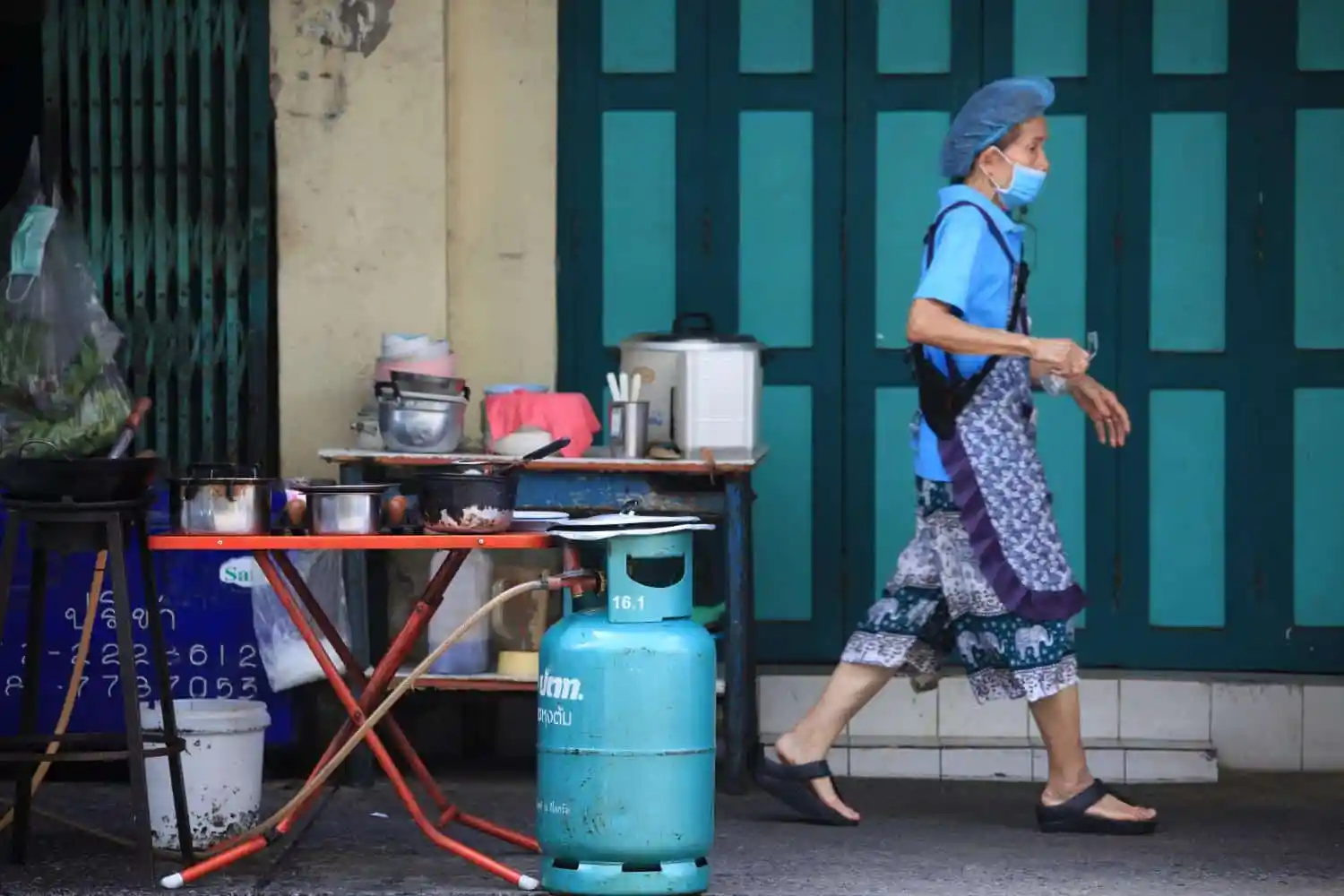
Home - Environment - Thailand’s Reliance on Gas: LPG for Home Cooking and Street Food A Thai home kitchen often centers on a steady blue flame, while a street vendor may cook over a gas cylinder beside a busy road. While many countries around the world rely on a piped natural gas service to fuel their homes, Thailand primarily utilizes liquefied petroleum gas, or LPG. This fuel is unique in its state of matter, as it is stored as a liquid under high pressure within a canister but is converted into a vapor for cooking. This article focuses on why LPG remains the primary choice for household cooking and small food businesses, even as some vendors still rely on charcoal, kerosene, or biomass. LPG makes daily cooking practical for millions of people, but rising prices, import costs, cylinder safety standards, and fire risks are putting pressure on families and vendors. The discussion also considers cleaner energy alternatives and the effect of fuel costs on Thailand’s street food prices, starting with how LPG fits into the fabric of everyday Thai kitchens. LPG became a practical answer to Thailand’s cooking needs because it combines high heat, portability, and quick refueling. Families can use the same basic fuel in a city apartment, a suburban house, or a roadside food stall. That convenience depends on more than the burner. A network of cylinders, refill stations, delivery riders, distributors, and state price policies keeps LPG moving into kitchens across the country. Most Thai LPG stoves use self-aspirating burners. These burners function by drawing air into the gas stream, where air and fuel particles mix thoroughly before reaching the burner head. This process creates a steady blue flame that users can adjust with a simple control knob. As the burner ignites, the temperature rises, which significantly increases the kinetic energy of the gas molecules in accordance with kinetic theory. This high-energy reaction ensures a consistent heat output for various culinary tasks. The design is basic, but it fits Thai cooking extremely well. A cook can turn the heat up for a hot wok, lower it while simmering soup, and shut it off immediately after serving. That direct response matters when a recipe changes heat levels within seconds. Refillable cylinders also make LPG convenient. Liquefied Petroleum Gas is stored in these tanks under high pressure, which overcomes the intermolecular forces of the gas to force it into a liquid state. This high density allows a large volume of gaseous fuel to be stored in a relatively small tank, adhering to the principles defined by the ideal gas law. When the valve is opened, the liquid evaporates into a gas that flows to the stove. Households typically exchange an empty cylinder for a filled one through a neighborhood gas shop or delivery service. The cylinder remains portable, so users do not need a permanent gas line connected to the home. A motorcycle delivery rider can often bring a replacement to a house or small restaurant when supplies run low. Electric stoves can handle many of these tasks, but they do not always offer the same combination of speed and flexibility. Some electric burners take longer to heat a large wok, while certain induction models require compatible cookware and a reliable electrical supply. Outdoor kitchens and street stalls may also lack enough power for several appliances at once. A gas burner gives cooks immediate control, which is especially useful when a wok needs intense heat one moment and gentle heat the next. Urban households often use both electricity and LPG rather than choosing only one energy source. Electricity may power a rice cooker, refrigerator, microwave, or induction plate. LPG handles wok cooking, boiling, and larger pots. This mixed setup gives families a backup when one fuel becomes expensive, unavailable, or unsuitable for a particular dish. A cooking gas cylinder starts with LPG produced during natural gas processing and petroleum refining. Thailand gets part of its supply from domestic fields, including offshore production, but local output does not always meet demand. The country therefore imports large volumes of LPG when domestic production falls short, or market conditions require additional supply. PTT is the dominant supplier in Thailand’s LPG system, with major processing, storage, terminal, and distribution operations. However, other companies also participate in importing, refining, bottling, transport, and retail sales. After LPG reaches a terminal, distributors move it to filling plants, where workers transfer the fuel into certified cylinders. The filled cylinders then travel through several retail channels. A household may buy or exchange one at a neighborhood gas shop, order delivery by phone, or obtain fuel through a local distributor. Restaurants, market vendors, and street cooks usually maintain a closer relationship with suppliers because they use gas more often and may need several cylinders. Thailand’s LPG supply and price controls have helped keep cooking fuel within reach for many consumers. The government has often capped household LPG prices below the full import or replacement cost, while the Oil Fuel Fund and related measures cover part of the difference. These policies reduce sudden increases for families and food vendors, although they also place pressure on public finances. Prices still change when global energy costs, shipping rates, exchange rates, and government policy shift. The system also requires regular oversight because household LPG can sell at a different price from fuel intended for vehicles or industry. Authorities have investigated illegal diversions, underfilled cylinders, and other practices that raise costs for consumers. Reports of Thailand LPG cooking gas regulations show why cylinder weights, filling standards, and licensed retailers matter in everyday transactions. For a Thai family or vendor, the final product looks simple: a cylinder arrives, connects to a regulator, and fuels the next meal. Behind that blue flame, however, sits an import network, a national distribution system, and a price policy designed to protect access to cooking fuel. LPG fits the daily rhythm of Thai food businesses. A vendor can light a burner quickly, adjust the flame while serving customers, and replace an empty cylinder without waiting for a utility connection. That flexibility matters when a stall moves between markets or operates beside a busy road. Gas also matches the demands of Thai cooking. Woks, stockpots, steamers, and frying pans need strong, controllable heat, often for many hours. For a small food business, the cylinder is both a fuel supply and a practical part of the workstation. The 15 kilogram LPG cylinder is common among Thai vendors because it offers a workable balance between fuel capacity and portability. It holds enough gas for a busy cooking shift, yet most stalls can move it with help from one person. A much larger cyl

0

Original source

Chiang Rai Times

原文を読む