Vietnam's Central Region: Towards Sustainable Tourism Development Leveraging Cham Cultural Heritage
Culture
2026年8月1日
5
Nhan Dan

General articles are free for 24 hours after publish.

Vietnam's Central Region: Towards Sustainable Tourism Development Leveraging Cham Cultural Heritage

Share
AI Summary

Khanh Hoa Province in Central Vietnam is promoting cultural tourism leveraging ancient Cham ruins and traditional crafts. However, challenges remain in direct community participation and benefit sharing, necessitating a shift from mere sightseeing to community-based tourism where residents are key stakeholders.

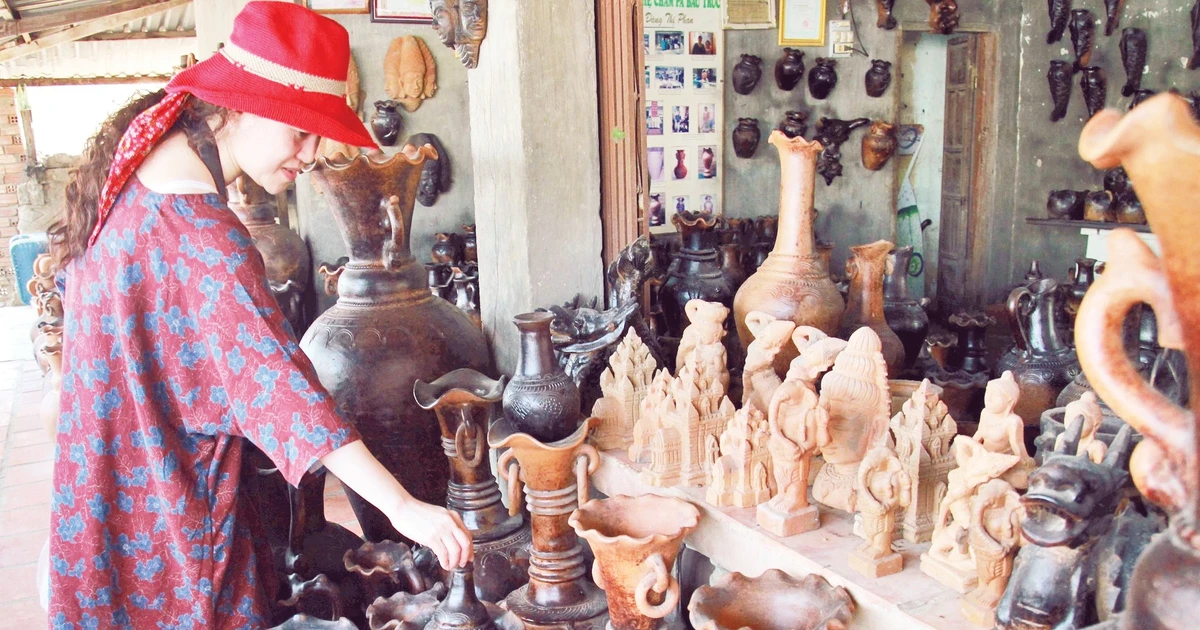
Khanh Hoa Province in Vietnam's central region is aiming to develop Cham cultural tourism by leveraging its unique resources, including ancient Cham temple complexes, festivals, traditional crafts, and folk arts. However, for these values to be sustainably preserved, it is essential for local communities to actively participate in tourism activities and directly benefit from them. Khanh Hoa Province possesses a rich Cham cultural space, a legacy from the period when it was integrated with Ninh Thuan Province. This provides favorable conditions for the province to expand its tourism products, connecting its strengths in marine and island tourism with cultural, spiritual, and community-experience tourism. The Cham cultural resources are also vibrantly present in traditional villages. Bau Truc village is known as one of the oldest pottery villages in Southeast Asia, with its entirely manual shaping and firing techniques recognized by UNESCO on the List of Intangible Cultural Heritage in Need of Urgent Safeguarding. Not far away, My Nghiep weaving village continues to maintain its traditional craft with a history spanning hundreds of years. This cultural space is further enriched by traditional festivals such as Kate, Ramuwan, and Rija Nagar. Among these, Kate is a major festival for the Cham Brahman followers, with its celebratory space extending from temple towers to each village and family. Drawing from these abundant resources, many Cham cultural relics, scenic spots, and craft villages have been incorporated into tour programs by travel agencies. Activities related to the preservation and restoration of relics, the maintenance of festivals, and the revival of folk arts are also gradually being linked with tourism promotion. However, Associate Professor, Dr. Phan Quoc Anh, Head of the Ethnic and Religious Council Advisory Board of the Vietnam Fatherland Front Committee of Khanh Hoa Province, points out that the value of some Cham cultural relics is still not fully exploited. Therefore, it is necessary to research and restore festival activities in suitable cultural spaces, thereby creating greater connection between heritage, community life, and tourism activities. Mr. Le Kim Nhut, Head of the Tourist Guide Association Branch of the Khanh Hoa Tourism Association, believes that current tourism products related to Cham culture mainly focus on sightseeing and listening to explanations. Practical experience activities are not yet diverse, resulting in short visitor stays and low memorability. The community tourism model in craft villages is not yet synchronized, and the direct participation and economic benefit for local residents remain low. Given this reality, experts suggest that for Cham culture to truly become a source of development, there needs to be a shift from a purely sightseeing model to responsible community-based tourism, where residents directly participate in the construction, operation, and benefit from the products. Households need to be trained and provided with more opportunities to develop community lodging models, preserve traditional housing architecture, and introduce traditional cuisine. Cultural art troupes, dancers, and folk musicians need support to organize regular performances at tourist sites. Revenue from accommodation, culinary services, and performances will be directly distributed to the community, creating motivation to preserve heritage. When communities are empowered and fairly benefit, each artisan, dignitary, and resident will become a "cultural ambassador." Tourism will then not only exploit heritage but also create resources to nurture it, helping Cham cultural values continue to exist in contemporary life.

0

Original source

Nhan Dan

原文を読む