General articles are free for 24 hours after publish.
Russia-North Korea Military Pact Fuels Drone Tech Proliferation Risk
The military cooperation between Russia and North Korea is creating significant proliferation risks, particularly in drone technology. Russia has provided drone technology to Pyongyang in exchange for weapons and troops, potentially enabling North Korea to develop advanced AI-enabled and jet-powered drones.
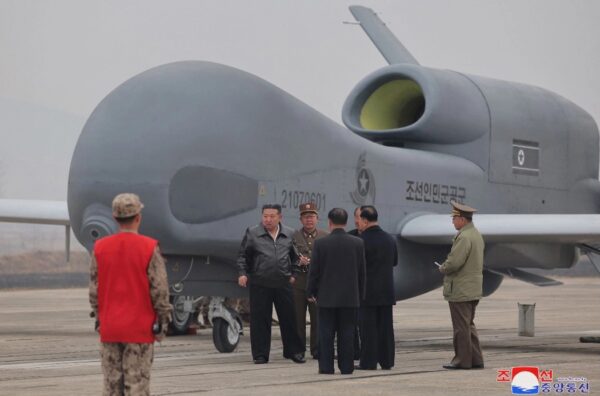
Read The Diplomat, Know The Asia-Pacific North Korea, already receiving Russian drone technology, could eventually gain access to more advanced capabilities like autonomous AI‑enabled and jet‑powered drones. In this photo provided by North Korean state media, North Korean leader Kim Jong Un attends tests of “various kinds of reconnaissance and suicide drones” developed and produced by the Unmanned Aerial Technology Alliance, Mar. 18, 2025. Russia’s expanding military partnership with North Korea has become one of the most significant proliferation risks of the Ukraine war. Since Pyongyang began actively supporting Russia’s campaign, Moscow is believed to have transferred sensitive technologies such as naval reactors for nuclear‑powered submarines, air defense systems, and other advanced capabilities in exchange for North Korean weapons and troops. Russia has already provided drone technology to Pyongyang, and the rapid evolution of Russian battlefield innovations now raises concerns that North Korea could, in time, gain access to far more sophisticated systems, including new versions of autonomous AI–enabled and jet–powered drones. In a war that began as an artillery‑heavy conflict, drone usage and tactics have evolved rapidly. One of the most consequential developments is Russia’s experimentation with autonomously controlled AI‑enabled drones. Earlier iterations required a human operator to confirm targets, with AI used primarily to counter radio‑jamming and ensure the drone reached its destination. In recent months, however, Russia has begun allowing onboard AI systems to make independent strike decisions. This shift toward autonomous targeting represents a significant technological leap and raises concerns that North Korea, already receiving Russian drone technology, could eventually gain access to these more advanced capabilities. As with much of the evolution of technology in the Ukraine war, Russia’s has equipped its autonomous AI drones with off-the-shelf technology, specifically commercial grade Nvidia Jetson Orin computers designed to create AI-enabled devices. Using such tools, Russia is training the drone AI to identify specific targets such as gas stations. Russia has also begun modifying drones with jet powered engines. Jet powered drones are more expensive than the propellor powered models that have been heavily utilized during the war, but they are also more difficult to shoot down. The Geran-5, a Russian version of the Shahed drone, also has a China connection: Its 200 kilogram-thrust turbojet engines are believed to have Chinese origins. North Korean Drone Cooperation With Russia Since becoming active in the war against Ukraine, North Korea has transferred over 15 million artillery shells and provided Russia with an estimated 15,000 troops. Reports suggest that Moscow agreed to provide drone technology to Pyongyang in exchange for the troop deployment, but North Korea’s decision to provide Russia with cluster bombs for its suicide drones was likely also a factor. The partnership that has developed between Russia and North Korea has allowed Pyongyang to rapidly advance its drone development program. Prior to the Ukraine war, North Korea only possessed outdated reconnaissance drone technology despite development efforts dating back at least to the early 2010s, including initial efforts to develop a strike drone based on U.S. technology. The war in Ukraine, however, has allowed Pyongyang to not only undertake rapid technological advances in its drone technology but to also gain battlefield experience in utilizing them. When Russian President Vladimir Putin met North Korean leader Kim Jong Un in September 2023, Russia provided North Korea with four suicide drones and one reconnaissance drone. More significantly, Russia is believed to have transferred the technology behind Iran’s Shahed-136 drone, the template for Russian drone advances, to North Korea, as well as equipment to enable production. North Korea has also unveiled its Geumseong series tactical attack drones, which closely resemble Russia’s Lancet‑3 loitering munition and Israel’s HERO‑30, a similarity that strongly suggests additional technology transfers from Moscow. Pyongyang claims the Geumseong series is already AI–enabled, a capability it has not previously demonstrated. Given North Korea’s limited domestic experience with autonomous guidance systems and Russia’s active development of AI‑driven loitering munitions, this initial integration of AI was almost certainly achieved with Russian assistance. Pyongyang has additionally benefited from its partnership with Russia beyond the transfer of technology. Unconfirmed reports suggest that North Korean laborers were being recruited through the Jihyang Technology Trading Company to support production of Shahed/Geran drones at Russia’s Yelabuga drone production facility in Tartistan. The North Korean workers were expected to assist in production and handle secondary and itinerary assembly, practical skills that would over time enhance North Korea’s own ability to produce drones. North Korean troops have also gained practical tactical experience in drone warfare on the battlefield. North Korean tactics quickly evolved during their deployment to Russia to the realities of drone warfare. This includes the deployment of troops in smaller groups to evade enemy drones and adoption of tactics in long-range strike missions. Pyongyang’s participation in the war is also giving it access to real world data on the success of North Korean drones and ballistic missiles against Western defensive systems, and access to Russian operational tactics for electronic warfare. Taken together the knowledge gained from North Korea’s combat experience will enhance its ability to utilize drones and evade defensive systems. Will North Korea Produce AI-Enabled or Jet-Powered Drones? In 2025, the General Staff Department ordered the North Korean military to integrate AI into both manned and unmanned systems, including drones. With AI integration part of North Korea’s weapons development policy, advances in the field from Russia are likely to be adopted in time. The Jetson Orin computers in Russian drones are commercial grade parts and had circuit boards printed with “Made in China.” Russia is likely procuring them from illicit Chinese supply chains; North Korea will be able to as well. The kits are also relatively cheap. Some versions cost less than $300. Given the battlefield experience that North Korea has gained in Russia using drones and the technology cooperation between the two, including initial usage of AI, it would seem only a matter of time before Pyongyang integrated autonomous AI strike drones into its arsenal. This will enhance its ability to hit targets in the South, including civilian infrastructure, and overwhelm traditional missile defense systems over time. Jet powered drones would require North Korea to make modifications to its production
Original source
The Diplomat Indonesia