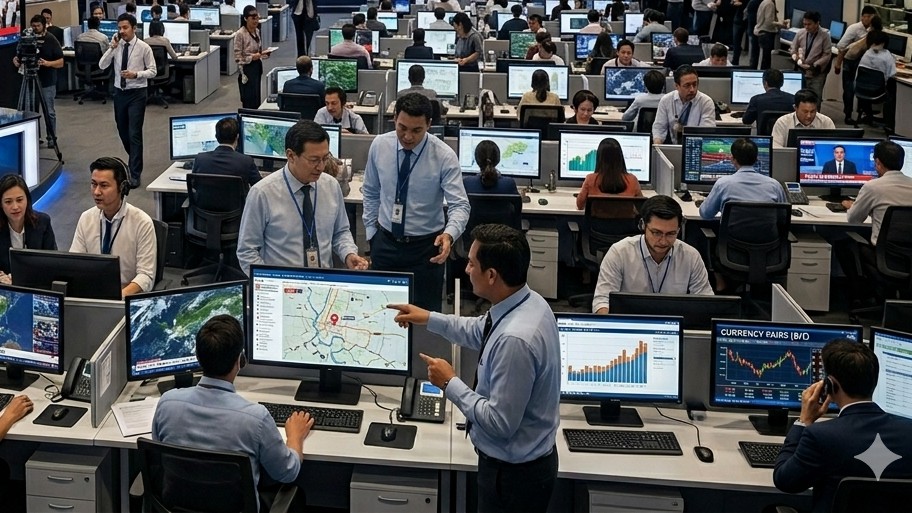
Thailand Sees Surge in AI Infrastructure Investment, Foreign Direct Investment Up 80%
Technology
2026年7月28日
5
Thailand Business News
Relations
🇹🇭Thailand🇨🇳China🇺🇸United States

General articles are free for 24 hours after publish.

Thailand Sees Surge in AI Infrastructure Investment, Foreign Direct Investment Up 80%

Share
AI Summary

Thailand's foreign direct investment (FDI) has surged by 80% to $41 billion in the first half of the year, largely driven by AI infrastructure development. However, geopolitical challenges, including US-China tech tensions and security incidents in the south, are also emerging.

Thailand has recently been at the center of significant international news coverage, spanning security incidents, major economic developments, sporting events, and diplomatic relations. Among these, the surge in investment in AI infrastructure and its geopolitical implications are particularly noteworthy in shaping the nation's current narrative. The most urgent story dominating headlines is a deadly attack on a security checkpoint in southern Thailand, where five soldiers were killed and six civilians were injured in a combined gun and pipe bomb assault. Multiple international outlets confirmed the attack occurred in the country’s long-troubled southern region, which has experienced decades of separatist violence. Thai authorities have launched a manhunt for suspects following the incident, with the army confirming the casualty figures. This attack underscores the persistent security challenges in Thailand’s deep south, a region that has seen recurring violence linked to separatist insurgency movements for years. Thailand is experiencing a remarkable surge in foreign investment, driven largely by artificial intelligence infrastructure development. According to Bloomberg and multiple other sources, Thailand’s FDI applications jumped 80% to $41 billion in the first half of the year, while other reports cite figures as high as $43.6 billion, reflecting big tech’s accelerated push into Southeast Asian AI infrastructure. The Board of Investment (BOI) confirmed that first-half investment topped 1.47 trillion baht, with digital and data center projects leading the charge. This investment boom coincides with Thailand’s new investment jumping 37% in the January-June period, positioning the country as an increasingly attractive destination for Southeast Asia’s tech-driven economic expansion. Thai Prime Minister Anutin has pledged full backing for Chinese investment as a Thailand-China expo opened in Bangkok, further cementing bilateral economic ties. A significant technology controversy has emerged involving China’s Moonshot AI allegedly using servers in Thailand to circumvent U.S. chip export bans. According to U.S. officials cited by NewsNation and other outlets, the White House has accused Moonshot AI of accessing banned Nvidia GB300 chips via Thailand, with reports suggesting the company “stole from Anthropic” and used Thai infrastructure to dodge restrictions. This story adds a geopolitical dimension to Thailand’s growing role in the global AI supply chain, raising questions about the country’s position amid U.S.-China technology tensions. Thailand faces potential trade headwinds, as the country is on alert following a U.S. Section 301 probe that could raise tariffs by up to 25%. Simultaneously, Thailand is pursuing economic diversification through initiatives like a $700 million EV plan aimed at replacing 80,000 vehicles, signaling commitment to sustainable transportation. Additionally, China’s durian imports from Thailand and Malaysia have soared amid a supply glut pressuring regional growers, illustrating the interconnected nature of Southeast Asian agricultural trade. Thailand’s high-speed rail link to China is targeted for completion of its first phase by 2030, according to multiple railway industry publications. In tourism, IHG Hotels & Resorts is expanding its Thailand portfolio with a new Holiday Inn Express location in Krabi Ao Nang, while Thailand has extended stay and work authorization for migrant workers, addressing labor market needs. The country also scrapped plans to end visa-free entry for Indian tourists, reflecting efforts to sustain its critical tourism sector. Thailand continues to navigate complex regional relationships. The country is pressing on with a border fence project along its Cambodia frontier following clashes in 2025, according to Reuters. Meanwhile, Myanmar’s military leader Min Aung Hlaing is scheduled to visit Thailand in early August, highlighting Thailand’s continued diplomatic engagement with its neighbors despite regional instability. Separately, China has asked Thailand to deport a Chinese journalist, with human rights organizations warning of potential persecution—a story that has drawn scrutiny from press freedom advocates. Source: Thailand Business News

0

Original source

Thailand Business News

原文を読む