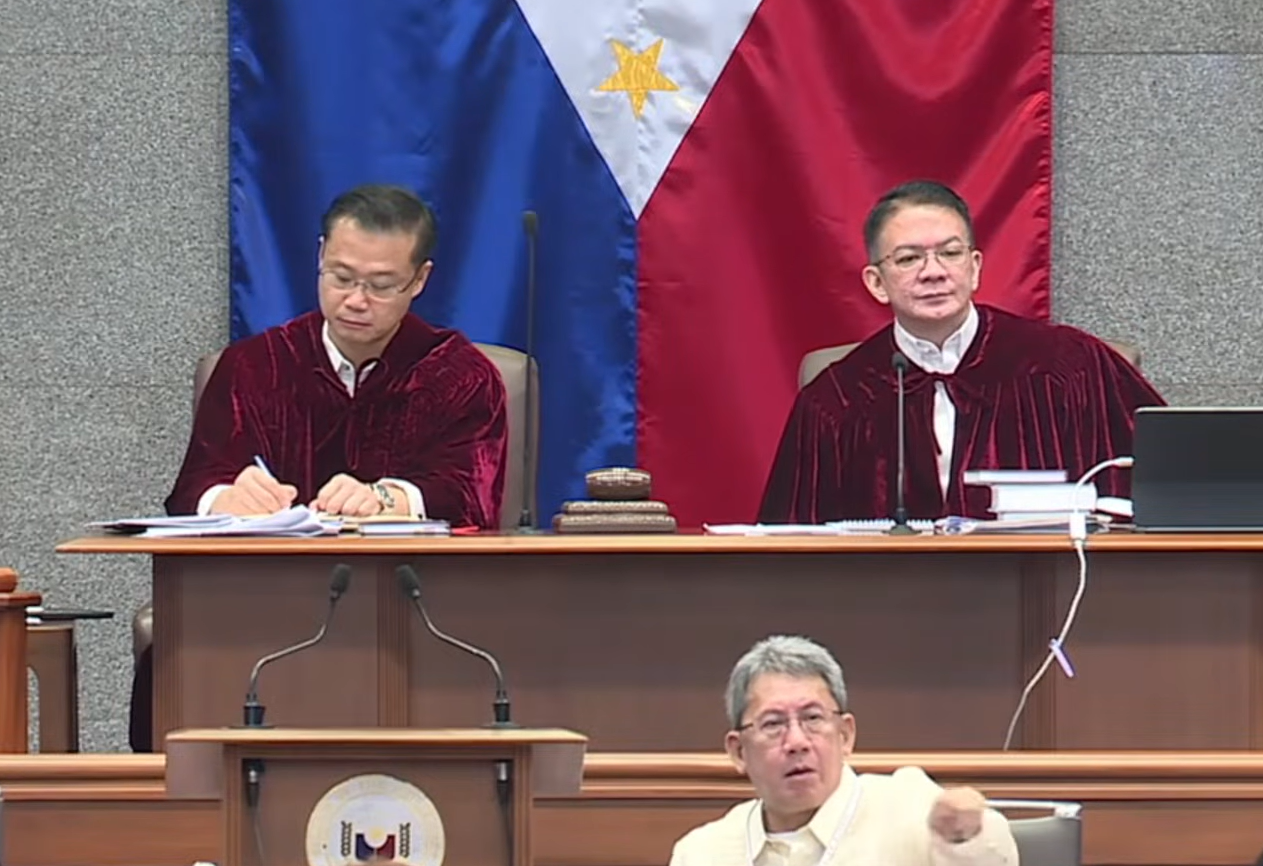
Philippine VP's impeachment trial faces vote threshold question, awaits SC ruling
A debate over the number of votes needed to convict the Philippine Vice President in her impeachment trial has emerged, with the presiding officer citing a 16-vote threshold based on Supreme Court precedent. The presiding officer has welcomed any challenge to the Supreme Court.
This article requires PRO
This article is outside the free access window or is a special report. PRO unlocks it and the full archive.
Related articles
- Duterte's SALN Issues Now a National Security Concern, Says House
Issues concerning Vice President Sara Duterte's Statement of Assets, Liabilities, and Net Worth (SALN) have escalated beyond mere non-declaration to become a national security concern, according to a House prosecution spokesperson. The statement was made in the context of the Vice President's impeachment trial.
- VP Duterte Impeachment Trial: Husband's Bank Balances Take Center Stage
During the impeachment trial of Philippine Vice President Sara Duterte, prosecutors presented testimony regarding the year-end balances of her husband, lawyer Manases Carpio's bank account, covering the period from 2022 to 2025.
- Bangsamoro Groups Urge Marcos, MILF Chair to Finalize Peace Process
Several organizations from the Bangsamoro Autonomous Region in Muslim Mindanao (BARMM) have urged President Marcos and Moro Islamic Liberation Front (MILF) chair Al Haj Murad Ebrahim to complete the peace process ahead of the 50th anniversary of the Tripoli Agreement, with a focus on decommissioning and extending the transition period.
- Pangilinan Questions Cale88 Ownership Change Amid P1.25B Transactions
Senator Francis Pangilinan questioned the ownership change of Cale88 Foods Corp., citing Anti-Money Laundering Council (AMLC) records allegedly showing over ₱1.25 billion in transactions from 2022 to 2025. He also referenced testimony that lawyer Manases Carpio, husband of the Vice President, held 47.5 percent of the company's shares.