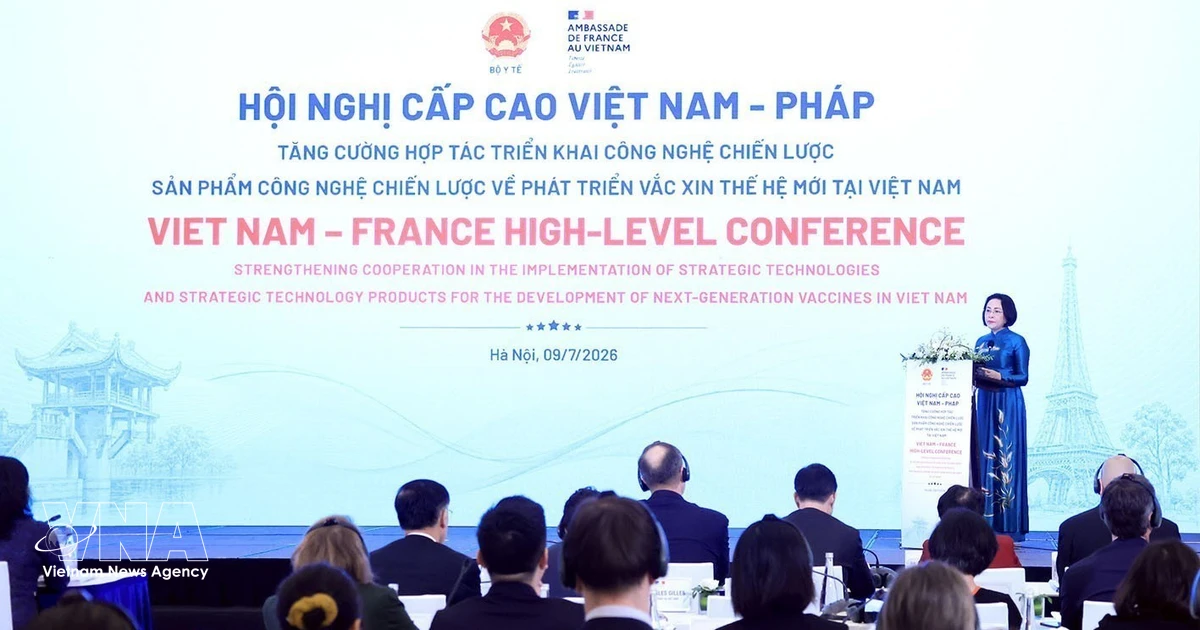
Vietnam to Produce First Homegrown Next-Generation Vaccines from 2028
Health
2026年7月10日
7
VietnamPlus English
Relations
🇻🇳Vietnam🇨🇳China

Vietnam to Produce First Homegrown Next-Generation Vaccines from 2028

AI サマリー

Vietnam aims to produce homegrown next-generation vaccines by 2028, collaborating with international partners and developing advanced technologies like mRNA. This initiative underscores the nation's commitment to strengthening its healthcare system and enhancing public health, marking a significant step towards medical self-reliance.

Vietnam is poised to commence the production of its first homegrown next-generation vaccines by 2028, a move that will involve collaboration with international partners, including Russia and France, in conducting clinical trials. A particular focus will be placed on vaccines utilizing mRNA technology, especially for cancer treatment. This strategic direction underscores Vietnam's commitment to enhancing its medical technological self-reliance and bolstering its public health infrastructure. The significance of advancements in vaccine development was highlighted by the 2025 VinFuture Grand Prize, which recognized four scientists for their groundbreaking work in the discovery and development of HPV vaccines aimed at preventing tumors caused by human papillomaviruses. The Ministry of Health has issued directives to relevant units, emphasizing the necessity of ensuring an adequate supply of vaccines, medical equipment, and essential supplies. Concurrently, it has instructed local authorities to proactively implement immunization programs across their jurisdictions. A cornerstone of Vietnam's healthcare strategy is the pursuit of universal health check-ups by 2026. This initiative is designed to establish a foundation for a modernized healthcare model. Under this new framework, every resident is expected to benefit from an electronic health record, undergo regular screenings, receive continuous health management throughout their lives, and gain access to early intervention services facilitated by primary healthcare providers. The Prime Minister has articulated that throughout the nation's development, people have consistently been viewed as the central focus, the driving force, the ultimate objective, and the most crucial resource. Sustainable and rapid development, he stressed, necessitates not only a healthy, knowledgeable, and skilled population but also a healthcare system that is modern, equitable, efficient, sustainable, and accessible. According to the municipal Department of Health, the development of gateway hospitals is a pivotal element in the city's strategy to establish a specialized regional healthcare system. This network is intended to alleviate overcrowding in major downtown hospitals and strengthen a robust inter-regional emergency care and treatment network. The Ministry of Health has also moved to clarify new border health declaration rules, set to take effect on July 1. It has stressed that these declarations will not be mandatory for all travelers and that no online declaration portal is currently operational. Globally, non-communicable diseases (NCDs), encompassing cardiovascular diseases, diabetes, cancer, and chronic respiratory diseases, represent a significant public health burden. According to the World Health Organization (WHO), these conditions account for nearly 80% of all deaths in Vietnam, positioning them as one of the country's most pressing healthcare challenges. Deputy Prime Minister Nguyen Van Thang has commended the hospital's transition to a multi-campus model, which involves unified professional standards, governance, training, research, service culture, and digital transformation. For individuals managing chronic conditions, technological advancements are offering new solutions. For instance, a newly developed sensor allows people living with diabetes to view their glucose readings and receive automatic alerts when their glucose levels become dangerously low or high. In terms of environmental health, heatwaves are currently affecting numerous localities nationwide, with temperatures frequently ranging from 36 to 40 degrees Celsius, and even exceeding these levels in some areas. The revised national program on elderly care aims to ensure that by 2030, 90% of communes, wards, and special zones will have at least one elderly care club and a corresponding volunteer care team. In a testament to advanced medical capabilities, an infant, critically ill after more than three months of intensive treatment and specialized neonatal care, was discharged from the hospital in stable condition on June 22. The success in treating complex cases is highlighted by incidents like the one at Hong Ngoc General Hospital, emphasizing the critical role of advanced diagnostics and multidisciplinary collaboration, particularly for long-standing conditions that may be misdiagnosed or remain unresolved. International cooperation in medical education and research continues to flourish. Vietnam’s 108 Military Central Hospital and Japan’s Toho University Graduate School of Medicine are actively promoting faculty and student exchange programs, joint scientific research, academic conferences, and the sharing of advanced medical knowledge and technologies. Public health officials are also observing shifts in disease patterns. Vo Hai Son, Deputy Director of the ministry's Administration of Disease Prevention, noted that dengue fever is no longer following its traditional epidemiological trends. In 2025, infections remained elevated through November and December, rather than declining at the end of the year as previously observed, indicating a shortening outbreak cycle. In a significant achievement in organ transplantation, Hue Central Hospital successfully performed six transplant procedures using organs and tissues donated by a brain-dead donor. These included one heart, one liver, two kidney, and two corneal transplants. All recipients have since recovered well and been discharged. These breakthroughs are expected to support diabetes prevention and treatment, while also opening up broader biomedical applications. FV Hospital in Ho Chi Minh City has received international recognition, being named in the Best Specialized Hospitals Asia-Pacific 2026 ranking published by Newsweek in partnership with global data research firm Statista. One of the key priorities outlined in a recent resolution is the continued improvement of healthcare services, with a central focus on patient well-being. This includes enhancing grassroots healthcare capacity and accelerating digital transformation within the sector. In a demonstration of dedicated medical care, Mr. David Schmidt, a German tourist critically ill with septic shock and multiple organ failure, received intensive treatment for 15 days from doctors at a Vietnamese hospital, despite having no family members present. Copyright, VietnamPlus, Vietnam News Agency (VNA) Editor-in-chief, Mr. Tran Tien Duan.

多角的分析

経済的影響

ベトナムの次世代ワクチン国産化は、製薬産業の高度化と国際競争力強化を促す。mRNA技術のような最先端技術への投資は、長期的な経済成長のドライバーとなり得る。これは、単なる医療分野の発展に留まらず、バイオテクノロジー分野全体への波及効果も期待できる。国内での生産能力向上は、輸入依存度を低下させ、国際市場での輸出機会も創出する可能性がある。ただし、初期投資の大きさや、国際的な規制・品質基準への適合が課題となる。

投資家心理

次世代ワクチン国産化の動きは、製薬・バイオテクノロジー分野への投資機会を示唆する。特にmRNA技術への投資は、将来性の高い分野として注目される。ベトナム政府の医療インフラ強化やデジタル変革への投資も、関連産業への追い風となるだろう。ただし、技術移転、知的財産権保護、そして国際的な臨床試験の成功といったリスク要因も考慮する必要がある。

社会的影響

国産次世代ワクチンの開発・製造は、国民の健康アクセス向上に大きく貢献する。特に、NCDs(非感染性疾患)の増加や dengue fever の流行パターン変化といった公衆衛生上の課題に対し、より迅速かつ効果的な対応が可能になる。また、医療技術の進歩は、不妊治療など、新たな家族形成を望む人々への支援拡大にも繋がる。電子健康記録の導入や生涯にわたる健康管理は、地域格差の是正や医療サービスの質の均てん化に寄与すると期待される。

市民の声

国民は、よりアクセスしやすく、質の高い医療サービスへの期待を抱くだろう。特に、次世代ワクチンが国産化されれば、これまで高価であったり入手困難であったりしたワクチンへのアクセスが改善される可能性がある。また、電子健康記録や生涯にわたる健康管理は、自身の健康状態をより把握しやすくなり、予防医療への意識向上にも繋がる。一方で、医療技術の進歩に伴う恩恵が、都市部と地方部で均等に享受されるかどうかが問われる。

背景・歴史的文脈

ベトナムは、一党体制下で社会主義的市場経済を推進し、経済成長を遂げてきた。特に近年の医療分野への投資は、国民の健康増進と医療システムの近代化を国家戦略として位置づけている。過去には、 dengue fever などの感染症対策で国際機関と協力してきた経験があり、ワクチン開発・製造能力の向上は、こうした経験と、より高度な医療技術へのアクセスを求める国民のニーズに応えるものと言える。また、中国との複雑な関係を踏まえ、戦略物資である医療分野での自立は、国家安全保障の観点からも重要視されている。

原文ソース

VietnamPlus English

原文を読む