General articles are free for 24 hours after publish.
China Appears to be Introducing a New Form of Coercion in Waters Around Taiwan
China is escalating its assertiveness in waters east of Taiwan, conducting systematic and long-term maritime control attempts, including inspections of commercial vessels and intelligence gathering. This suggests a new coercive tactic to increase pressure on Taiwan and gauge international reactions.
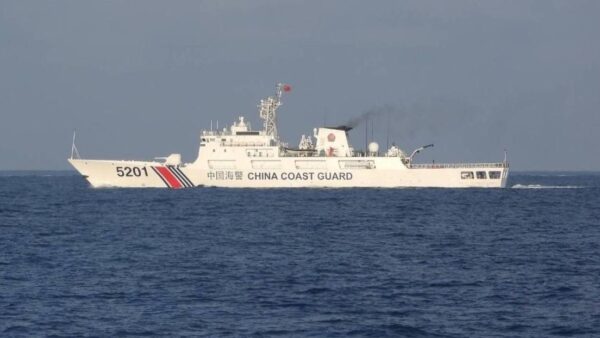
Signs indicate that China is introducing a new form of coercion in the waters around Taiwan. Since the announcement of "special maritime operations" on June 6, Chinese naval activities have become more assertive, with patrols extending into broader waters, troop rotations aimed at regularizing presence, and the deployment of research vessels capable of military reconnaissance. The Global Times, a mouthpiece for the Chinese Communist Party, reported on July 4 that China's maritime patrols have entered a "new phase" characterized by a move towards a "more systematic, institutionalized, and long-term framework," diverging from past "isolated military exercises or patrols." Recent deployments bear this out. Between June 6 and June 10, China's Ministry of Transport conducted its first special operation in waters east of Taiwan, halting commercial vessels and requesting information on their points of origin and destination. While mandatory inspections have been announced during past exercises, this was the first time they were effectively enforced. Chinese Coast Guard ships conducted inspections en masse via radio communications with all transiting commercial vessels, with three foreign-flagged vessels, including those from Singapore, Benin, and Liberia, reportedly having "violations rectified." This demonstrates China's ability to govern vessel traffic in Taiwan's waters and serves as grounds to assert that cross-strait dynamics are China's internal affairs. These operations may serve as test cases for a "quarantine" where China selectively permits commercial vessels to enter or leave, exerting immense pressure on Taiwan's supply lines. The multi-day patrols aim to test foreign government responses and normalize inspections. Furthermore, the concentration of these activities in waters east of Taiwan, rather than the Taiwan Strait, is noteworthy. This is seen as part of a "boa-constrictor strategy" to sever Taiwan from international support. China's claim that these patrols were initiated in response to maritime boundary delimitation talks between Japan and the Philippines east of Taiwan also suggests an intent to deter strategic cooperation in the region. Additionally, the activity of Chinese research vessels has increased. While these vessels claim to be conducting marine scientific research, they are suspected of systematically mapping the undersea terrain, potentially leading to naval operation planning. These signs suggest that a more intrusive form of coercion is taking shape, and regional nations should not dismiss this as "business as usual."
Original source
The Diplomat Indonesia