General articles are free for 24 hours after publish.
Colorectal Cancer Cases Rise in Vietnam, Late-Stage Diagnoses Remain a Major Challenge
Colorectal cancer incidence in Vietnam has surged by approximately 1.7 times over the past two decades, with over 16,000 new cases annually. A significant challenge remains that a majority of patients are diagnosed at late stages, reducing chances for complete recovery. Promoting widespread endoscopic screening and improving its quality are urgent priorities.
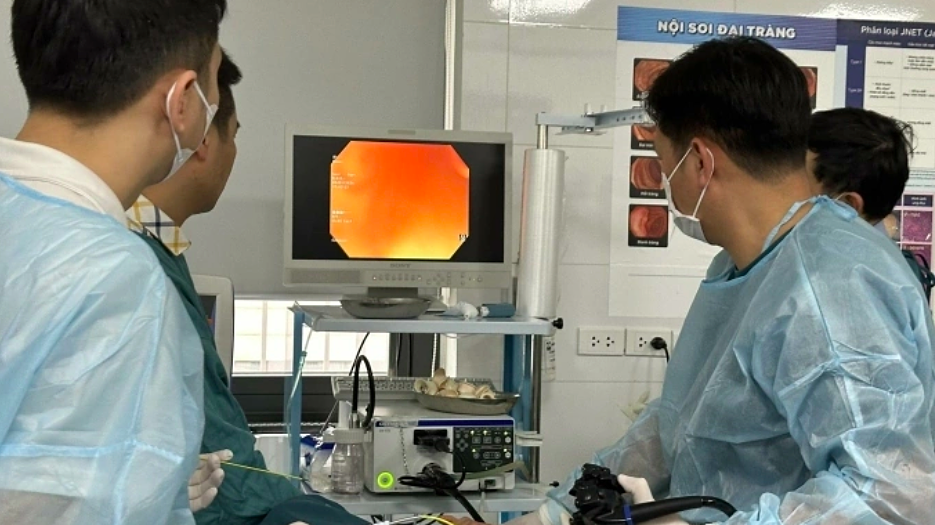
Colorectal cancer is emerging as a significant health burden in Vietnam, with a continuous rise in new cases over the past two decades, increasing by approximately 1.7 times. A major concern is that the majority of patients are diagnosed at late stages, diminishing the chances of complete recovery. "The biggest barrier in treating colorectal cancer patients today is not technique, but the limited number of patients detected at an early stage," stated Ths.Bs Pham Nhu Hien from Hue Central Hospital at the First Northern Interventional Digestive Endoscopy Conference organized by the Vietnam Interventional Digestive Endoscopy Society (VIGES) on July 25. According to the latest GLOBOCAN data, colorectal cancer ranks fourth in terms of new cases in Vietnam, with 16,835 cases recorded annually and approximately 8,454 deaths. Over the past 20 years, the incidence rate has increased by about 1.7 times, particularly among men and individuals over 50. Dr. Hien noted that public awareness of cancer risks is improving, especially among those with risk factors such as advanced age or a family history of the disease. The demand for regular health check-ups is also rising, along with the prevalence of paraclinical tests like biomarkers, ultrasounds, and CT scans. However, in reality, most people still only visit the hospital when symptoms such as prolonged constipation, diarrhea, blood in stool, or abdominal pain appear. At this point, colonoscopy is primarily performed for diagnosis rather than proactive screening. At Hue Central Hospital, during the period 2021–2025, the facility received 2,359 colorectal cancer patients, averaging about 400–500 cases per year. Notably, about two-thirds of these patients were diagnosed when the cancer was already in an advanced stage. The average age of patients is 62.1 years, with over 56% being 60 years or older. Rectal cancer accounts for approximately 52% of total cases, while colon cancer makes up 48%. Dr. Hien emphasized that colonoscopy remains the most crucial method for early detection of colorectal cancer. The cost of colonoscopy in Vietnam is relatively low, ranging from $12–$24 for unsedated procedures and $32–$60 for sedated ones. Health insurance also covers the cost of endoscopy for patients with suspected cancer symptoms to aid diagnosis and treatment. This presents a favorable condition for expanding early detection activities if systematic screening programs are implemented. "Detecting precancerous lesions or very early-stage cancer has a decisive impact on the choice of treatment method," Dr. Hien said, adding that for lesions that only superficially invade the submucosa, patients can be treated with endoscopic submucosal dissection (ESD), which preserves the colon and avoids major surgery. Conversely, cases with deeper invasion often require radical surgery. Associate Professor Dr. Nguyen Cong Long, Chairman of the Vietnam Society of Digestive Endoscopy and Intervention, and Director of the Digestive and Hepatobiliary Center at Bach Mai Hospital, stated that to change this situation, many hospitals are promoting sedated colonoscopies, applying artificial intelligence (AI) in detecting polyps and early lesions, and improving the quality of endoscopy through enhanced withdrawal times. They are also strengthening multidisciplinary consultations to optimize treatment. Experts also anticipate that Vietnam will soon establish standardized, widespread colorectal cancer screening programs. Amidst the continued rise in cases, proactive screening and standardized endoscopic quality are seen as key to improving treatment outcomes for colorectal cancer in Vietnam. At the conference, experts recognized the strong development of interventional digestive endoscopy with many modern techniques, particularly in the early detection and treatment of gastrointestinal cancers. However, the gap in human resources, equipment, and professional procedures between different healthcare levels remains significant, making it difficult for many patients in local areas to access specialized endoscopic techniques. Therefore, the program serves as an opportunity for doctors to update knowledge, share experiences, and promote standardized practices, thereby supporting lower-level healthcare facilities in enhancing their professional capabilities.
Original source
VnExpress