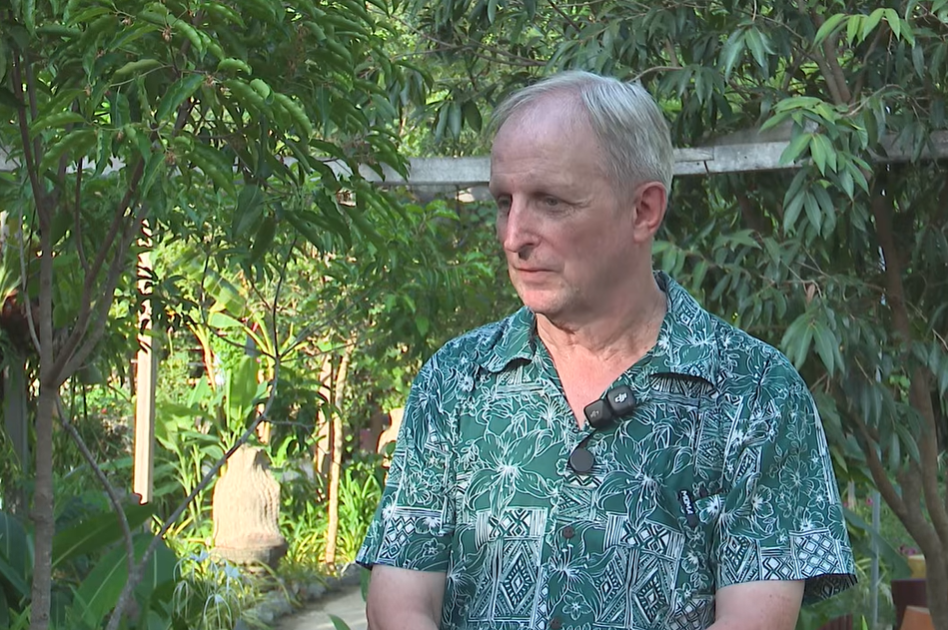
British Man Abandons Banking Career for Ancient Khmer Temples, Lives in Cambodia Over 30 Years
Andy Prower, a British man, abandoned his banking career in London to move to Cambodia in 1994. Deeply moved by the Khmer Rouge genocide and the grandeur of the Angkor temples, he has lived in Cambodia for over 30 years, fostering connections with ancient sites and local communities.
Andy Prower, a British man who abandoned his banking career in London, has been captivated by Cambodia's ancient temples and has lived in the country for over 30 years. Prower first learned about Cambodia in 1979 through news of the Khmer Rouge genocide. He decided to travel to Cambodia in 1994. Upon his arrival, he developed a profound love for Cambodia's ancient temples after visiting them in Siem Reap province. He expressed his astonishment that a country with such a high civilization could fall into such a terrible tragedy under the Khmer Rouge regime. Prower recounted his unforgettable first experience in 1994 when he visited Siem Reap and watched the sunrise at Angkor Wat with a guide. At that time, there were no other tourists, making him feel as if the temple belonged solely to him. As Angkor Wat began to attract more visitors, Prower shifted his focus from observing the temples as a whole to meticulously searching for intricate carvings in secluded areas. Prower holds the view that "the stones of each temple have their own stories," meaning that even though the Angkor temples are thousands of years old, there are always new stories to learn, such as the discovery of ancient water reservoirs within the Royal Palace of Angkor Thom. Furthermore, he recalled his difficult journey and enduring affection for Preah Vihear Temple, which remains unforgettable. He described how, around 2002, he rode a motorcycle from Kampong Thom province to Preah Vihear Temple, navigating through difficult roads and areas scattered with landmines. He vividly remembers staying alone in a hut amidst descending clouds, an experience that left a deep impression on him. Consequently, he expressed immense pain and regret upon seeing Preah Vihear Temple damaged, emphasizing that its carvings are unique and irreplaceable. Beyond his fascination with temples, Prower shared his deep emotional connection with villagers in rural areas. He recalled being inspired by a Cambodian film, which led him to seek out and eventually befriend an elderly man and a young child, forming a family-like bond. When traveling to remote areas, he would often ask village chiefs to stay with the local residents, who consistently welcomed him, preparing meals and arranging sleeping mats for his rest. He also shared that small conversations with villagers curious about England were some of his most wonderful memories, which he meticulously recorded online for future reference. What was even more special was that the villagers refused to accept money from him, motivating him to return and visit them every year to maintain their strong relationship.
多角的分析
プラウワー氏の事例は、カンボジアの文化遺産が持つ経済的価値、特に観光資源としてのポテンシャルを示唆している。彼の個人的な体験は、単なる観光客誘致を超え、文化遺産への深い理解と敬意を払うことで、より持続可能で質の高い観光へと繋がる可能性を示唆している。これは、カンボジア経済が、単なる労働集約型産業から、文化・歴史的資産を核とした付加価値の高い産業へと転換していく上での一つのモデルとなり得る。高付加価値観光は、地域経済への波及効果も期待できる。
プラウワー氏の物語は、カンボジアの文化遺産、特にアンコール遺跡群が持つ長期的な投資価値を示唆している。これらの遺跡は、数十年、数百年にわたって観光客を惹きつける力があり、ホテル、ツアーオペレーター、文化関連サービスなど、関連産業への安定した投資機会を提供する。彼の長年の滞在は、カンボジアの文化遺産が単なる短期的なブームではなく、長期的な魅力を持つ資産であることを示しており、慎重な市場分析に基づいた投資家にとって魅力的な要素となり得る。
プラウワー氏のカンボジアへの深い関与は、異文化理解と国際交流の重要性を示している。彼の農村部での住民との交流は、カンボジアの人々が外国人に対して持つ温かいもてなしの心と、文化的な壁を越えた人間関係構築の可能性を浮き彫りにしている。一方で、彼の体験は、カンボジアの歴史的悲劇(ポル・ポト政権)と、その後の復興・発展の過程を、一人の外国人の視点から追体験する機会を提供する。これは、カンボジア社会が直面してきた困難と、それを乗り越えようとする人々の姿を理解する上で、貴重な視点となる。
アンディ・プラウワー氏の物語は、カンボジア市民にとって、自国の豊かな歴史と文化遺産が、遠い異国の人々をも魅了する力を持っていることを再認識させる機会となるだろう。特に、ポル・ポト政権という暗い過去を乗り越え、現代に生きる人々が、外国から訪れる人々に温かく接し、良好な関係を築いている姿は、カンボジア社会の回復力と寛容さを示すものと言える。また、彼の文化遺産への深い敬意は、若い世代が自国の文化遺産をどのように捉え、未来に継承していくべきかという問いを投げかけるかもしれない。
背景・歴史的文脈
プラウワー氏がカンボジアに魅せられた背景には、ポル・ポト政権(1975-1979年)による悲劇的な歴史がある。この政権下で、カンボジアの文化遺産は破壊され、多くの知識人や文化人が犠牲となった。プラウワー氏が1979年にこの歴史を知ったことは、彼のカンボジアへの関心を深めるきっかけとなった。1990年代初頭、カンボジアは内戦終結後、復興と民主化への道を歩み始めていた。アンコール遺跡群は、この時期に国際社会の支援も受けながら、再評価と保存が進められていた。プラウワー氏の1994年の訪問は、まさにカンボジアが新たな時代を迎えようとしていた時期であり、彼の文化遺産への深い愛情と、カンボジアの人々との交流は、この国の歴史的文脈と密接に結びついている。
原文ソース
Kampuchea Thmey Local